Your check engine light just turned on, and your stomach drops. Fortunately, the car is still running normally, so you drive home and plug in your OBDII scanner - opens in new window or tab. to read the error code. The diagnosis: P0240. But what does that mean, and what should you do next?
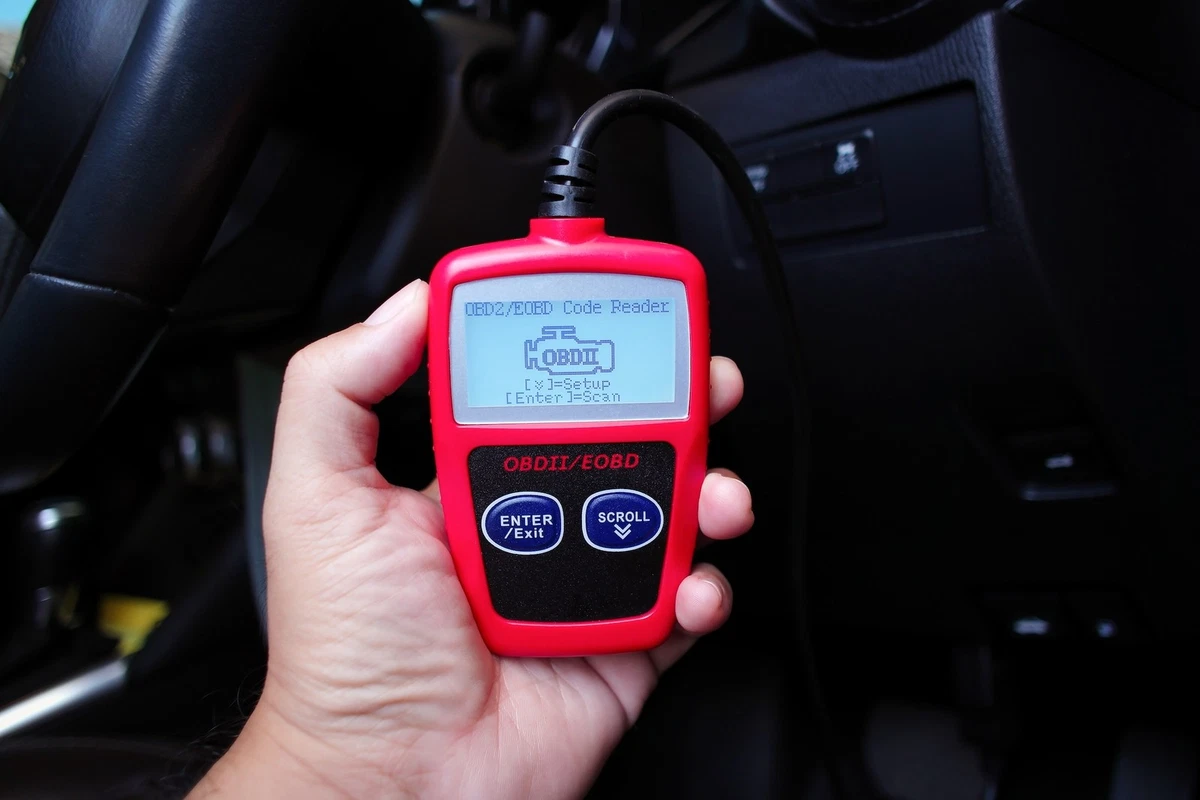
A P0420 code is not a “stop driving immediately” situation. It means your vehicle’s emissions system is not working properly. You can still drive the vehicle, but you may experience higher fuel consumption, and your vehicle may not pass an emissions test.
What Causes a P0420 Code?
The following issues will directly trigger a P0420 code. These problems could also set other codes.
Bad Catalytic Converter
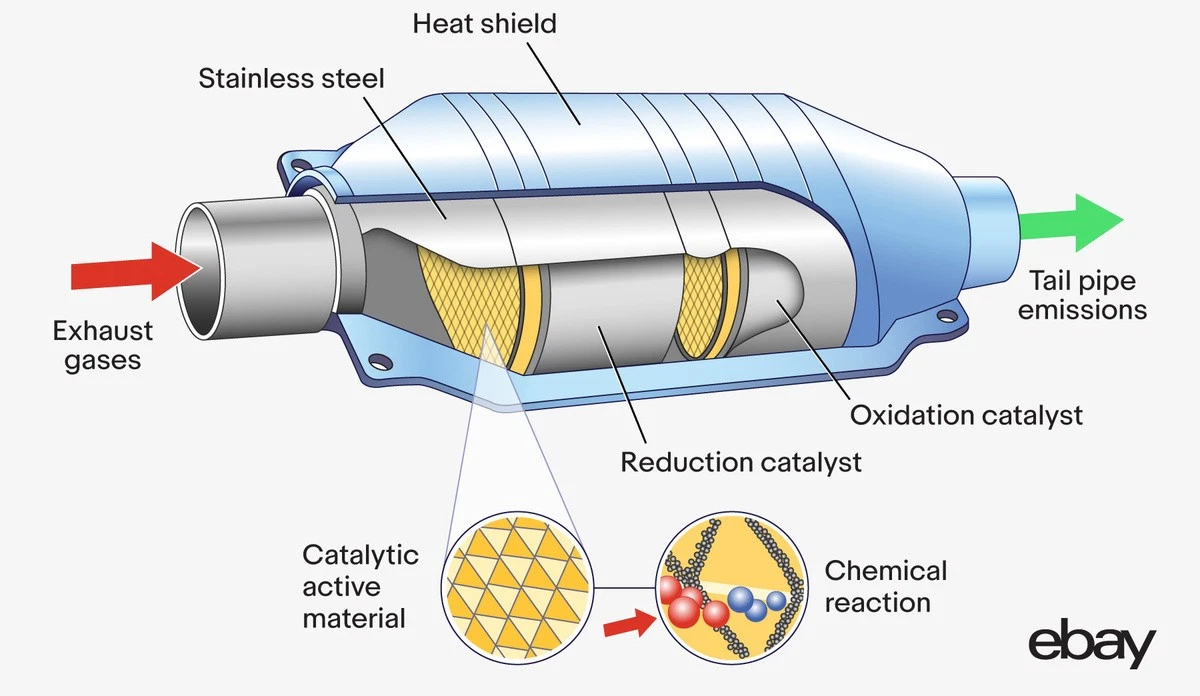
This cutaway illustration shows the components inside a typical catalytic converter. The catalytic active material is often called the honeycomb.
The most common cause is a faulty catalytic converter - opens in new window or tab.. If your catalytic converter is clogged, it can’t burn noxious gases. This can be a costly problem to fix because catalytic converters are expensive. You must replace a plugged or otherwise non-functional catalytic converter.
Bad Oxygen Sensor

O2 sensors go bad eventually. Test a sensor with a live-data scanner or with a multi-meter.
Another common cause of P0420 codes is a bad oxygen (O2) sensor. O2 sensors usually last around 100,000 miles. However, an O2 sensor in vehicles built before the 2000s might last only 30,000 miles. Also, driving through water or mud can damage an O2 sensor. Replacing a bad oxygen sensor - opens in new window or tab. is a simple fix for most cars.
Frayed or Cut Wire to O2 Sensor
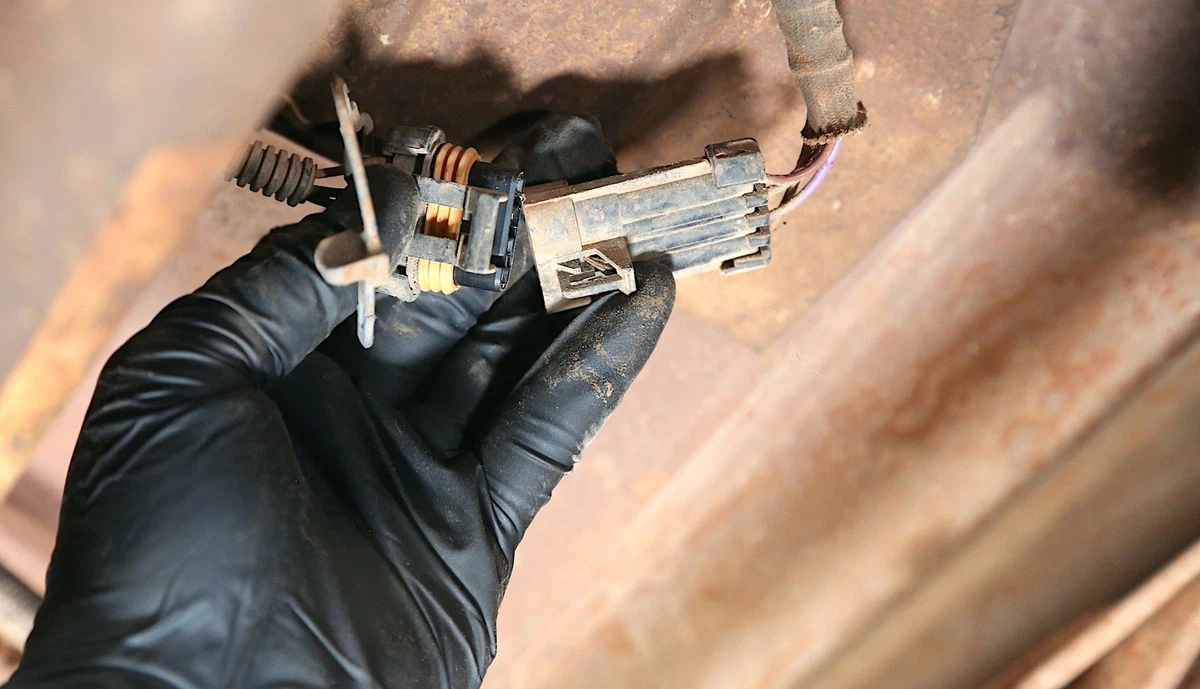
Visually inspect the O2 sensor wiring to ensure it is making a good connection.
Oxygen sensors hang low on the vehicle, putting them at risk for damage. It doesn’t take much to snag the wire and damage it. If the wire is frayed, burned, or pinched, the signal can be interrupted or corrupted, causing a P0420 code. This is also an easy fix.
Exhaust Leak
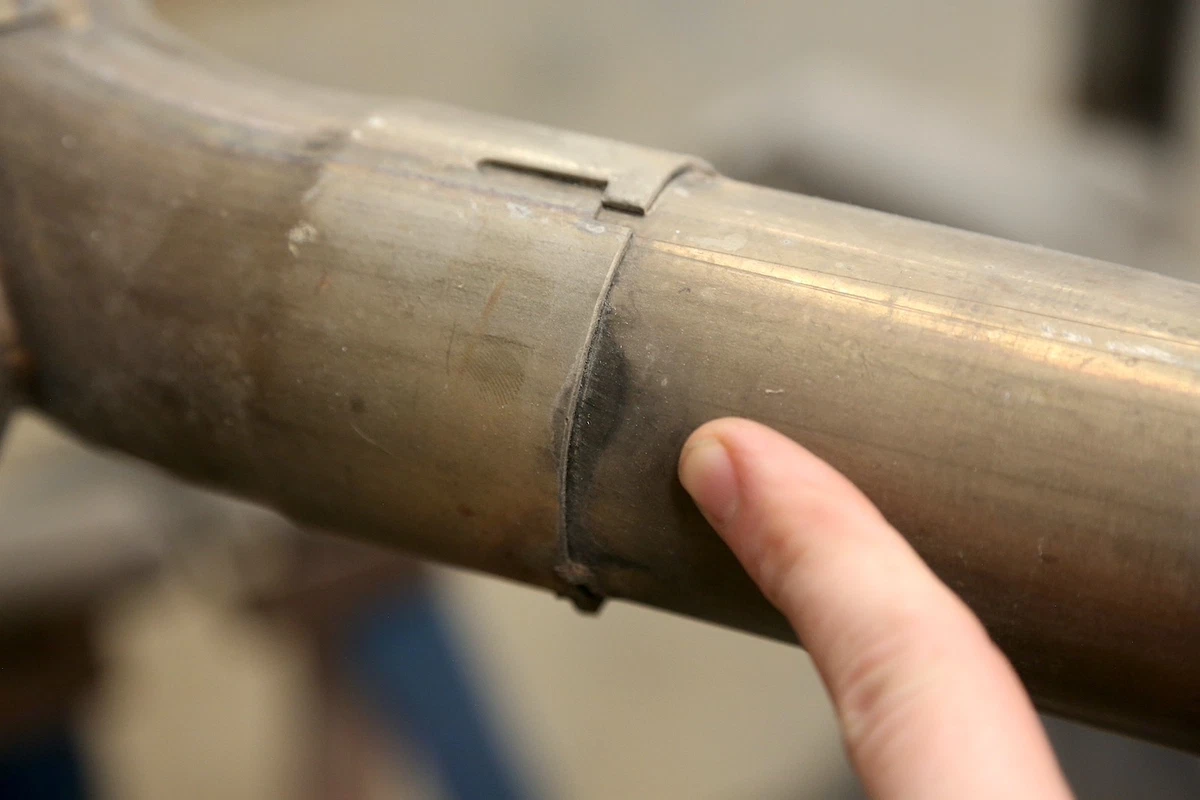
Exhaust leaks produce a dark soot mark. They usually occur at pipe joints.
An exhaust leak - opens in new window or tab. allows cold air into the exhaust system, which will throw off the gas mixture and temperature. This can affect your onboard computer’s readings. The most common leak points are the exhaust manifolds - opens in new window or tab. and pipe joints.
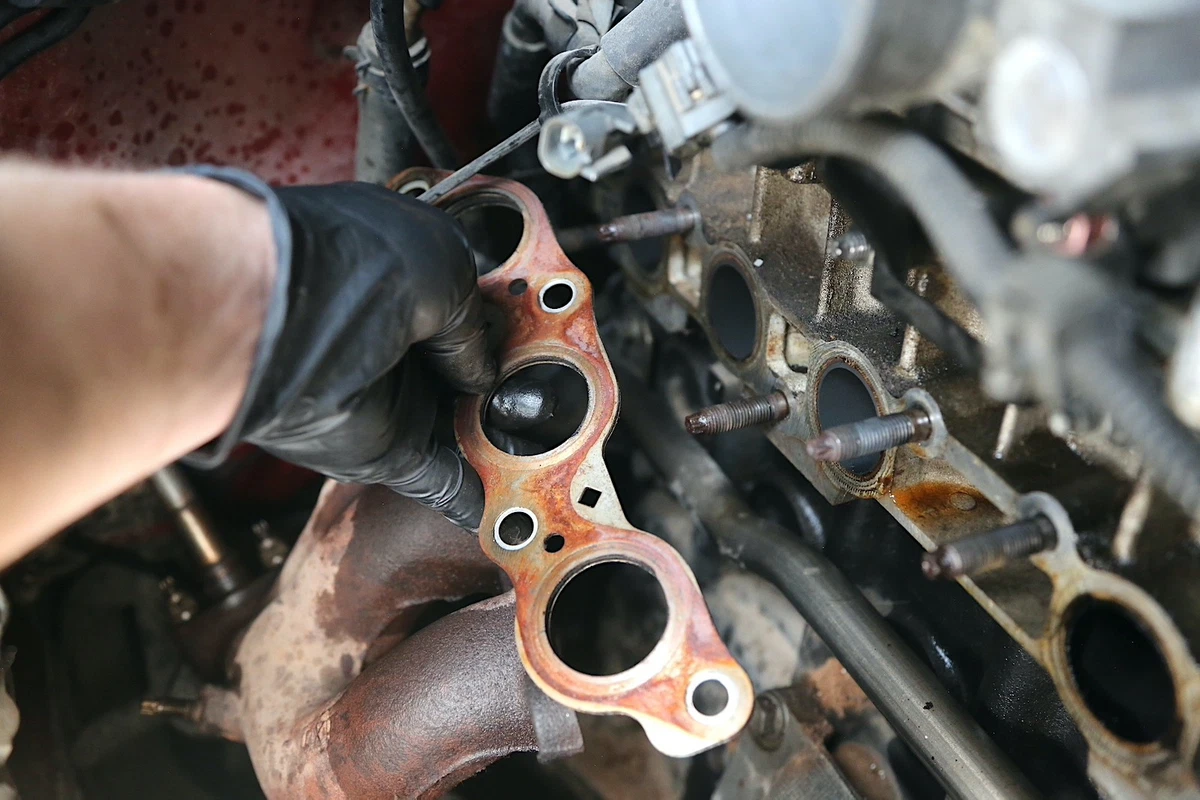
Exhaust gaskets are another common leak area.
An exhaust leak produces a small amount of black soot in the surrounding area. A smoke test can help you find a leak. Replacing the exhaust gaskets - opens in new window or tab. is usually the solution.
Secondary Causes
There could be a less common cause for a P0420 code—that is, if the problem is severe. Here are two potential problems to investigate:
Combustion Issues
If your engine is not burning fuel properly, the exhaust gases can push the cat converter readings out of an acceptable range. Bad spark plugs - opens in new window or tab., faulty ignition coils - opens in new window or tab., clogged fuel injectors - opens in new window or tab., or head gasket - opens in new window or tab. leaks might be the culprit. Other codes accompanying the P0420 will likely show up, pointing to the true cause.
Vacuum Leaks
A large enough vacuum leak can cause the engine to run poorly, dumping too much fuel into the system. This can trigger a P0420 code. For a quick test, spray carburetor cleaner around the vacuum lines and engine components. If the engine revs up, you’ve found a leak. Use the carb cleaner can’s straw to help pinpoint the leak’s source by spraying across smaller and smaller areas until you have located it.
Diagnosing the Problem
Now that you understand the potential causes, here's how to systematically diagnose a P0420 code:
- Scan and retrieve all engine codes. Determine what the codes mean. Start with codes other than P0420.
- If the only code is P0420, test the O2 sensor with a scan tool with live data testing.
- Look for vacuum and exhaust leaks, and examine the O2 sensor wires.
- Check the spark plugs. Use a color chart to determine if each plug is burning properly. If not, replace them.
- Clear the codes.

Scan the vehicle using a code scanner. If your scanner has live data reading, you can use it to test the O2 sensors.
If you've eliminated these possible causes—faulty O2 sensors, vacuum/exhaust leaks, and worn spark plugs—then the catalytic converter is likely failing and needs replacement. You'll probably need to take your vehicle to a qualified shop for a definitive diagnosis, since proper catalytic converter testing requires expensive professional scan tools with live data capabilities.
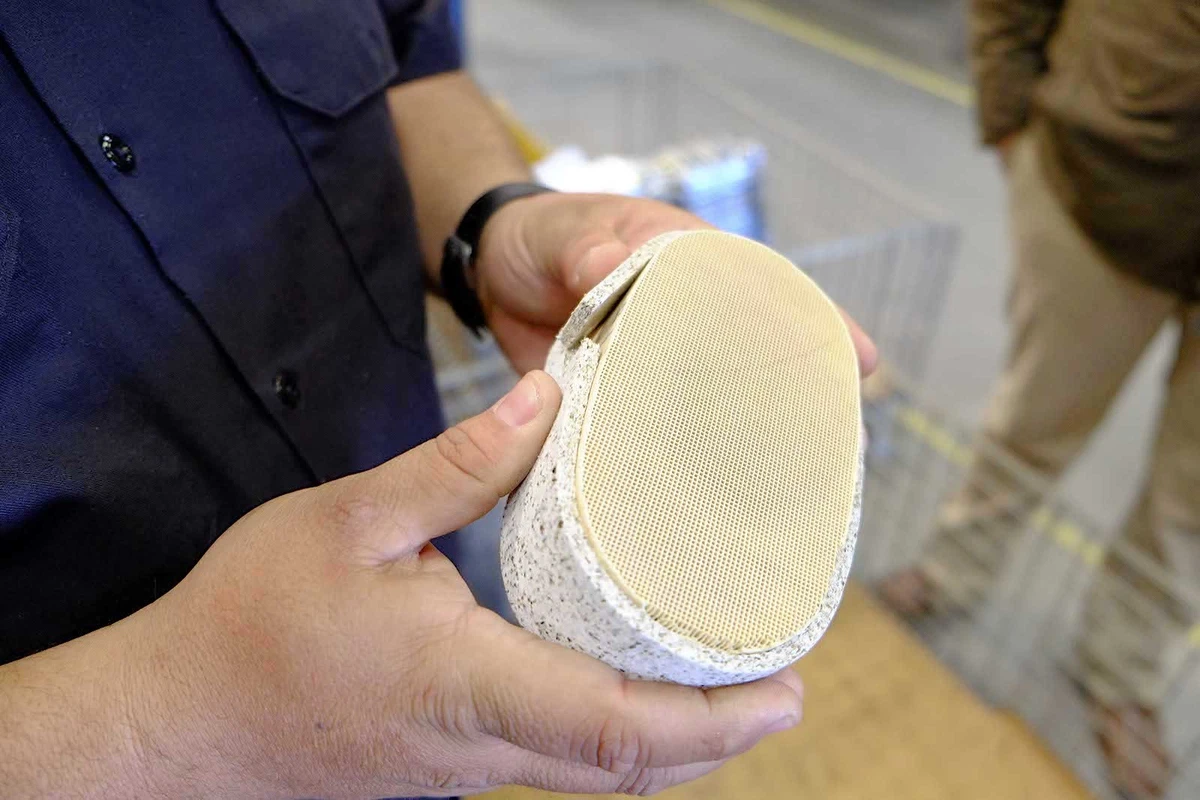
This is the honeycomb that plugs up on a converter. Once it is clogged, it can’t do its job.
If you live in a state that requires emissions testing, have your car tested at an emissions facility to provide additional confirmation of catalytic converter failure through exhaust gas analysis. In emissions-testing states, you must replace a faulty catalytic converter to pass inspection.
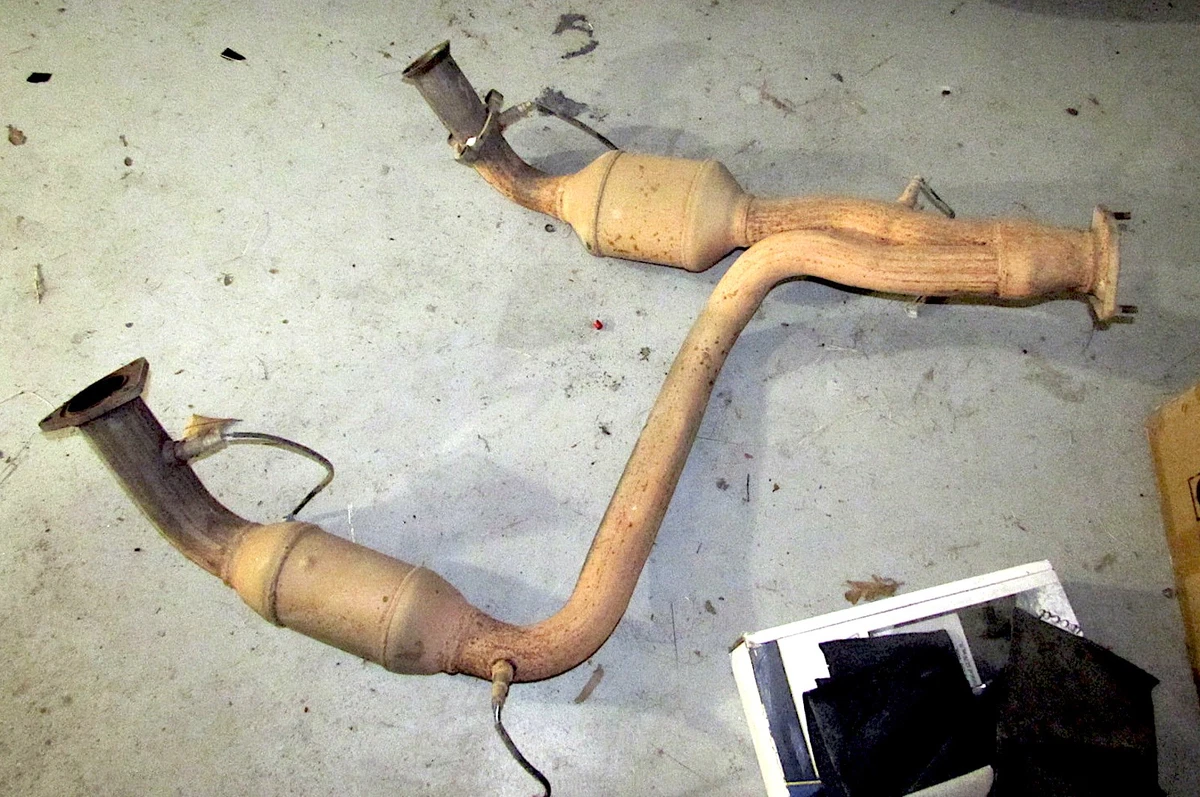
Most modern vehicles have multiple catalytic converters.
It is not illegal to drive a vehicle with a P0420 code. However, it is illegal to remove a cat without replacing it.
Fortunately, a P0420 code will not prevent you from driving. However, it’s essential to investigate the cause and, without undue delay, rectify the issue.
About the author
Share your feedback
This article is meant to provide general guidance only. Automotive maintenance, repair, upgrade, and installation may depend on vehicle-specifics such as make and model. Always consult your owner's manual, repair guide for specific information for your particular vehicle and consider a licensed auto-care professional's help as well, particularly for advance repairs.