Picture 1 of 1
Stock photo
Picture 1 of 1
Stock photo
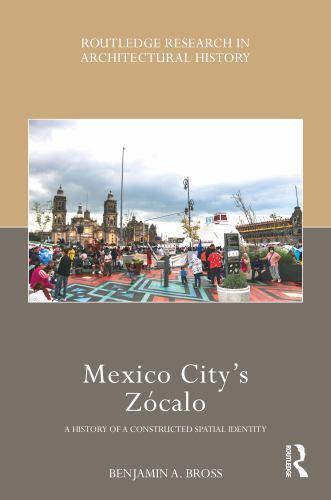
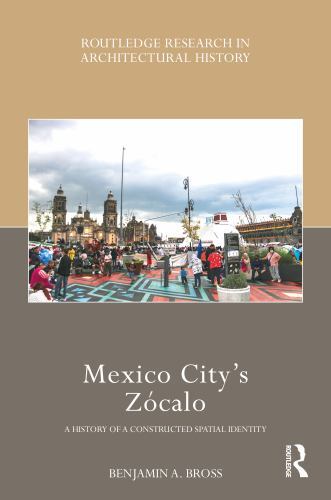
Mexico City�s Zocalo by Benjamin Bross (2022, Hardcover)

Great Book Prices Store (436639)
99.4% positive feedback
Price:
$257.25
Free shipping
Returns:
14 days returns. Buyer pays for return shipping. If you use an eBay shipping label, it will be deducted from your refund amount.
Condition:
- Buy It NowMexico City's Zócalo : A History of a Constructed Spatial Identity, Hardcover...
Oops! Looks like we're having trouble connecting to our server.
Refresh your browser window to try again.
About this product
Product Identifiers
PublisherRoutledge
ISBN-10036751074X
ISBN-139780367510749
eBay Product ID (ePID)16057239057
Product Key Features
Book TitleMexico City�S Zocalo
Number of Pages264 Pages
LanguageEnglish
Publication Year2022
TopicGeneral, Americas (North, Central, South, West Indies)
IllustratorYes
GenreArchitecture, History
AuthorBenjamin Bross
FormatHardcover
Dimensions
Item Weight23.1 Oz
Item Length9.2 in
Item Width6.1 in
Additional Product Features
LCCN2021-036985
Dewey Edition23
Dewey Decimal972.53
Table Of ContentList of Figures; Acknowledgements; Introduction; 1. From MexicaAxis Mundito Spanish Conquest; 2. The Plaza Mayor's Nascent Urbanscape; 3. Major Events in the Plaza Mayor During the Viceroyalty; 4. The Last Decades of the Viceroyal Period; 5. A Nascent National Identity; 6. Mexico's Second Empire and the Restored Republic; 7. Expressions of National Identity During the Porfiriato; 8. From the Mexican Revolution to World War II; 9. The Plaza de la Constitución in the Second Half of the 20th Century; 10. A Recent History of the Zócalo as Public Space; 11. The Zócalo, Mexico's Public Square; Bibliography; Image Credits; Index
SynopsisThis book presents a case study of one of Latin America's most important and symbolic spaces, the Zócalo in Mexico City, weaving together historic events and corresponding morphological changes in the urban environment. It poses questions about how the identity of a place emerges, how it evolves and, why does it change? Mexico City's Zócalo: A History of a Constructed Spatial Identity utilizes the history of a specific place, the Zócalo (Plaza de la Constitución), to explain the emergence and evolution of Mexican identities over time. Starting from the pre-Hispanic period to present day, the work illustrates how the Zócalo reveals spatial manifestations as part of the larger socio-cultural zeitgeist. By focusing on the history of changes in spatial production - what Henri Lefebvre calls society's "secretions" - Bross traces how cultural, social, economic, and political forces shaped the Zócalo's spatial identity and, in turn, how the Zócalo shaped and fostered new identities in return. It will be a fascinating read for architectural and urban historians investigating Latin America., This book presents a case study of one of Latin America's most important and symbolic spaces, the Zócalo in Mexico City, weaving together historic events and corresponding morphological changes in the urban environment.
LC Classification NumberF1386.6.P58B76 2022
All listings for this product



Be the first to write a review


