Long gone are the days of manual steering boxes, which relied on muscle to turn a car. Today, hydraulic power steering systems provide assistance that makes big, heavy, modern cars maneuverable.
For hydraulic power steering to work, it needs hydraulic fluid - opens in new window or tab. and a power steering pump - opens in new window or tab.. As covered in our Power Steering Pump 101 - opens in new window or tab., power steering pumps typically last between 10 and 15 years or 100,000 to 150,000 miles.
See our how-to guide and video for replacing the power steering pump - opens in new window or tab.. It has complete step-by-step instructions for the job. It’s fine for beginner mechanics and should only take an hour or two.
Before you buy a new power steering pump, you should know that there are a couple of different kinds of power steering pumps. Only one fits your vehicle.
What you’ll need
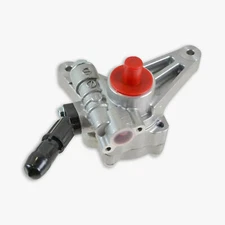


Types of Power Steering Pumps

Belt-driven power steering pumps utilize pulleys.
Various hydraulic power steering systems have different pump styles.
Gear-type pumps are common in older cars. They rely on gears to pressurize the fluid. While these have a simple design, they aren’t as efficient as newer types.
The gear-driven power steering pump has since been replaced with a belt-driven power steering pump. These are what you typically find on all modern vehicles with hydraulic power steering.
Belts typically drive modern power steering pumps, which usually use a vane design. Vane pumps rely on sliding vanes to create the pressure. Compared with gear pumps, operation is quieter and smoother. Similar in design is the rotary vane pump, except that it has a rotating mechanism to move the fluid.
Also, note that all power steering systems need a power steering reservoir. It holds the fluid to be used by the pump. Some hydraulic pumps have a built-in reservoir. Others are separate from the pump.
Keep in mind that when you’re shopping for a new power steering pump, you’re just looking for a replacement, not an upgrade. A vehicle won’t simply accept a different type of pump.
Your vehicle may use electric power steering. This started popping up on vehicles in the 1990s and has become increasingly common in this age of hybrid and electric cars. Electric power steering systems don’t use hydraulic pumps. Instead, they rely on electric motors for steering assistance.
How do you find a power steering pump that fits your car?
The easiest way to determine the best power steering pump for your vehicle is to narrow down the options based on results found in the eBay Parts Finder - opens in new window or tab.. By entering your vehicle year, make, model, engine, and trim, you can search for compatible parts that are guaranteed to fit.
How much should you spend on a power steering pump?
On average, a power steering pump costs between $100 and $300. Of course, if you have a luxury vehicle or prefer the quality you get from an OEM manufacturer, you may spend slightly more.
Who makes the best power steering pumps?
Cardone, Dorman, and Eaton make pumps for all types of vehicles. They highly regarded. You can also choose pumps from manufacturer-specific parts suppliers, such as AC Delco for GM or Motorcraft for Ford.
Used Versus Remanufactured Power Steering Pumps

Consider a remanufactured pump, rather than a new or used pump.
You might consider buying a used power steering pump on eBay. These may be the best options when looking for a pump on an older car. The trade-off is that you don’t know how much life is left in a used pump.
A good cash-saving alternative is a remanufactured power steering pump. A rebuilt power steering pump offers more reliability than a standard used model. It also often comes with a warranty, although not usually as long as a new pump.
If you have advanced mechanical ability, you may want to purchase a power steering pump rebuildkit and do it yourself. It’s a great project to get your hands in there with a power steering pump repair kit and make something new from it. For example, the GM Type 2 power steering is a favorite for rebuilding. They are widely available.
Should you buy a power steering pump kit?
When you replace your power steering pump, you should also replace its seals. Some power steering pumps come with a new seal kit. That’s often preferable than buying a new set of seals separately.
It’s the same story for power steering reservoirs. Some power steering pumps come with reservoirs, and others require you to buy a new one separately.
Power Steering Pump Tools and Accessories

Power steering pump pulley removal tool kits typically include a storage case.
When you replace the power steering pump - opens in new window or tab., you need new power steering fluid. There are varying types of power steering fluid - opens in new window or tab., so it’s essential to check compatibility before ordering. Unless you have a rare or exotic vehicle, a bottle shouldn’t cost more than $15. Do not use old or contaminated fluid with a new pump. That can lead to damage.
Depending on the setup, you may need a power steering pump pulley removal tool - opens in new window or tab.. Also, you may need a power steering pressure tester to diagnose and check the system.

This power steering hose kit is for vehicles that mate a GM power steering pump to 1979-97 Ford Mustang rack and pinion setup.
During pump replacement, make sure you inspect the power steering hoses - opens in new window or tab.. Replace them if there’s any sign of damage. You can do the same with the power steering reservoir - opens in new window or tab., drive belt - opens in new window or tab., seals, and gaskets - opens in new window or tab..
We recommend inspecting the entire system for wear. Putting a bad belt on a new pump doesn’t do you any good if it fails down the road. Replacing a leaky power steering pump is pointless if you hook it back up to leaky hoses. It’s a system. Everything works together.
About the author

Share your feedback
This article is meant to provide general guidance only. Automotive maintenance, repair, upgrade, and installation may depend on vehicle-specifics such as make and model. Always consult your owner's manual, repair guide for specific information for your particular vehicle and consider a licensed auto-care professional's help as well, particularly for advance repairs.
Shop project essentials
Recommended for you
Find answers and inspiration

5 Common Car-Suspension Problems—and What to Do

Understanding Steering Gearboxes
5 min read
CV Axles and How to Replace Them

A Fix-it Guide for Understeer and Oversteer

Diagnosing Bad Tie Rod Ends
6 min read
How to Choose the Best Shock Absorbers
8 min read
Upgrade Your Steering Column

Reasons to Switch to a Performance Shock

Deciding to Buy Original or Aftermarket Auto Parts: Quality and Selection

Your Crossover Can Become an Overlanding Rig

What to Check and What to Replace at 100,000 Miles
4 min read
Power Steering Pump Problems and Solutions
5 min read
How to Buy the Right Tie Rod Ends
6 min read
How to Replace Power Steering Fluid
8 min read
Deciding to Buy Original or Aftermarket Auto Parts: The Basics

Installing a Leveling Kit Will Raise Your Truck's Front End
Tax Refund Idea: Add an Air Bag Suspension to Your Ride
How to Buy the Right Sway Bar Links and Bushings
6 min read
Electric Power Steering Conversion: A Definitive Guide
How to Buy the Right Steering Gearbox
5 min read
How to Warm Up Your Steering Wheel

What Is Your Steering Wheel Telling You?

Taking Your Car to the Track: The Ultimate Guide

Squeaks, Clangs and Rattles: Car Noises That Need Attention

Why Idler Arms Are So Critical
6 min read
Car Lube Jobs Explained
4 min read
How to Buy the Right Idler Arm
6 min read
Online Videos Are a Game-Changer for DIY Car Repair
How Rack-and-Pinion Steering Works

Toyota Pickup Accessories and Upgrades: A to Z

Choosing the Right Power Steering Fluid
4 min read
Understanding Sway Bar Links
6 min read
How to Replace Sway Bar End Links and Bushings
6 min read
Hisses, Whines, and Rattles: What Your Car Is Trying to Tell You

How to Replace a Power Steering Pump
7 min read
Why Is Your Car Shaking and Vibrating?

An Intro to Flushing Your Power Steering Fluid
5 min read
What Makes a Vehicle Capable for Off-Road?

Shock Absorbers 101
8 min read
Steering Wheel Shaking? Find Out Why
How to Replace a Steering Gearbox
8 min read
How Do Torsion Bars Work?

Any Car Can Be Turned Into a Pickup, Right?

New Suspension Bushings Can Improve Handling

How to Remove Rusted Nuts and Bolts

How to Buy the Right 1970-74 Barracuda Trim Parts
4 min read
The Essential Role of Sway Bars

What You Should Know About Power Steering Pumps
5 min read
How to Pick the Right “Parts Car”

How to Customize Your Car for the Best Resale Value

How to Replace Shock Absorbers
8 min read
Why It’s Smart to Buy a Suspension Kit (Rather than Parts)

How To Buy New Old Stock (NOS) Parts on eBay

4 Ways to Upgrade or Mod Your Suspension

How to Buy the Right Ball Joint for Your Vehicle
7 min read
Aftermarket Steering Wheels: For Style and Control

How to Replace an Idler Arm
5 min read
Power Steering Fluid: Selection, Maintenance, and Changing
What to Do When Wheel Bearings Fail

How to Diagnose a Failing Ball Joint
7 min read
Deciding to Buy Original or Aftermarket Auto Parts: The Online Transaction

How to Improve Steering Response from a Classic Muscle Car
Sway Bars Are An Easy Upgrade To Improve Handling

How to Replace Tie Rod Ends
7 min read
A Quick Guide to Car Coilovers

What Is a Tie Rod?