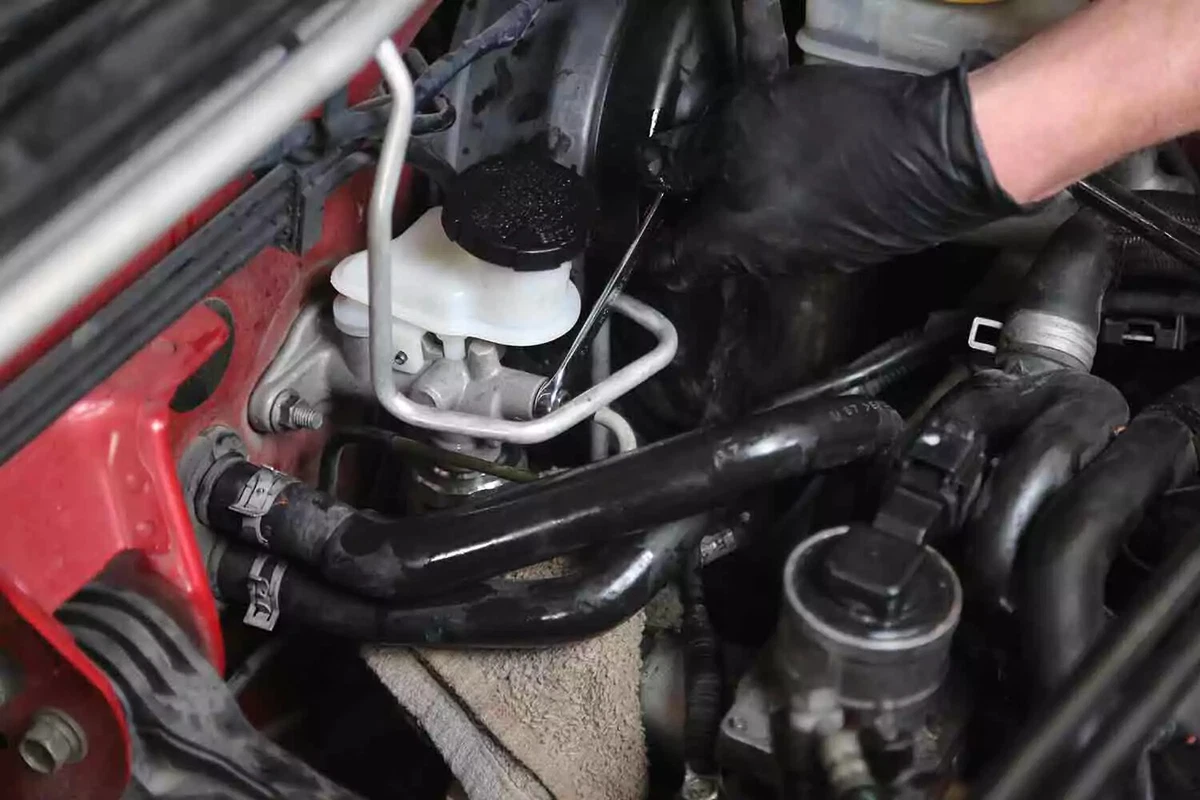
The master cylinder is typically located directly in front of the clutch pedal. This one is mounted to the firewall.
Parts made by automakers are considered original equipment manufacturer (OEM). Aftermarket parts from suppliers that work directly with automakers are original equipment (OE). We recommend buying an OEM or OE clutch master cylinder - opens in new window or tab..
For many DIY jobs, parts and accessories from aftermarket suppliers who are not the original producer—and did not work with them—can be easily interchanged to save money. For example, there’s no need to buy Honda-branded coolant. But that’s not the case with a clutch master cylinder.
Clutch master cylinders are not universal. Enter your year, make, model, engine, and trim into the eBay Parts Finder - opens in new window or tab.. This lets you search for clutch master cylinders designed to fit your vehicle. All the bolts line up to the same places, and everything fits together. Keep an eye open for OEM or genuine OE parts. These are high-quality parts on par with what came on your vehicle when it rolled off the assembly line.
Clutch master cylinders are similar to brake master cylinders. Some have a reservoir integrated into one unit and others have a remote reservoir. One kind is not an upgrade from the other. Buy what fits your vehicle.
What you’ll need


How Much Does a Clutch Master Cylinder Cost?

This brand new Aisin clutch master cylinder for the 1989-1995 2.4-liter Toyota Pickup and 4Runner was listed on eBay Motors for under $50.
Most clutch master cylinders cost between $25 and $75. This price depends on the type of vehicle you drive. Branded OEM parts are more expensive. As part of the replacement, you’ll also need to add clutch fluid - opens in new window or tab., which adds a minor expense. Clutch and brake fluid are the same. Doing this job yourself will likely save between $100 and $300 on labor charges if you were to have a shop do the work.
Buying a Used Clutch Master Cylinder (or Rebuilding One)
Do you have an older vehicle with a rare clutch master cylinder? A used part may be your only way to find a high-quality OEM part. That’s fine if you buy from a reputable seller that has a good return policy.
It probably makes sense to replace rather than rebuild your brake master cylinder. However, rebuild kits are relatively inexpensive. They come with all the new seals, O-rings, springs, and clips you need, and usually a new piston.
The problem is when an old clutch master cylinder has suffered years of abuse, and old fluid may be pitted on the inside. New O-rings and seals can’t fix a pitted master cylinder. In some cases, you might rebuild your clutch master cylinder only to discover that it still leaks. So, you need to pull it out after the time-consuming process of rebuilding, re-installing, and re-bleeding the clutch.
Related Parts, Tools, and Accessories

Play it safe, buy a kit, and replace both the clutch master cylinder and slave master cylinder at the same time.
When replacing the master cylinder, you will need to fill the reservoir with new clutch fluid (which is the same as brake fluid). Most clutch masters use DOT 3 - opens in new window or tab. or DOT 4 - opens in new window or tab. brake fluid, which are compatible with each other.
The clutch master cylinder has a corresponding clutch slave cylinder. Buy a new clutch slave cylinder - opens in new window or tab. with your clutch master cylinder. Replace them together. It doesn’t add a lot of cost to your order, and it saves time. If you replace both together, you only have to bleed the system once.
With some vehicles, you can purchase a kit - opens in new window or tab. that comes with the required hydraulic lines and fluid.
During a master cylinder replacement, inspect the entire system. Check for leaks around the slave cylinder and along the lines. Finally, give the clutch pedal a quick check to make sure it’s properly adjusted.
These tools are necessary when installing a new clutch master cylinder:
- Wrenches and socket set to remove the bolts on the clutch master cylinder
- A line wrench to remove hydraulic lines
- Snap-ring pliers if the master cylinder has internal snap rings holding it in place
- A bleeder wrench to remove air bubbles
- Plastic or rubber tubing for bleeding
- Fluid catch container
- Brake cleaner for removing dirt and grime
- Funnel for adding new fluid
Wearing rubber gloves and safety glasses will ensure safety. You don’t want any brake fluid on your hands and you definitely don’t want any in your eyes.
It’s also helpful to have shop towels or rags handy for cleaning up any messes. Brake/clutch fluid can remove paint. Keep any spills contained. Don’t let brake-fluid-contaminated gloves leave fingerprints on painted metal.
About the author

Share your feedback
This article is meant to provide general guidance only. Automotive maintenance, repair, upgrade, and installation may depend on vehicle-specifics such as make and model. Always consult your owner's manual, repair guide for specific information for your particular vehicle and consider a licensed auto-care professional's help as well, particularly for advance repairs.
Shop project essentials
Recommended for you
Find answers and inspiration

Understanding the Purpose of Transmission Mounts
5 min read
Buying the Right Transmission Fluid and Filter
4 min read
How to Replace Transfer Case Fluid
5 min read
How to Calculate Gear Ratio

Why Everybody Hates a CVT Gearbox But You Shouldn't

Driveline Basics: What Is a Balanced Driveshaft?

How to Buy the Right Differential Fluid
4 min read
Buying the Right Transmission Mounts
4 min read
Car Fuses and Fuse Boxes: Types, Amps, Wiring and Circuits

An Intro to Replacing Clutch Fluid
5 min read
Deciding to Buy Original or Aftermarket Auto Parts: Quality and Selection

What to Check and What to Replace at 100,000 Miles
4 min read
Deciding to Buy Original or Aftermarket Auto Parts: The Basics

How to Replace Ball Joints
12 min read
Picking the Right Manual Transmission Fluid
4 min read
An Intro to Replacing Manual Transmission Fluid
4 min read
Buying the Right CV Axle
6 min read
How to Buy the Right Transmission Fluid
5 min read
7 Steps for Successful Springtime Car Prep

Taking Your Car to the Track: The Ultimate Guide

Squeaks, Clangs and Rattles: Car Noises That Need Attention

How To Check and Change Transmission Fluid

An Introduction to CV Axles and Joints
5 min read
Online Videos Are a Game-Changer for DIY Car Repair

Types of U-Joints and When They Go Bad
6 min read
How to Replace a Clutch Master Cylinder
11 min read
Hisses, Whines, and Rattles: What Your Car Is Trying to Tell You

How to Replace a Transmission Mount
7 min read
A Quick Guide to Your Clutch Master Cylinder
5 min read
How to Change Manual Transmission Fluid
4 min read
How to Replace Transmission Fluid and Filter
11 min read
Choosing the Right Clutch Fluid
6 min read
How to Buy and Build a Gen-1 Coyote Ford Mustang
7 min read
How to Remove Rusted Nuts and Bolts

All-Wheel Drive vs. 4-Wheel Drive: What’s the Difference?

Aftermarket Clutch Kits: What You Need to Know

Everything You Need to Know About Wheel Bearings
7 min read
All About Cat-Back Exhaust Systems
6 min read
How to Replace a CV Axle
7 min read
Snowmobile Pre-Season Checklist

What to Know About Changing Transmission Fluid
6 min read
How to Pick the Right “Parts Car”

What Your Differential Fluid Is Telling You
5 min read
How To Replace Differential Fluid
8 min read
Replacing Your Transmission Fluid and Filter
5 min read
Is It Time for a New Shifter?

How to Replace Clutch Fluid
6 min read
How to Replace a U-Joint
14 min read
Adding Aftermarket Cruise Control Is Easier Than You Think

The Double Clutch Automatic Transmission Explained

U-Joint Buying Guide
4 min read
Understanding Cruise Control Choices

Deciding to Buy Original or Aftermarket Auto Parts: The Online Transaction

How to Change Differential Fluid

How to Replace Wheel Bearings
7 min read
How to Buy the Right Replacement Wheel Bearings
6 min read
Winter Car Prep: 5 Essential Articles

How to Change Automatic Transmission Fluid
6 min read
What Is a Dual Overhead Camshaft (DOHC) Engine?

How to Replace an Idler Pulley
4 min read
Selecting the Right Transfer Case Fluid
4 min read
What You Need To Know About Transfer Case Fluid
4 min read