Replacing brake fluid - opens in new window or tab. is part of a recommended maintenance schedule. Brake fluid absorbs moisture and goes bad over time.
In this guide, we explain the different types of brake fluid, show you what to look for, and help you understand the cost.
What you’ll need

Brake Fluid Types
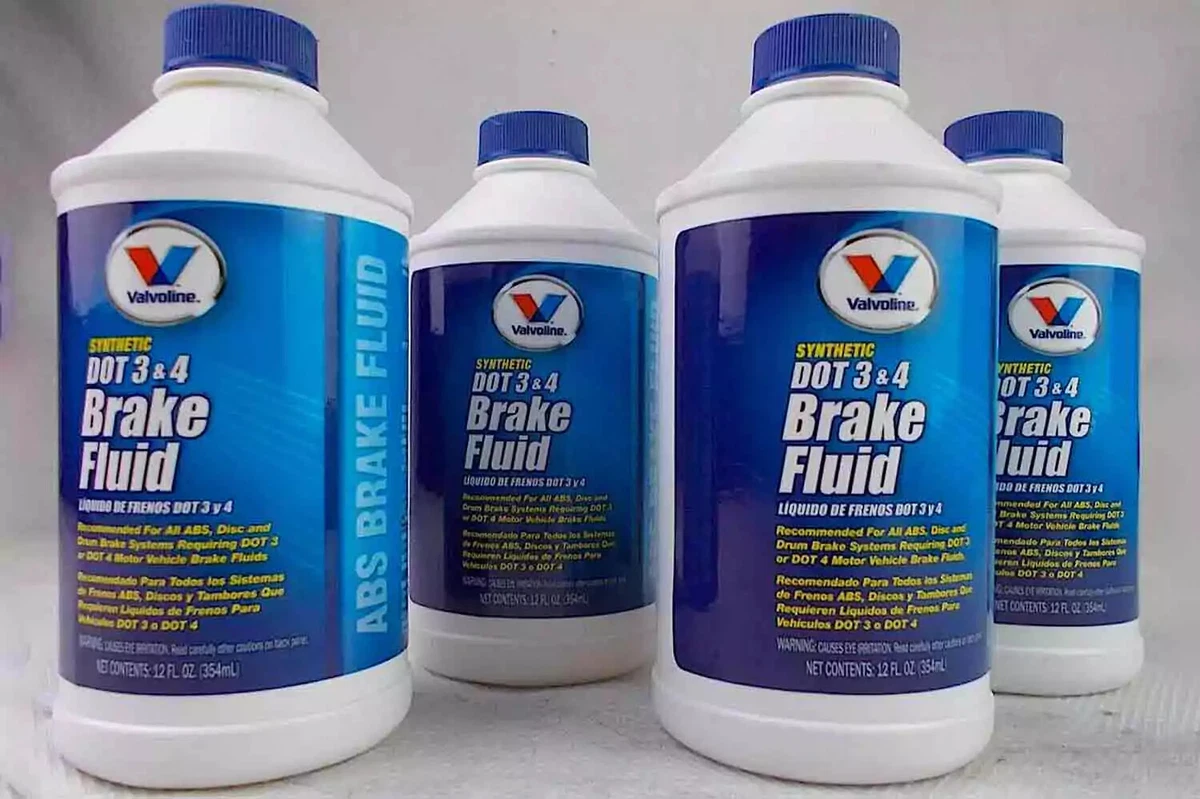
It’s smart to keep a spare DOT 3 and DOT 4 brake fluid on the shelf.
Brake fluid is synthetic hydraulic fluid that comes in four basic types.
DOT 3 - opens in new window or tab.: This glycol-based fluid has a boiling point of around 401 degrees Fahrenheit dry. It has a lower boiling point than DOT 4 and absorbs less water. It’s used primarily in older vehicles.
DOT 4 - opens in new window or tab.: This is another glycol-based fluid but with a higher boiling point of around 446 degrees Fahrenheit dry. It has a higher boiling point than DOT 3 but absorbs more water. Many of today’s manufacturers recommend this type. It’s a sensible upgrade in applications that put stress on the brake system, such as towing or hauling heavy loads.
DOT 5 - opens in new window or tab.: Don’t use this one on modern cars. This is a silicone-based fluid. It is not compatible with modern ABS systems.
DOT 5.1 - opens in new window or tab.: This glycol-based fluid contains a very high boiling point of around 518 degrees Fahrenheit dry. It’s meant for racing and high-performance applications.
Are brake fluids interchangeable?
Yes and no. Brake fluids like DOT 3, DOT 4, and DOT 5.1 are all glycol-based, so it’s fine to mix them in a pinch.
However, be careful to never mix DOT 5 fluid with anything else in your system. DOT 5 is silicone-based and meant for motorcycles and off-road vehicles that get exposed to a lot of water. Glycol-based and silicone-based fluids don’t mix.
Don’t be misled by labels saying that brake fluid is “synthetic.” All brake fluid is synthetic. Any DOT 3 fluid can be mixed with any other DOT 3 fluid. It’s the same with DOT 4 or DOT 5.1.
What’s the best brake fluid for towing?
If you tow heavy loads or drive in mountainous areas where the brakes endure more stress, consider upgrading the brake fluid. For example, if your car calls for DOT 3, you may want the higher boiling point of DOT 4. Check your owner’s manual to see if it’s allowed by the manufacturer.
How to Find Brake Fluid That Fits Your Car

There’s a reason why some brake fluid brands cost significantly more than others.
Use the eBay Parts Finder - opens in new window or tab. to find the brake fluid that is compatible with your vehicle. We recommend sticking with a recognizable name-brand fluid. But don’t feel compelled to buy a fluid branded by your automaker. For example, you don’t need Honda-branded fluid for your Honda vehicle. Aftermarket brake fluid is fine.
For daily driving, it’s more important for your brake fluid to be changed than it is for the brake fluid to be ultra-high-spec. DOT 3 is fine if that is what your owner’s manual recommends. DOT 4 is a sensible upgrade, but there’s no need to jump up to 5.1 unless you’re hitting the track.
How much should you spend on brake fluid?
Expect to spend $5 to $20 per bottle of brake fluid, with the average car using one to two bottles per change. Even the best brake fluids aren’t expensive. If you have brake fluid replaced at a shop, it may cost between about $60 to $150, including parts and labor. Save money, and go DIY.
Parts and Tools Needed to Replace Brake Fluid
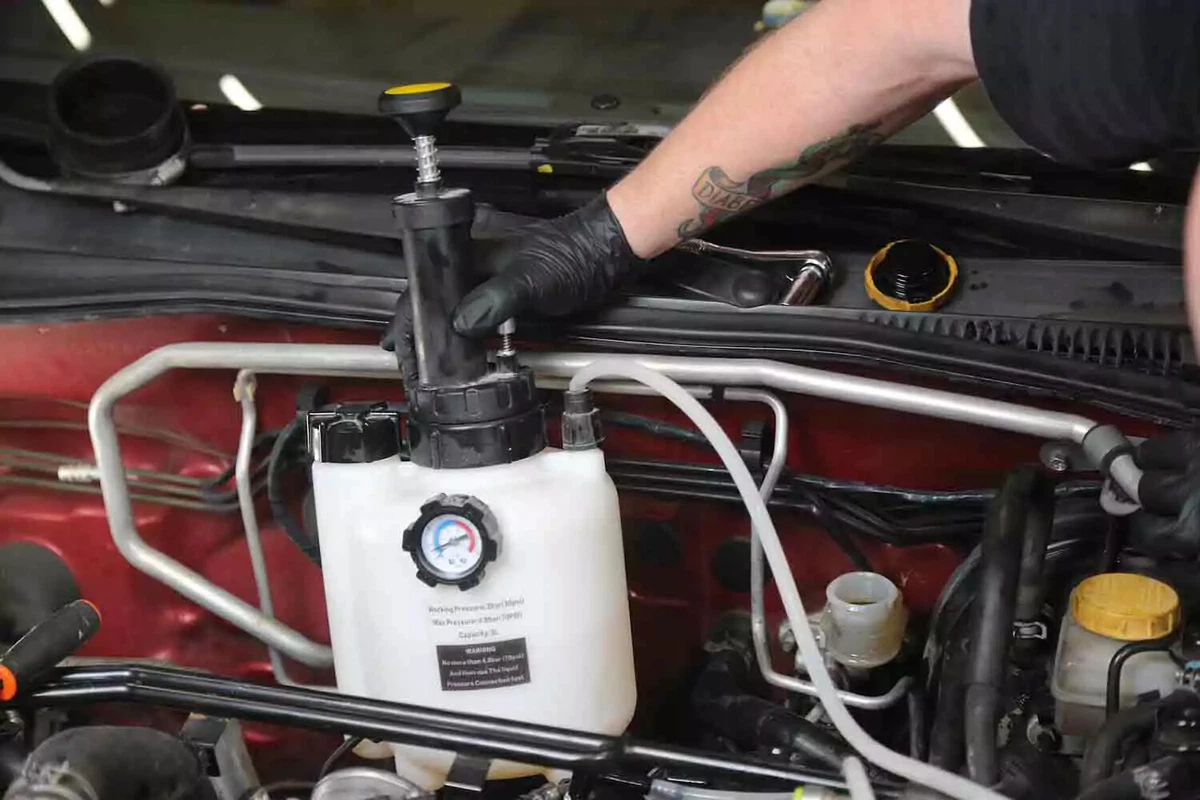
A vacuum pump makes the job easier.
When you replace the brake fluid, conduct a thorough brake inspection. Carefully look over the brake lines and hoses, repairing any leaks or damage. You can also inspect the brake pads, brake rotors, and the master cylinder. Change out worn or damaged parts.
While changing the brake fluid, complete other scheduled maintenance recommended by your carmaker. To prevent problems, replace your brake fluid every 30,000 to 45,000 miles (or two to three years). At that time, the manufacturer’s schedule may include a transmission fluid flush, tire rotation, or oil and filter change.
You might need to acquire tools to complete this job. Look for a high-quality floor jack, jack stands, a brake bleeder kit, and a wrench. Some DIYers also prefer to get a vacuum pump, which makes it easier to bleed your brakes without a helper. Even with a vacuum pump, it’s useful to have a helper bleed the brakes with you. It cuts down the time it takes to get the job done.
About the author

Share your feedback
This article is meant to provide general guidance only. Automotive maintenance, repair, upgrade, and installation may depend on vehicle-specifics such as make and model. Always consult your owner's manual, repair guide for specific information for your particular vehicle and consider a licensed auto-care professional's help as well, particularly for advance repairs.
Shop project essentials
Recommended for you
Find answers and inspiration

Brake Booster Basics

How to Replace a Brake Caliper
7 min read
DIY: 2018-22 Honda Accord Brake Pads and Rotors
6 min read
An Introduction to Brake Master Cylinders
6 min read
What You Need to Know About Brake Fluid
What Are Common Brake Caliper Positions?

A Breakdown of Different Types of Braking Systems
What Are Jake Brakes and How Do You Use Them?

3 Types of Brake Pads To Consider
Understanding the Dual Master Cylinder Brake System

Deciding to Buy Original or Aftermarket Auto Parts: Quality and Selection
What Are Your Brakes Trying to Tell You?

Drum Brakes vs. Disc Brakes: What’s the Difference?
What Are Air Brakes and How Do They Work?

What to Check and What to Replace at 100,000 Miles
4 min read
A Guide to Brake Pedals
How To Remove Rust on Rotors

Enhance Your Car’s Performance with a Brake Upgrade

Buying the Right Brake Master Cylinder
6 min read
Brake Cleaners Versus Carburetor Cleaners

Brake Master Cylinder Replacement: Step-by-Step
10 min read
Deciding to Buy Original or Aftermarket Auto Parts: The Basics

Performance Mods for the Nissan Leaf

How to Buy the Right Brake Rotors
4 min read
Dress Up Your Ride With Brake Bling

Brake Rotor Comparison: Vented, Drilled or Slotted?

7 Common Mistakes When Bleeding Brakes

How to Replace Brake Fluid
10 min read
How to Diagnose and Repair Your Parking Brake

Taking Your Car to the Track: The Ultimate Guide

How to Repair Sticking Brake Calipers

Squeaks, Clangs and Rattles: Car Noises That Need Attention

Basic Car Maintenance Is Simpler Than You Think

Painted Brake Calipers Dress Up Any Ride

How to Find the Best Brake Pads for Your Vehicle
6 min read
How to Install a Brake Controller
Online Videos Are a Game-Changer for DIY Car Repair

Everything You Need to Know About Brake Rotors
5 min read
Easy Steps: How To Replace a Master Cylinder

The Ultimate Brake Dust Guide

Hisses, Whines, and Rattles: What Your Car Is Trying to Tell You

Anti-lock Braking (ABS): How Does It Work?

Maintaining Trailer Brakes for Towing Safety

Taking Vintage Cars Out of Storage: Planning for Spring

How to Replace a Brake Hose

How to Compress a Brake Caliper

How to Get Air Out of Brake Lines Without a Brake Bleeder
Bleeding Brakes: A Step-by-Step Guide
How to Pick the Right “Parts Car”

How to Customize Your Car for the Best Resale Value

Buying the Right Brake Calipers
7 min read
How To Buy New Old Stock (NOS) Parts on eBay

When to Replace Your Brake Fluid
5 min read
How to Replace Brake Rotors
7 min read
Tools You Need for Changing Brakes

A Beginner’s Guide to Hand Brakes

Converting From Drum to Disc Brakes: A Definitive Guide

How to Change Disc Brake Pads
8 min read
Add a Third Brake Light to Increase Safety

Brake-Rotor Problems: Machining Versus Replacing

Brake Pads 101
7 min read
How to Check Your Car’s Brake Fluid
A Quick Guide to Changing Your Brake Fluid

Deciding to Buy Original or Aftermarket Auto Parts: The Online Transaction
How to Improve Braking Performance
Why Do Brakes Lock Up?

Regularly Check These 4 Car Fluids

Brake Pad and Rotor Replacement Costs: What to Expect
8 min read
Brake Calipers 101
4 min read
Why Should You Grease Brake Pads and How to Do It