
Inspect your existing transmission mounts before ordering replacements.
If your vehicle is experiencing excessive vibration and road noise, your transmission mounts - opens in new window or tab. could be worn and need to be replaced. The key to selecting the best transmission mounts is to ensure compatibility with your make and model.
You can replace your transmission mounts at home with basic tools, such as a ratchet and sockets, a torque wrench, breaker bar - opens in new window or tab., floor jack - opens in new window or tab., and jack stands - opens in new window or tab.. See step-by-step instructions in our guide and video.
This article will help you buy the right mounts. We also look at buying used mounts and other components you should inspect when replacing your transmission mounts.
What you’ll need


What to Consider When Buying Transmission Mounts
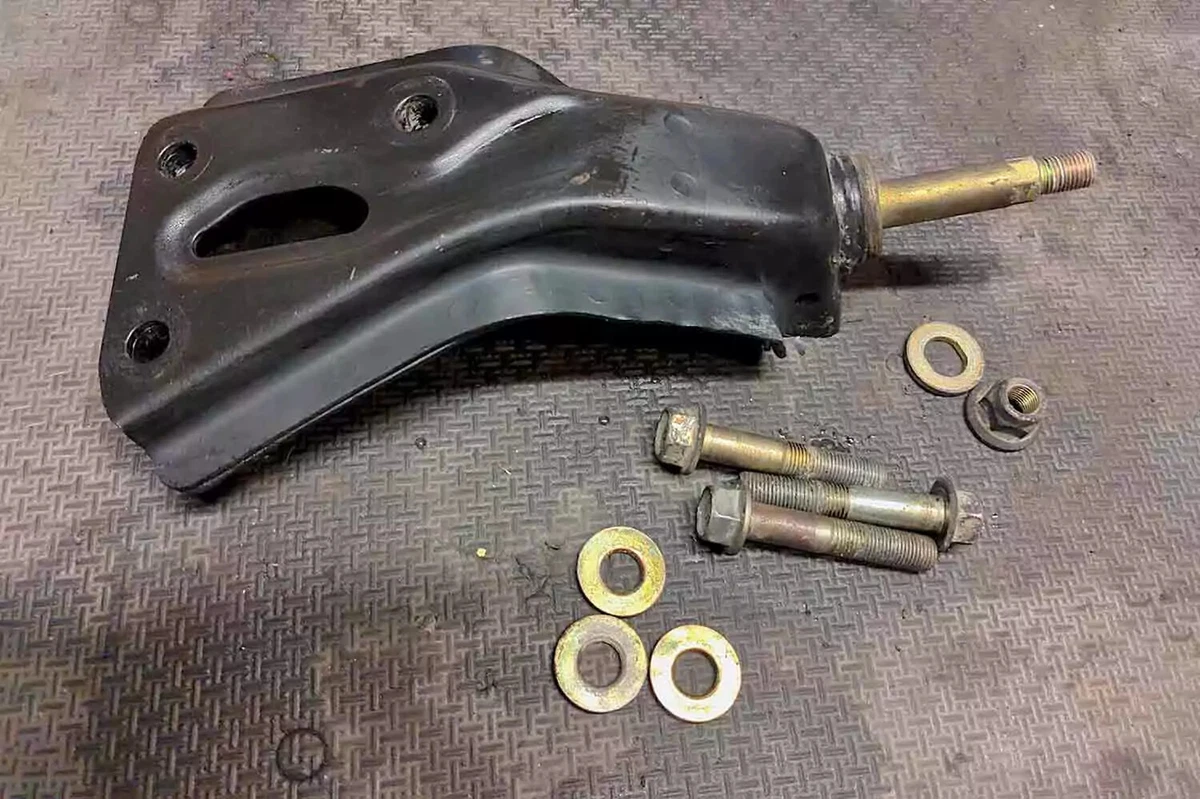
Unless used mounts are in great condition, we recommend buying new transmission mounts.
Brand: Choose a reliable brand that offers a decent warranty, at least one year, such as Motorcraft for a Ford or Mopar for a Dodge.
OEM vs. aftermarket: OEM mounts cost more than aftermarket brands. Performance mounts are ideal for racing or extreme conditions. They are built with higher-quality materials for the added stress they endure, making them more expensive.
Material: Most cars use a combination of transmission and engine mounts - opens in new window or tab. to reduce vibration, harshness, and wear. The mount is usually encased in metal, offering the support needed to hold the heavy components. You can then typically choose from two different insulating material types, molded to the metal, when buying new mounts.
- Rubber transmission mounts, whichdo a good job of isolating the vibration, are used in most vehicles today. We recommend rubber mounts for most daily commuters, who are seeking the most comfortable and quiet ride. Because rubber is softer than polyurethane, it can tear in high-torque or high-horsepower driving. Rubber mounts crack over time if exposed to contaminants. However, they are usually less expensive than polyurethane transmission mounts.
- Polyurethane transmission mounts hold up to extremes better than rubber. That’s why we recommend polyurethane for off-roading and towing, which can put a lot of stress on the transmission. Polyurethane’s extra rigidity provides more stability and is less prone to cracking than rubber mounts. However, because they are more rigid than rubber, passengers could feel more vibration.
Is it a good idea to buy used transmission mounts?
When shopping for transmission mounts on eBay, you might discover used mounts. If the transmission mounts are in good consideration, this could be a way to save money. However, new transmission mounts are not expensive, and there’s not likely to be a big cost difference between new and used. New mounts will probably deliver more miles. So, unless the used mounts are in great condition and offered at a low price, we would recommend buying new transmission mounts.
How much do transmission mounts cost?
Transmission mounts typically cost between $25 and $100. Those prices often include free shipping and a warranty. You can expect to pay slightly more for performance mounts, OEM models, and parts for luxury vehicles.
If you perform the transmission mount replacement on your own, you may save $100 to $200 over professional repair charges. That doesn’t count how much the shop might charge extra for the parts.
Parts and Tools Related to Transmission Mounts
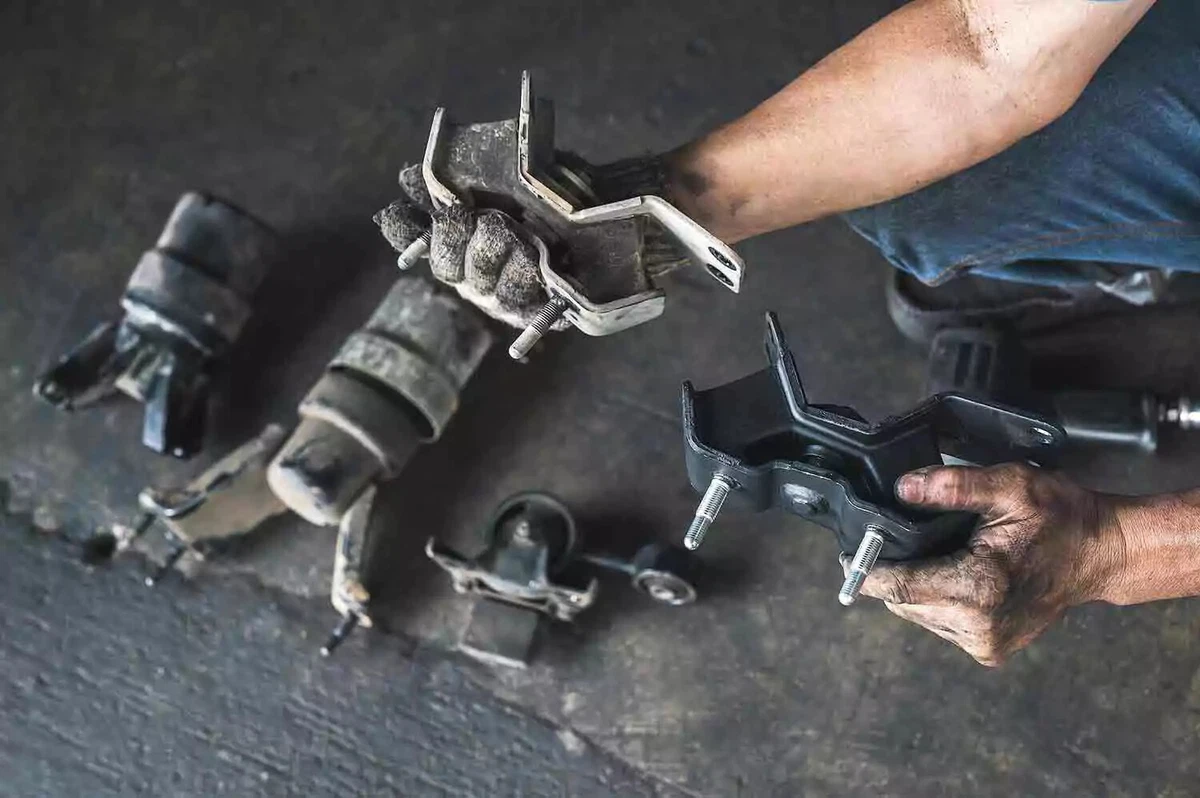
If your transmission mounts are worn out, it’s probably time to also replace the engine mounts.
When you replace your transmission mounts, conduct an in-depth inspection of the engine mounts. Transmission and engine mounts work in concert. Also, inspect the exhaust hardware, which is located near the transmission.
If you are driving a rear- or all-wheel-drive vehicle, it’s also a good time to look at the driveshaft and U-joints. These components are exposed to a lot of wear and deterioration if the transmission is misaligned. Also, consider replacing the transmission fluid.
Replacing transmission mounts is straightforward, not requiring a lot of tools. In most cases, you’ll need a jack, jack stands, socket wrenches, and a pry bar. However, some cars require specialized tools for mount removal based on the specific model. Check your repair manual before starting.
For transmission mounts and all related parts, use the eBay Parts Finder - opens in new window or tab. to find items that are compatible with your vehicle. Enter your car’s year, make, and model to see components that are guaranteed to fit.
About the author

Share your feedback
This article is meant to provide general guidance only. Automotive maintenance, repair, upgrade, and installation may depend on vehicle-specifics such as make and model. Always consult your owner's manual, repair guide for specific information for your particular vehicle and consider a licensed auto-care professional's help as well, particularly for advance repairs.
Shop project essentials
Recommended for you
Find answers and inspiration

Understanding the Purpose of Transmission Mounts
5 min read
Buying the Right Transmission Fluid and Filter
4 min read
How to Replace Transfer Case Fluid
5 min read
How to Calculate Gear Ratio

Why Everybody Hates a CVT Gearbox But You Shouldn't

Driveline Basics: What Is a Balanced Driveshaft?

How to Buy the Right Differential Fluid
4 min read
Car Fuses and Fuse Boxes: Types, Amps, Wiring and Circuits

An Intro to Replacing Clutch Fluid
5 min read
Deciding to Buy Original or Aftermarket Auto Parts: Quality and Selection

What to Check and What to Replace at 100,000 Miles
4 min read
Choosing the Best Clutch Master Cylinder
4 min read
Deciding to Buy Original or Aftermarket Auto Parts: The Basics

How to Replace Ball Joints
12 min read
Picking the Right Manual Transmission Fluid
4 min read
An Intro to Replacing Manual Transmission Fluid
4 min read
Buying the Right CV Axle
6 min read
How to Buy the Right Transmission Fluid
5 min read
7 Steps for Successful Springtime Car Prep

Taking Your Car to the Track: The Ultimate Guide

Squeaks, Clangs and Rattles: Car Noises That Need Attention

How To Check and Change Transmission Fluid

Online Videos Are a Game-Changer for DIY Car Repair

An Introduction to CV Axles and Joints
5 min read
Types of U-Joints and When They Go Bad
6 min read
How to Replace a Clutch Master Cylinder
11 min read
Hisses, Whines, and Rattles: What Your Car Is Trying to Tell You

How to Replace a Transmission Mount
7 min read
A Quick Guide to Your Clutch Master Cylinder
5 min read
How to Change Manual Transmission Fluid
4 min read
How to Replace Transmission Fluid and Filter
11 min read
Choosing the Right Clutch Fluid
6 min read
How to Buy and Build a Gen-1 Coyote Ford Mustang
7 min read
How to Remove Rusted Nuts and Bolts

All-Wheel Drive vs. 4-Wheel Drive: What’s the Difference?

Aftermarket Clutch Kits: What You Need to Know

Everything You Need to Know About Wheel Bearings
7 min read
All About Cat-Back Exhaust Systems
6 min read
Snowmobile Pre-Season Checklist

How to Replace a CV Axle
7 min read
What to Know About Changing Transmission Fluid
6 min read
How to Pick the Right “Parts Car”

What Your Differential Fluid Is Telling You
5 min read
How To Replace Differential Fluid
8 min read
Replacing Your Transmission Fluid and Filter
5 min read
Is It Time for a New Shifter?

How to Replace Clutch Fluid
6 min read
How to Replace a U-Joint
14 min read
Adding Aftermarket Cruise Control Is Easier Than You Think

The Double Clutch Automatic Transmission Explained

U-Joint Buying Guide
4 min read
Understanding Cruise Control Choices

Deciding to Buy Original or Aftermarket Auto Parts: The Online Transaction

How to Change Differential Fluid

How to Replace Wheel Bearings
7 min read
How to Buy the Right Replacement Wheel Bearings
6 min read
Winter Car Prep: 5 Essential Articles

What Is a Dual Overhead Camshaft (DOHC) Engine?

How to Change Automatic Transmission Fluid
6 min read
How to Replace an Idler Pulley
4 min read
Selecting the Right Transfer Case Fluid
4 min read
What You Need To Know About Transfer Case Fluid
4 min read