- When you press the brake pedal, it pushes a piston inside the brake master cylinder.
- The master cylinder then pushes hydraulic fluid through the lines.
- In the case of drum brakes, fluid - opens in new window or tab. goes to the wheel cylinders, which press the brake shoes against the brake drum.
- In the more common modern case of disc brakes, that fluid goes right to the brake calipers. The brake caliper then presses the brake pads - opens in new window or tab. down onto the brake rotor - opens in new window or tab., bringing you to a stop.
There are just a few parts inside a master cylinder: the piston, cup, o-rings, spring, and snap ring. Exterior components may include an external reservoir - opens in new window or tab., cap - opens in new window or tab., and a cap seal or gasket.
Over time, the seals and passages inside the brake master cylinder wear out. That leaves you with reduced brakes. Eventually, they fail completely. If you have ever experienced a catastrophic brake failure, you know that it’s more than harrowing.
What you’ll need
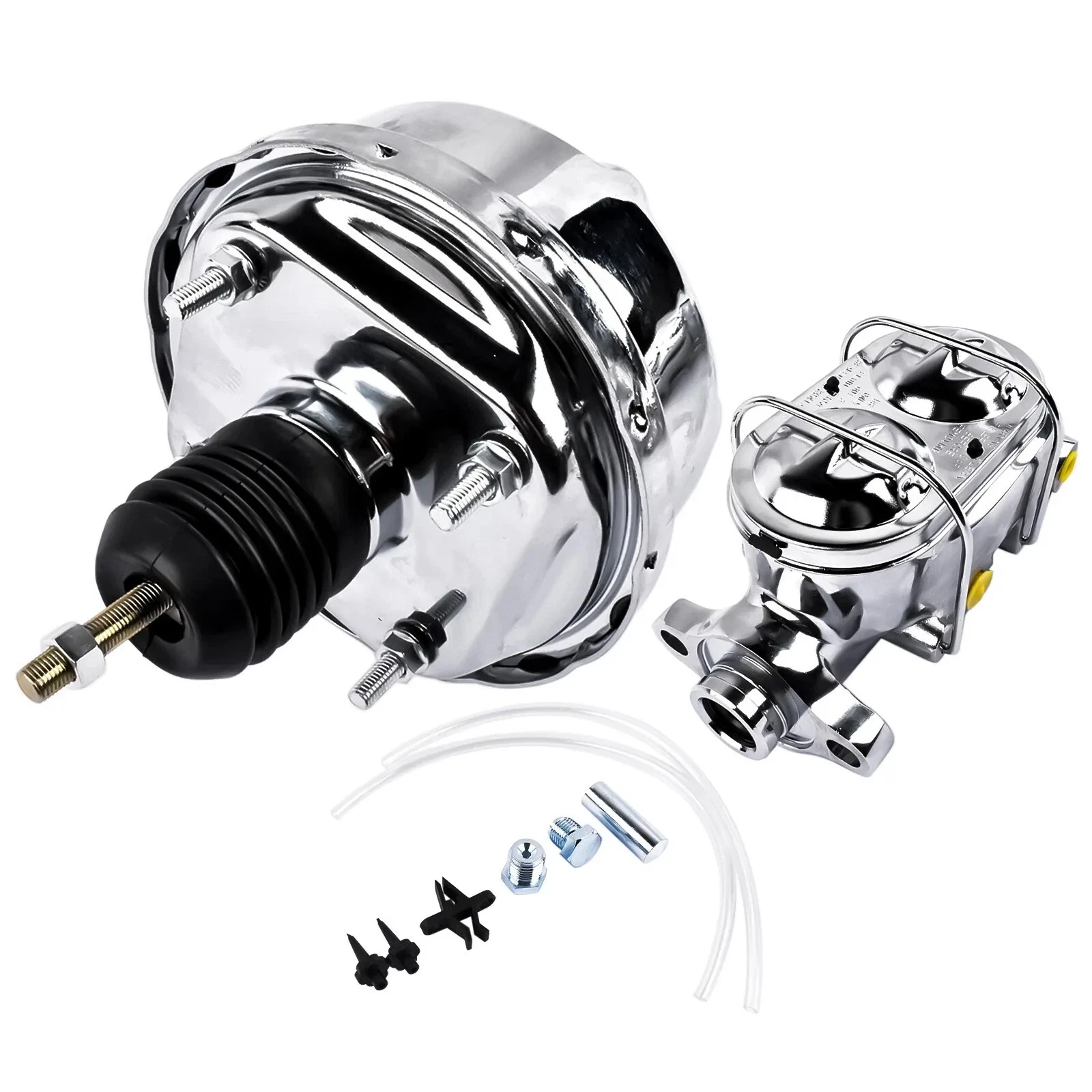


Types of Brake Master Cylinders
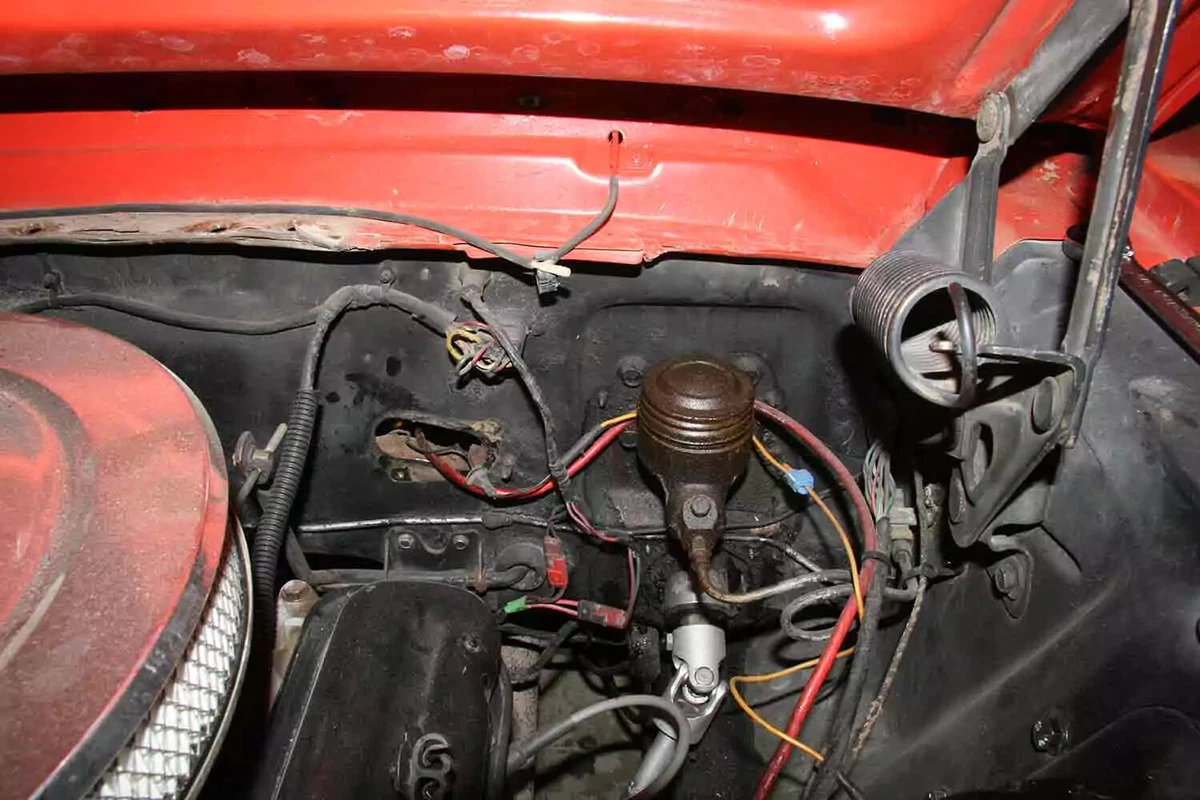
This is a “jam jar” single reservoir master cylinder; these are inherently dangerous. They leave you with no brakes if anything in the system fails.
For most owners, you should replace the master cylinder with the same stock-type unit that came on the car. But that’s not always true. While most modern vehicles have the best style of brake master cylinder, vehicles made in the early 1980s and older often need upgrades. That could be switching to an aluminum master cylinder and adding a power brake booster. If you are looking to upgrade your braking system, start with the master cylinder.
Single reservoir: Often referred to as a “jam jar” master, these have a single small reservoir for both the front and rear brakes. These are inherently dangerous units. We highly recommend replacing these with a dual-reservoir MC unless you are committed to strictly maintaining originality. The problem with these masters is that if one line or component fails, the entire braking system fails.

Here is an older cast iron tandem reservoir master cylinder. If one half of the brakes fail, the other half still works. Also shown is the telescoping cap gasket, which unfolds as the fluid is used up to prevent air from getting into the lines. This gets folded back up when you refill the fluid.
Dual reservoir: Also called tandem reservoir, this is what most vehicles since the early 1970s received from the factory. Early designs were cast iron with integral reservoirs. The modern design has been used since the late 1980s and features an aluminum master cylinder and plastic reservoir.
If one half of the brakes fail, the other half remains functional so you can safely stop the vehicle. This is still an emergency. Do not drive with any failed brake component.
Finding a Brake Master Cylinder That Fits
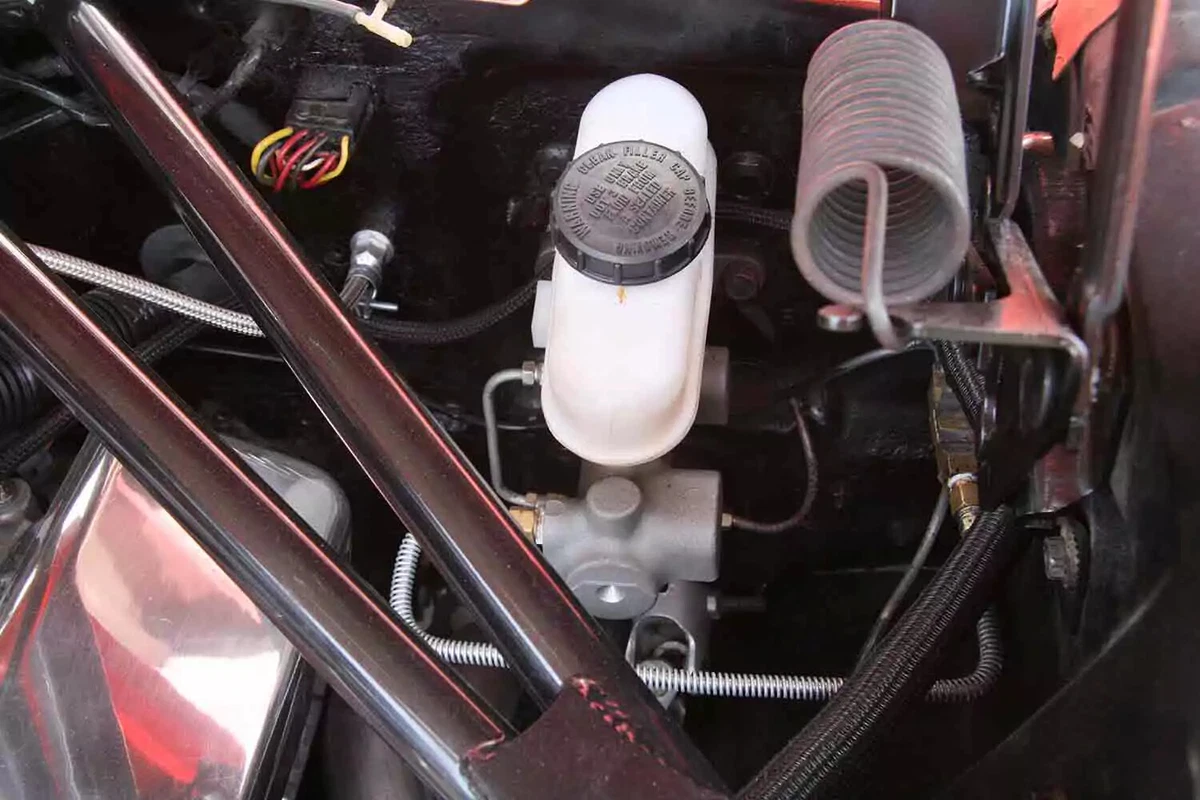
Most modern vehicles have an aluminum master with a plastic reservoir like this one. This is a retrofit that replaced the “jam jar.”
The master cylinder is vehicle-specific. When looking for a new brake master cylinder, go to the eBay Parts Finder - opens in new window or tab.. Enter your vehicle’s year, make, model, engine, and trim, then select a master cylinder that matches your vehicle. While some models have options that could change the brake master cylinder, most use the same unit across the board.
When it comes to the brake master cylinder, you want to buy a quality brand. Tolerances and overall build quality absolutely matter here. The best brands for a brake master cylinder, outside of the original equipment manufacturer (OEM) part, are ACDelco, Cardone, Centric, Dorman, Raybestos, and Wagner.
The Cost of a Brake Master Cylinder
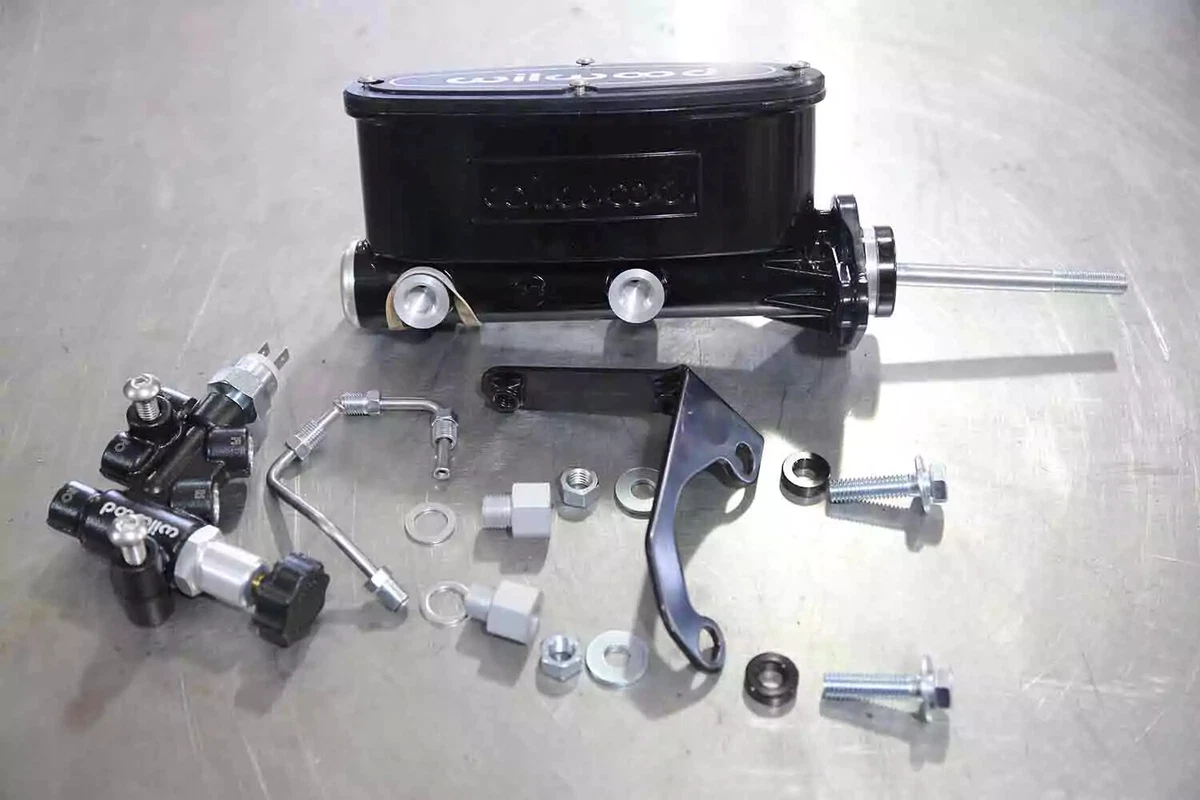
High-performance brakes are often swapped into older vehicles using aftermarket performance master cylinders.
On average, the typical brake master cylinder costs between $75 and $200. This varies depending on the year, make, and model of your vehicle.
Should you buy a rebuilt or remanufactured master cylinder?
There are three ways to go with a master cylinder: new, remanufactured, or rebuilt. Each depends on what you need and your skill level.
When choosing between remanufactured or new, the only difference is the reservoir and casting. In most cases, the casing is fine, especially aluminum castings. Older cast iron master cylinders are usually replaced with new aluminum castings when buying a replacement. That’s because the old castings are hard to find. When a master cylinder is rebuilt, the internals are replaced, so a remanufactured unit is as good as a new one in most cases.
Actually, most master cylinders can be easily rebuilt your garage with a basic kit. Unless the casting is damaged or severely pitted inside, the body of the unit can be salvaged with cleaning and new seals. This is not commonly done today because most people prefer to swap a new part onto their vehicle. If you like to recycle, a rebuild kit for almost every master cylinder costs less than $30.
Brake Master Cylinder Tools and Accessories
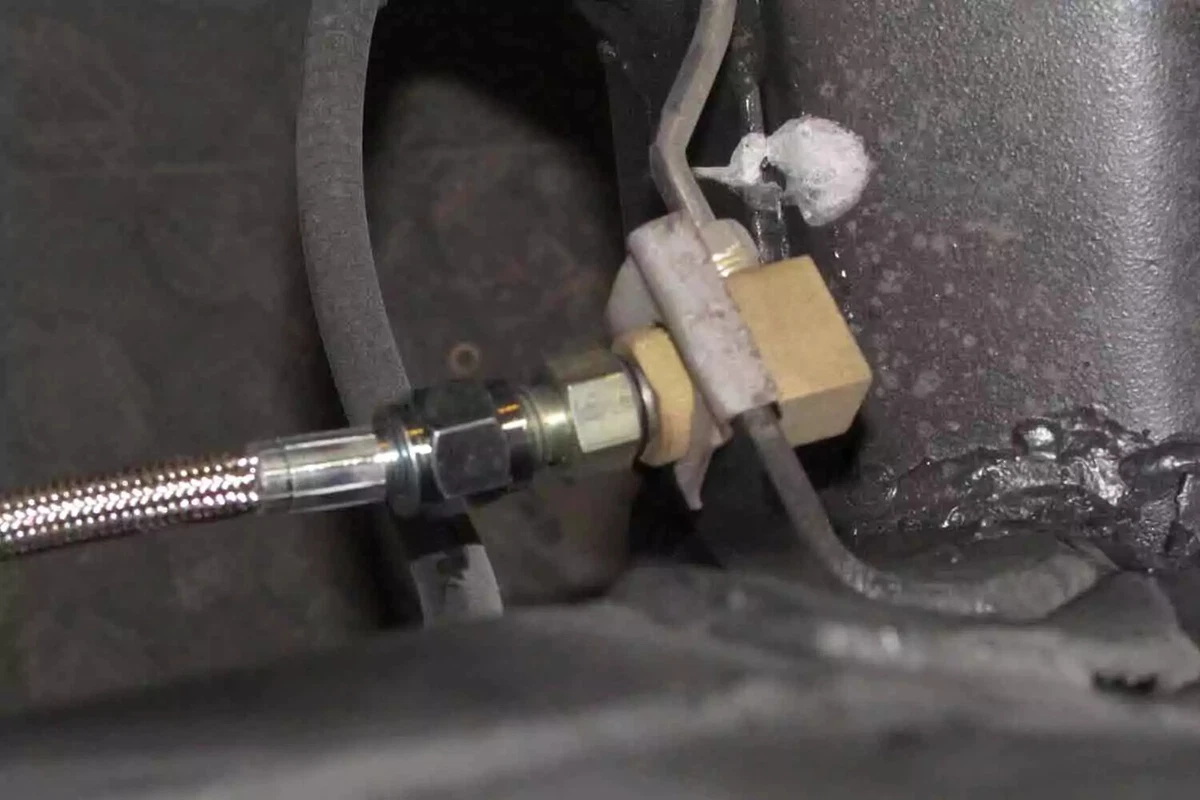
Don’t forget the fittings and lines. Leaks often start here.
There are a few tools that you should have when working on any brake system.
Line wrenches. These are closed-end wrenches with a notch cut out to slide over the hardline. These are used instead of open-end wrenches, which round off the hex on the fitting.
Flaring tool: If you damage a line or fitting - opens in new window or tab., the line must be repaired and re-flared, or it has to be replaced. Many times, you can’t just replace the line, so repair is the best option. All brake lines are double flared. The end is folded over onto itself, creating a sealing ring. The flaring tool you need for the job are easy to use and cost less than $100.
Bleeding kit: There are two types of bleeding kits: pressure and vacuum. Both are manually operated. Both work well to pull air out and fresh fluid into the brake lines with minimal effort.
What other items should you buy?
Brake fluid - opens in new window or tab. is vital, and you must use the right kind. There are three types of brake fluid: DOT 3, 4, and 5. DOT 3 and 4 fluids are essentially the same. There are slight differences in boiling points against water absorption rate. DOT 3 absorbs less water, and 4 has a higher boiling point.
DOT 5 brake fluid is silicone-based and is not used for automobiles. It is only used in motorcycles and off-road vehicles that are exposed to lots of water, as DOT 3 and 4 are hygroscopic, meaning they absorb moisture from the air. If you mix DOT 5 with 3 or 4, it destroys your braking system.
Most vehicles have power brakes, which typically means there’s a vacuum booster mounted directly behind the master cylinder. Heavy duty 3/4- and one-ton trucks and some high-performance vehicles use a high-pressure assist system called a hydro-boost, which is powered by the power steering pump. These are excellent upgrades for older vehicles.
About the author

Share your feedback
This article is meant to provide general guidance only. Automotive maintenance, repair, upgrade, and installation may depend on vehicle-specifics such as make and model. Always consult your owner's manual, repair guide for specific information for your particular vehicle and consider a licensed auto-care professional's help as well, particularly for advance repairs.
Shop project essentials
Recommended for you
Find answers and inspiration

Brake Booster Basics

How to Replace a Brake Caliper
7 min read
DIY: 2018-22 Honda Accord Brake Pads and Rotors
6 min read
An Introduction to Brake Master Cylinders
6 min read
What You Need to Know About Brake Fluid
What Are Common Brake Caliper Positions?

A Breakdown of Different Types of Braking Systems

What Are Jake Brakes and How Do You Use Them?

Choosing the Right Brake Fluid for Your Vehicle
5 min read
3 Types of Brake Pads To Consider
Understanding the Dual Master Cylinder Brake System

Deciding to Buy Original or Aftermarket Auto Parts: Quality and Selection

Drum Brakes vs. Disc Brakes: What’s the Difference?
What Are Your Brakes Trying to Tell You?
What Are Air Brakes and How Do They Work?

What to Check and What to Replace at 100,000 Miles
4 min read
A Guide to Brake Pedals
How To Remove Rust on Rotors

Enhance Your Car’s Performance with a Brake Upgrade

Brake Cleaners Versus Carburetor Cleaners

Brake Master Cylinder Replacement: Step-by-Step
10 min read
Deciding to Buy Original or Aftermarket Auto Parts: The Basics

Performance Mods for the Nissan Leaf

How to Buy the Right Brake Rotors
4 min read
Brake Rotor Comparison: Vented, Drilled or Slotted?

Dress Up Your Ride With Brake Bling

7 Common Mistakes When Bleeding Brakes

How to Replace Brake Fluid
10 min read
How to Diagnose and Repair Your Parking Brake

Taking Your Car to the Track: The Ultimate Guide

How to Repair Sticking Brake Calipers

Squeaks, Clangs and Rattles: Car Noises That Need Attention

Basic Car Maintenance Is Simpler Than You Think

Painted Brake Calipers Dress Up Any Ride

How to Find the Best Brake Pads for Your Vehicle
6 min read
How to Install a Brake Controller
Online Videos Are a Game-Changer for DIY Car Repair

Everything You Need to Know About Brake Rotors
5 min read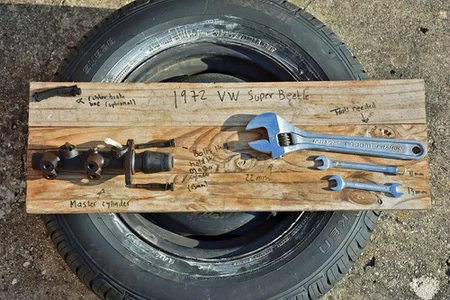
Easy Steps: How To Replace a Master Cylinder

The Ultimate Brake Dust Guide

Hisses, Whines, and Rattles: What Your Car Is Trying to Tell You

Anti-lock Braking (ABS): How Does It Work?

Maintaining Trailer Brakes for Towing Safety

Taking Vintage Cars Out of Storage: Planning for Spring

How to Replace a Brake Hose

How to Compress a Brake Caliper

How to Get Air Out of Brake Lines Without a Brake Bleeder
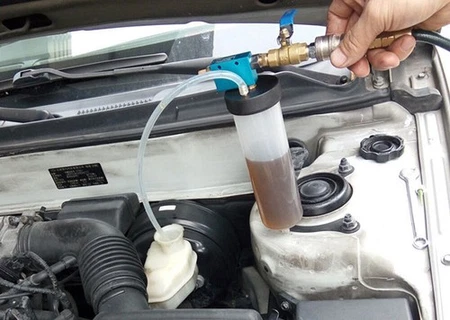
Bleeding Brakes: A Step-by-Step Guide
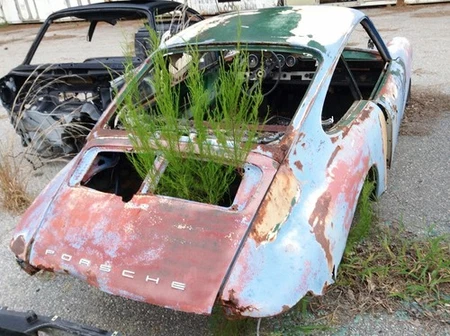
How to Pick the Right “Parts Car”

How to Customize Your Car for the Best Resale Value

Buying the Right Brake Calipers
7 min read
When to Replace Your Brake Fluid
5 min read
How To Buy New Old Stock (NOS) Parts on eBay

How to Replace Brake Rotors
7 min read
Tools You Need for Changing Brakes

A Beginner’s Guide to Hand Brakes

Converting From Drum to Disc Brakes: A Definitive Guide

How to Change Disc Brake Pads
8 min read
Add a Third Brake Light to Increase Safety

Brake-Rotor Problems: Machining Versus Replacing

Brake Pads 101
7 min read
How to Check Your Car’s Brake Fluid
A Quick Guide to Changing Your Brake Fluid

Deciding to Buy Original or Aftermarket Auto Parts: The Online Transaction
How to Improve Braking Performance

Why Do Brakes Lock Up?

Regularly Check These 4 Car Fluids

Brake Pad and Rotor Replacement Costs: What to Expect
8 min read
Brake Calipers 101
4 min read
Why Should You Grease Brake Pads and How to Do It