
As the auto industry continues to explore the full range of alternative fuels, it’s a good time to consider this restored Mercedes-Benz 170 VG W wood-gas limousine. The rare vehicle, which once transported people in war-torn Europe, resides at the Dr. Carl Benz Museum in Ladenburg, Germany.
The Mercedes-Benz 170 VG Limousine was produced from 1939 to 1943, during the throes of World War II. Due to fuel rationing and shortages, hundreds of thousands of motorized vehicles in Europe were converted to use firewood, coal, or other biomass feed stocks. Many of these conversions were done in small workshops.

Photos courtesy of Jan Metzinger.
Mounted on the iconic body of this sleek Mercedes is a cumbersome wood coal gas generator that can run on branch wood, coal, lignite, or peat. Almost any wood can be used. After the war, with gasoline once again readily available, the technology all but disappeared.
Thousands of these Mercedes-Benz 170 VG wood gas limousines were on the road in Germany during the war. This pristine beauty in the Carl Benz Museum is only one of two fully restored Mercedes-Benz 170 VG wood gas limousines left in the world.

How It Works
Wood gasification is a process in which organic material is converted into combustible monoxide-rich gas under tremendous heat. The wood, or coal, was loaded into a gas generator tank, or hopper. The hopper, which looks like a giant sheet metal water heater, is lit with a kerosene oil wick—and in this case was mounted on the back of the classic 170 VG body. Temperatures in this generator tank can reach 900 Celsius (approximately 1650 Fahrenheit).
The gas and smoke from the hopper was led underneath the vehicle though a pipe to a canister in the front of the vehicle where tar and particulates were filtered. From there, the filtered gasses were fed via the carburetor into the internal combustion engine. The gas was used to power the engine and the resulting heat was directed to the interior of the car—no doubt useful during winter.

The converted Mercedes W136 engine delivered 22 horses at 3,200 rpm, and the maximum speed of the world’s most beautiful potbelly stove was a brisk 50 miles per hour. Another quirk of this generator was that it could take the fuel from 15 minutes to one hour to get up to working temperature, so a little advanced planning was needed before heading out.

There is a small but enthusiastic community of wood gasification car enthusiasts around the world who still build these generators and convert everyday vehicles to burn organic materials like wood and coal. They claim that any handyman with an angle cutter and a welder can build one of these gasifiers. Worth a try?
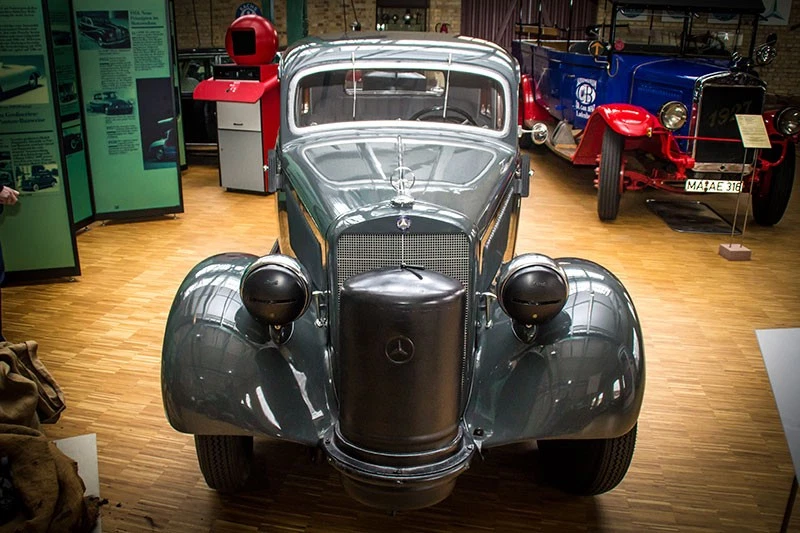
The museum that houses the wood-burning limo is on the site of the former Carl Benz and Sons factory building—used from 1908-1923 to produce automobiles under the “C. Benz Söhne” brand. The factory site is not far from the original workshop in Mannheim, where Benz invented the first functioning two-stroke engine in 1879, and the first patented automobile in 1886.
About the author

Share your feedback
This article is meant to provide general guidance only. Automotive maintenance, repair, upgrade, and installation may depend on vehicle-specifics such as make and model. Always consult your owner's manual, repair guide for specific information for your particular vehicle and consider a licensed auto-care professional's help as well, particularly for advance repairs.