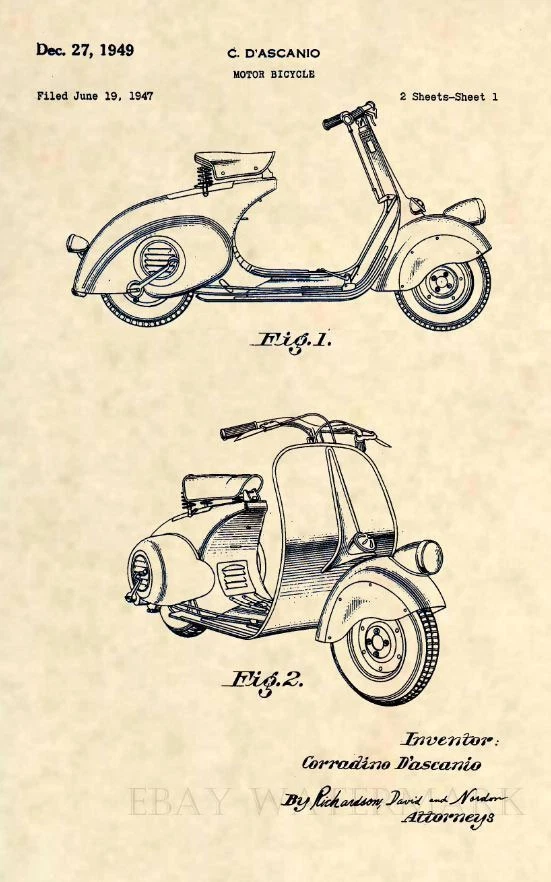
Art print of 1949 Vespa US Patent
Scooters are the most practical transportation in global cities such as Taiwan, Bangalore, and Beijing—where populations are dense, streets are narrow, and petroleum resources run thin. That ultra-practicality, when combined with hipster cool, makes scooters a vehicle to consider for American city-dwellers as well.
What differentiates a scooter from a motorcycle? The step-through design makes it easier for riders to travel in street clothes. That’s in keeping with Enrico Piaggio’s original design shielding owners from the dirt they would encounter riding a traditional chain-driven motorcycle.
Corradino D’Ascanio, a retired aeronautical designer who produced the first Vespa prototype at Piaggio’s rebuilt production facility in Pontedera, Italy in 1947 inspired the name. Piaggio thought the design that was wide through the central part where the rider sat and narrow at the waist looked like a wasp. “Vespa” - opens in new window or tab. is Italian for wasp.
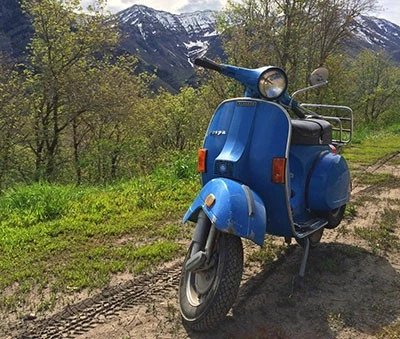
Vintage 1980 Vespa for sale on eBay.
Piaggio’s idea caught on like wildfire in post-War Europe. Replacing the original 98cc model with a more powerful 125cc Vespa the following year, Piaggio sold almost 20,000 of his scooters by the end of 1949. Plants in Germany, Spain, Great Britain, and France followed, with production reaching the one million mark by 1956. By 1965, when Piaggio died, the plant in Italy had produced more than 3.3 million Vespas.
21st
Century Scooters
Vespa’s current models—the Primavera, Spring, and GTS—continue to sport the brand’s iconic Italian design, albeit with modern, fuel-injected engines, electric starters, and automatic transmissions. The GTS, Vespa’s most powerful model, comes with a 300cc engine capable of 80 mile per hour top speeds, making it suitable for highway travel in most areas.
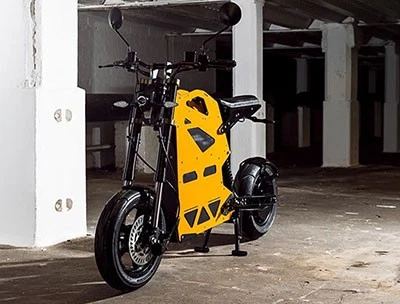
The Raker has a top speed of about 30 miles per hour and a range of about 50 miles. Owners can use a 3D printer to make some of its plastic components.
Honda’s - opens in new window or tab. focus is more on ride and handling. The sleek PXC150 features a hydraulic front fork and twin shock rear end, giving the scooter enough suspension travel for uneven road surfaces. The more powerful Honda Forza adds front and rear disc brakes with optional ABS and an additional inch of front and rear suspension travel. Honda’s water-cooled engines require less maintenance than air-cooled units on competitive models.
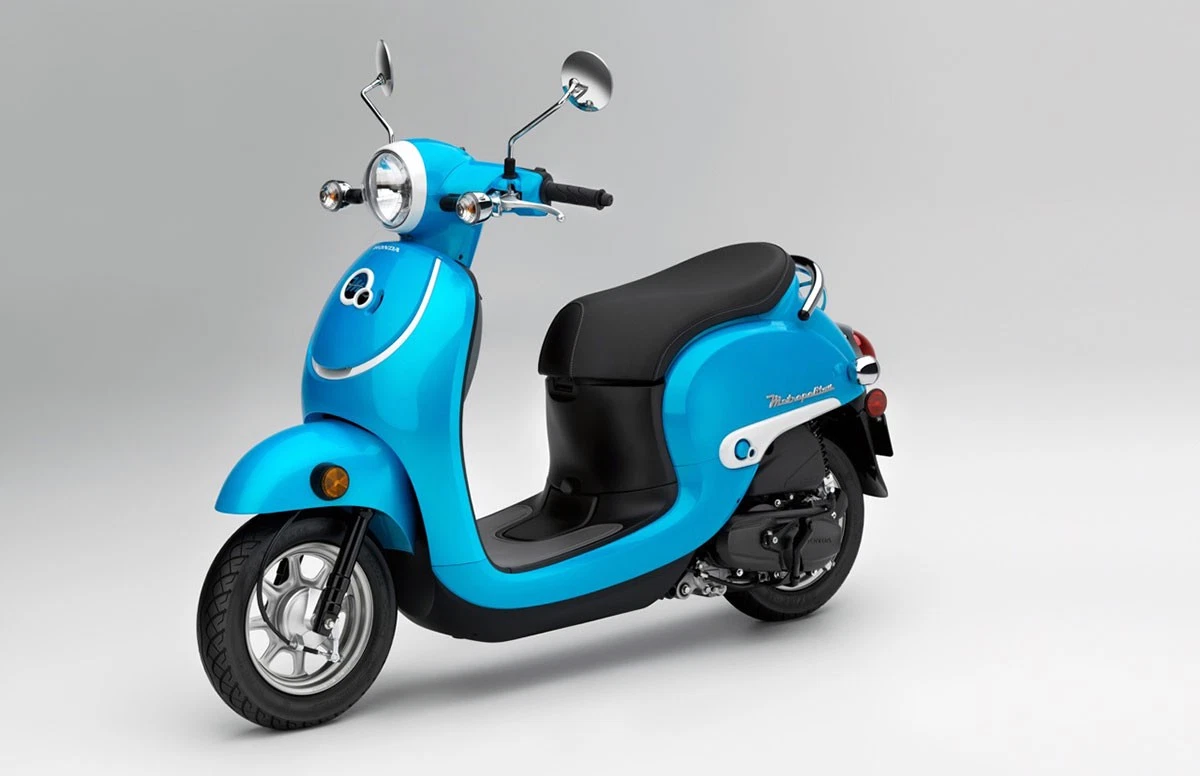
The Honda Metropolitan pictured at the top of this page exemplifies why scooters have such widespread appeal. Equipped with a 50cc four-stroke engine rated at 117 mpg, it’s as thrifty as it is stylish.
In China, electric bicycles and motorized scooters outnumber cars by more than two-to-one. While some electric scooters are no more than alternative fuel versions of their gasoline counterparts, emerging models—such as the new Raker - opens in new window or tab., Watseka XP Cargo - opens in new window or tab. electric bicycle, and one-wheel Ryno - opens in new window or tab.—are breaking new ground.
Scooter design adapts to each new era. They provide our overcrowded, resource-challenged planet with new possibilities for personal mobility—while still imbuing a sense of urban gearhead cool. That’s why we love them.
About the author

Share your feedback
This article is meant to provide general guidance only. Automotive maintenance, repair, upgrade, and installation may depend on vehicle-specifics such as make and model. Always consult your owner's manual, repair guide for specific information for your particular vehicle and consider a licensed auto-care professional's help as well, particularly for advance repairs.