Wave Goodbye to These Iconic Cars in 2023
Sports Cars
News
Classics
European
Asian
American
Even if a car has graced a hundred magazine covers, the time comes when it isn’t working in the marketplace. Unfortunately, that’s the case for these illustrious cars, which automakers will discontinue in 2023.
Changes like this are inevitable, and the industry-wide switch to electric power hastened the disappearance of internal combustion supercars. Also, crossovers are nailing the coffin shut for many sedans.
Here’s a rundown of cars to be discontinued in 2023, starting with the dream machines.
Acura NSX

The first-gen Acura NSX proved that supercars could be affordable, practical, and non-temperamental.
The last Acura NSX - opens in new window or tab. two-seater will run off the assembly line at Honda’s facility in Marysville, Ohio - opens in new window or tab., in a matter of days. So let’s shed a tear for a true innovator, a model that proved that a supercar could also be relatively affordable and a daily driver. In its late incarnation as the Type S hybrid, the NSX sports a twin-turbo V-6 and three electric motors to produce 600 horsepower and 2.9-second zero-to-60 times.
Production of the NSX dates to 1990, when the svelte two-seater wowed just about everyone with its $57,993 list price. Its all-aluminum three-liter V-6 with variable valve timing produced 270 horsepower and a 5.7-second zero-to-62 mph figure. It was a halo car for Acura but not exactly a bestseller. The sales trend was straight down after 1991, its best year. Acura sold 58 in 2006 and two in 2007.
The brave second generation upped the performance considerably in 2016, but raves did not translate to action in the showrooms. US sales were just 124 in 2021, and the Type S was limited to 300 units for the US. The price climbed to $169,500. Don’t despair, however, because the NSX could be back as a pure electric vehicle.
Ford GT

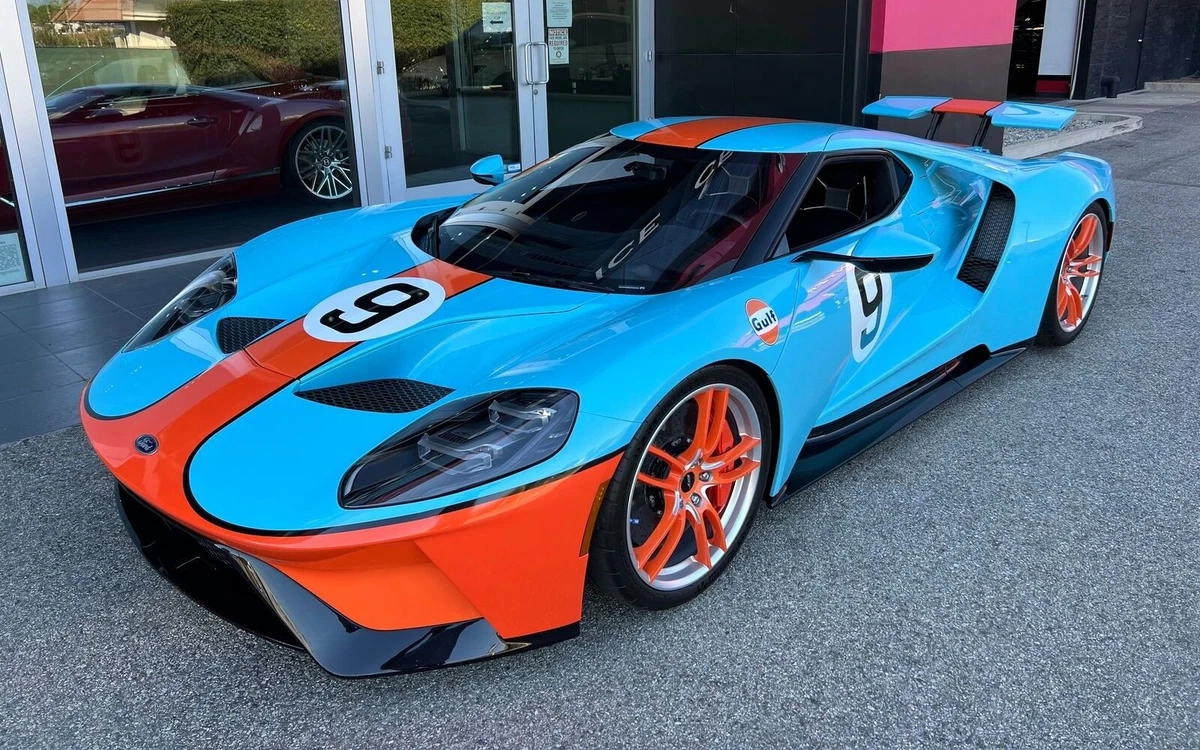
The Ford GT was an icon, but Ford vs. Ferrari is disappearing in the taillights.
The GT has always been about remembering that thrilling 1-2-3 Ford GT 40 victory over Ferrari at the Le Mans 24 Hours in 1966.
The civilian Ford GT - opens in new window or tab., powered by a supercharged 5.4-liter V-8 and produced for the 2005 and 2006 model years, attracted 4,038 buyers and generated oceans of nostalgic publicity for Ford. Owners didn’t drive these rough and ready chariots all that often, but they made great garage ornaments. The stats were there: 205 mph top speed and zero-to-60 in 3.8 seconds.
The first-gen cars are hugely valuable collectibles now. The second generation (2017-2022) also got a warm welcome with a sleek new body and a twin-turbo Ford EcoBoost V-6 producing 647 horsepower. This iteration of the GT is also history after 2022, when it goes out with a bang in the form of the $500,000 LM Edition.
Lamborghini Aventador
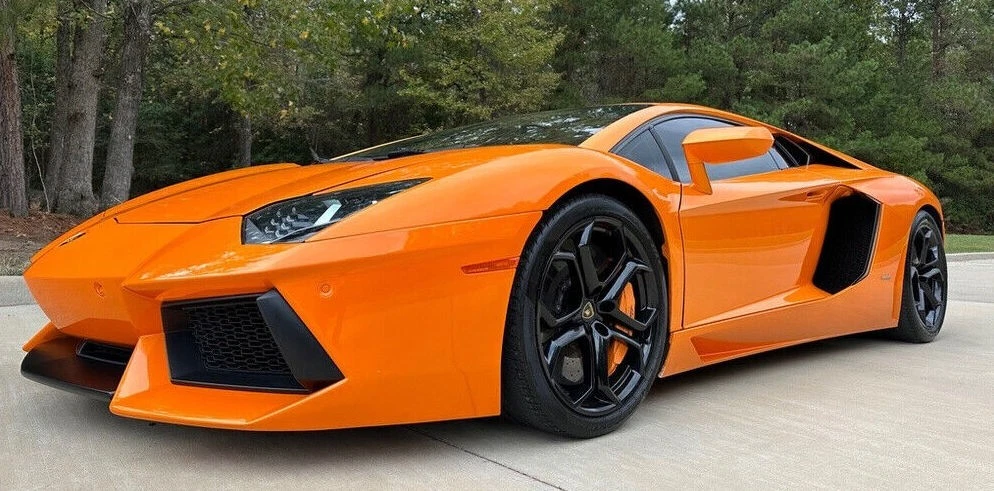
Lamborghini is killing the Aventador and will only produce hybrid cars in the future.
The storied Italian automaker produces aspirational supercars that have set teenage hearts throbbing since the 1970s. But now it’s time for a transition. So Automobili Lamborghini sends off the Aventador with one final model—the LP 780-4 Ultimate Roadster, marking the end of an era. It’s the last pure naturally-aspirated V-12 Lamborghini to be produced in Sant’Agata Bolognese before the company enters full hybridization in 2024.
The Lamborghini Aventador - opens in new window or tab., succeeding the Murcielago, has been a powerhouse in the company’s lineup since 2011. And like other supercars, it’s going out with a bang—the 769-horsepower Ultimate can reach 62 mph in 2.9 seconds. But the age of powering Lamborghinis solely with huge V-12s is over. The company says that the cylinders might remain, but the next-generation cars from the Raging Bull will have some form of electrical assistance.
Lamborghini CEO Stephan Winkelmann said last year:
We are challenged to make cars that are better than today, and there are huge opportunities with electrification.
Infiniti Q60

Will Infiniti release a revised Q60 based on the new Nissan Z?
In a different time, the handsome Infiniti Q60 - opens in new window or tab.—a luxury/performance coupe shown as a concept in Detroit circa 2015 and produced for 2017—would have had a longer shelf life. Given the existing headwinds, it will exit the market at the end of the 2022 model year. (Some leftover Q60s will still be available in 2023.)
Nissan’s upscale division did its best. To add excitement, it introduced the Q60 Red Sport 400 last year with a 400-horsepower twin-turbo three-liter V-6 under the hood. That was a 100-horsepower increase over the base car. But there was still no manual transmission—a feature that comes on the new Nissan Z car.
So the company was faced with a slow-selling Infiniti model that was competing with its high-stakes Z launch. The shift to crossovers leaves the market for performance coupes crowded and small. We can only hope that Infiniti's choice to discontinue the Q60 for 2023 is a hiccup.
Hyundai Veloster

The Veloster was always a quirky entry, with its asymmetrical door arrangement. It's not surprising to see Hyundai discontinue the car for 2023.
What was wrong with the Hyundai Veloster - opens in new window or tab., which won’t make it into 2023? Not much, but it was a hatchback in a market that overwhelmingly favors crossovers. The standard Veloster got the ax in 2021, but the “N” model briefly soldiered on.
The Veloster, introduced in 2011, was always a quirky purchase consideration and an attempt to grab a slice of the youth market. The single driver’s door was conventional, but on the passenger side, there was a minivan setup with two smaller portals. The initial $17,800 price tag was attractive. The four produced 138 horsepower, but the ante went up in 2012 with a 201-horsepower turbo version.
The Veloster to buy is the “N,” which was introduced in 2019 and will have a short shelf life. It’s got a 275-horsepower turbo four, a six-speed manual (or eight-speed dual-clutch automatic), and goes from zero to 62 in 5.6 seconds—wow! But the electric IONIQ 5 GT does that same dash in 5.2 seconds, and that’s where Hyundai wants you to go.
About the author

Share your feedback
This article is meant to provide general guidance only. Automotive maintenance, repair, upgrade, and installation may depend on vehicle-specifics such as make and model. Always consult your owner's manual, repair guide for specific information for your particular vehicle and consider a licensed auto-care professional's help as well, particularly for advance repairs.