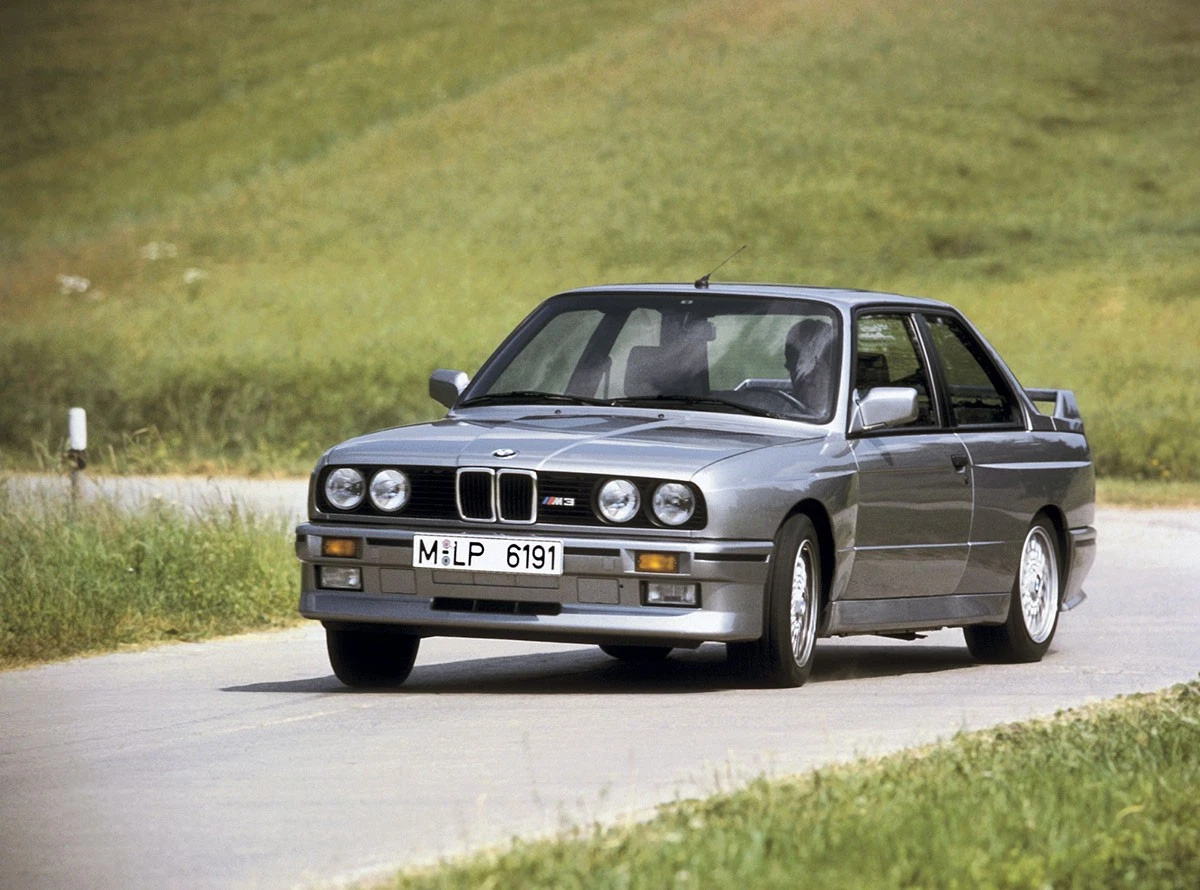
The phrase “the ultimate driving machine” has been printed at the bottom of countless BMW ads since the 1970s. BMW typically designs its cars with a focus on performance and driving dynamics, but few of the company’s models do a better job of exemplifying the slogan than the original M3.
Based on the second-generation 3 Series, the first M3 was presented to the public at the 1985 edition of the Frankfurt Motor Show. At the time, BMW didn’t know how the general public would react to a 3-Series on steroids. The project was therefore both costly and risky, but the Munich-based car maker had to build and sell at least 5,000 examples in order to get the 3-Series homologated in the World Touring Car Championship.
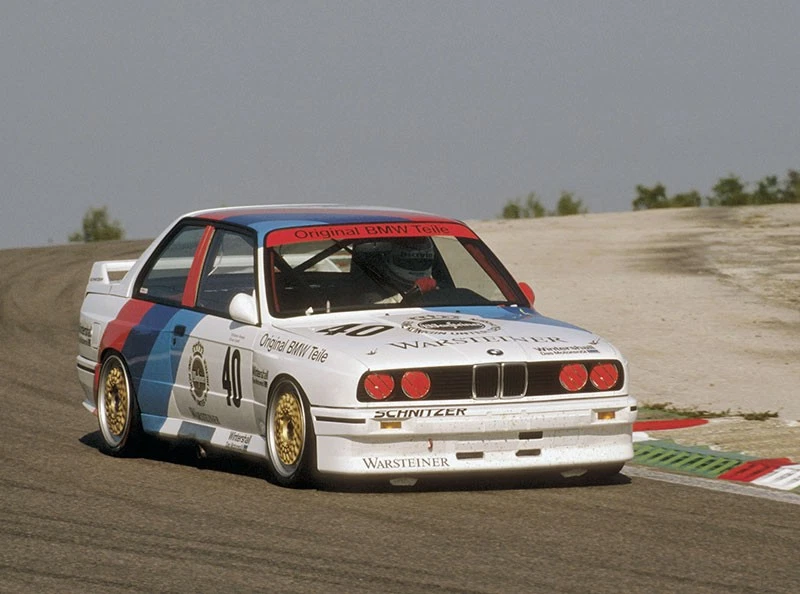
Designed to hit the track, the BMW M3 was one of the most successful touring cars in the 1980s.
BMW quickly ruled out using a six-cylinder engine for weight and balance reasons, and turbos weren’t allowed by Group A regulations. The M3 was consequently powered by a naturally-aspirated 2.3-liter four-cylinder engine massaged by BMW’s Motorsport division to develop 200 horsepower at 6,750 rpm—about 30 more than the 325i, the next model down—and 177 lb-ft. of torque at 4,750 rpm. Bolted to a five-speed manual transmission, the four-cylinder sent the 2,645-pound M3 from zero to 62 mph in 6.7 seconds and on to a top speed of nearly 150 mph.
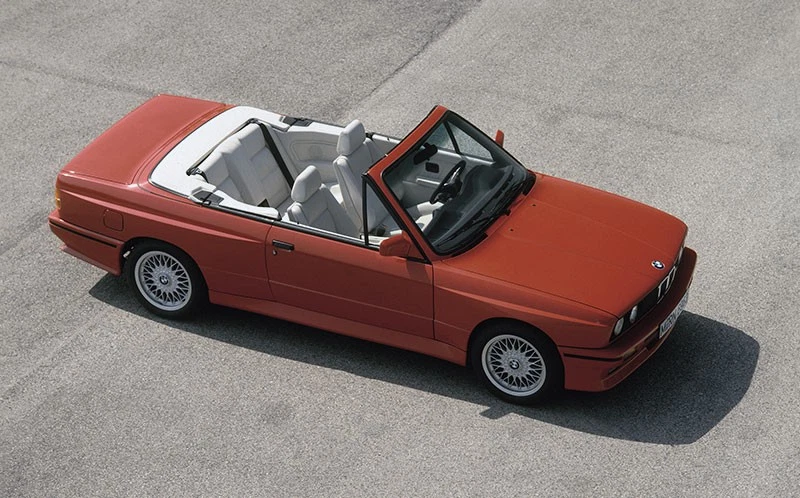
BMW built about 800 examples of the M3 convertible, but the ragtop was never sold in the United States.
Visually, the M3 stood out from the regular 3-Series thanks to a full body kit that included a deeper front bumper, famously flared fenders, side skirts, and a trunk-mounted wing that reduced lift on the rear axle by two-thirds. The cabin was spruced up with sports seats for the front passengers and a long list of standard equipment.
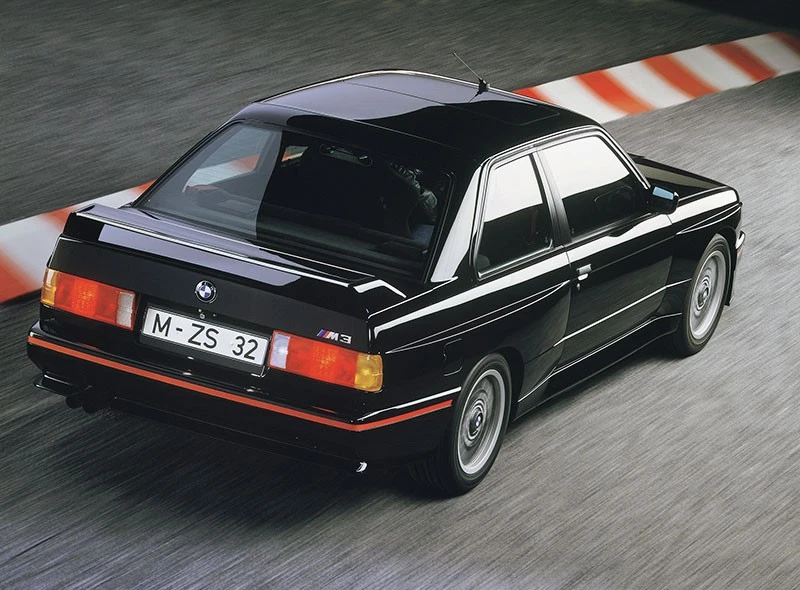
Both bumpers and the trunk lid were made out of lightweight plastic to help the 3-Series shed as much weight as possible in its transition into a M3.
The M3 was an instant success on the track and in showrooms all around the globe. Italian pilot Roberto Ravaglia won the 1987 World Touring Car Championship behind the wheel of a 300-horsepower race-spec M3, and the street-legal model was so popular that many German enthusiasts who had reserved the car ended up selling their reservation to buyers who had missed out.
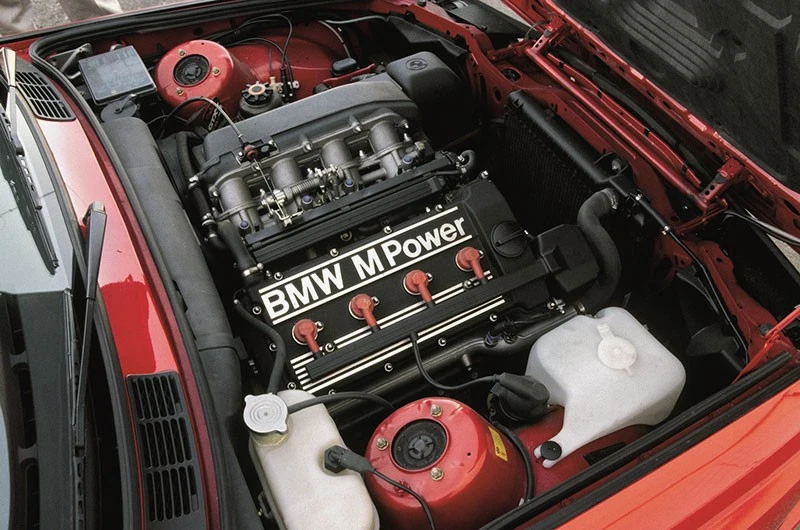
The M3’s 2.3-liter four-cylinder offered 238 horsepower in its most powerful configuration.
BMW made several improvements to the M3 over the course of its production run. Notably, in 1987 the M3 became the first BMW available with an electronic suspension. A knob on the center console allowed the driver to alternate between three settings called Sport, Comfort, and Normal. BMW introduced the M3 Evo in 1988 with a bigger spoiler and a 220-horsepower version of the four-banger, and 600 cars Sport Evolution-badged cars were even quicker thanks to a 238-horsepower engine.
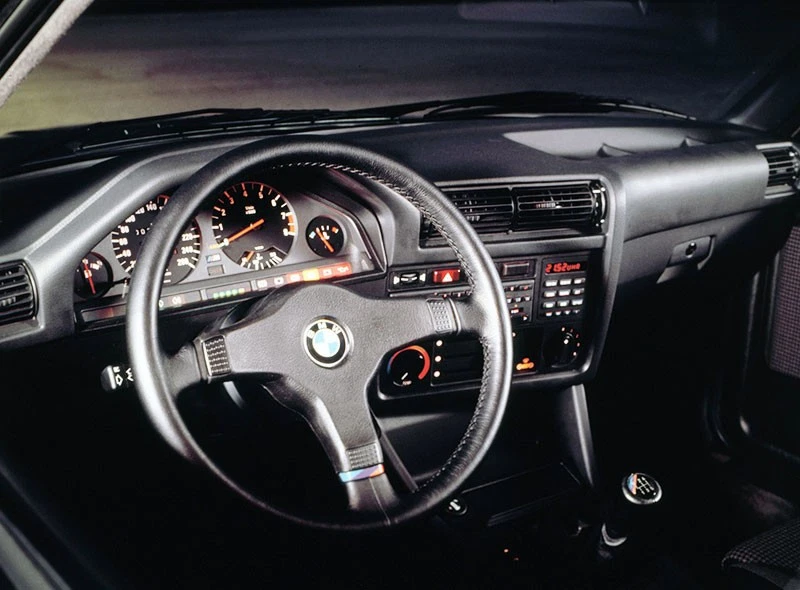
Unsurprisingly, the M3 was markedly more expensive than a regular 3-Series. A long list of standard features helped justify the price hike.
BMW sold precisely 17,970 examples of the first-generation M3 by the time production ended in late 1992, a figure that far exceeded executives’ initial expectations. About 5,200 examples were sold in the United States. All of them were coupes because BMW decided not to offer the M3 convertible on our side of the pond.
About the author

Share your feedback
This article is meant to provide general guidance only. Automotive maintenance, repair, upgrade, and installation may depend on vehicle-specifics such as make and model. Always consult your owner's manual, repair guide for specific information for your particular vehicle and consider a licensed auto-care professional's help as well, particularly for advance repairs.