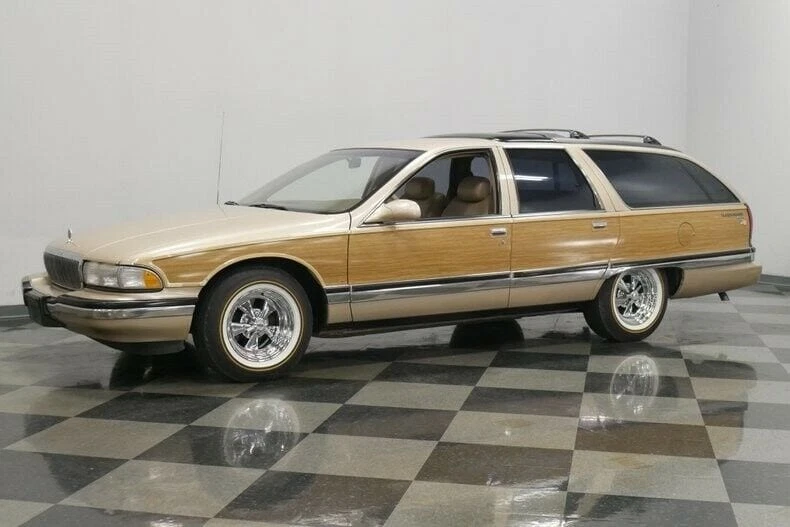
Classic Roadmaster station wagons are flat-out fabulous—for those of us who worship the wood.
With V-8-power, rear-wheel-drive, and an optional rear-facing third-row seat, the 1991-1996 Buick Roadmaster Estate Wagon stands tall as the last traditional American Woodie Wagon. It’s a compelling combo: the ability to carry a 4x8-foot sheet of plywood (or a family of eight) and run an honest 14- second quarter mile.
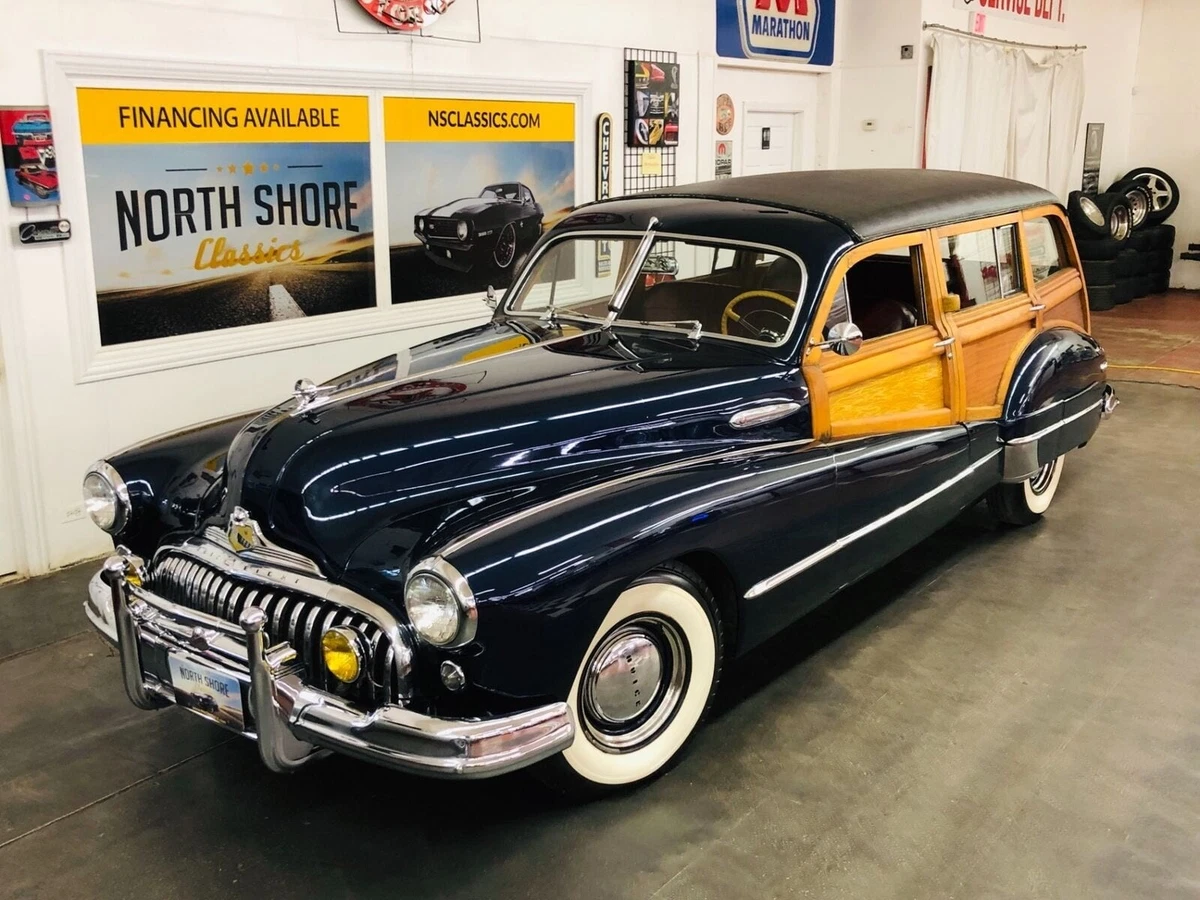
If you yearn for a Woodie with real wood, this handsome 1947 Roadmaster Estate Wagon fits the bill.
The Buick Roadmaster enjoyed a lengthy run between the years of 1936 and 1958. The crown jewels are the sleek sedans and handsome Roadmaster wagons of the 1950s, created by legendary designer Harley Earl. But the nameplate’s Second Act came after a decades-long hiatus, sharing its platform with the Chevrolet Caprice and Oldsmobile Vista Cruiser wagons. To me, it's those slab-sided 1991 to 1996 model years that are pure automotive poetry.
If those station wagons also float your boat, then consider this advice from one Roadmaster fanatic to another.
Tip #1: Focus on the V-8s from 1994 to 1996
The Roadmaster’s V-8 engine is core to the wagon’s appeal. The 260-horsepower LT1 offered in the 1994-1996 model years offer the most coveted powerplant.
Yep, that’s the Buick wagon with the “Corvette motor,” albeit detuned to produce less horsepower with iron heads and a two-bolt main. If you’re looking to buy a Roadmaster wagon as a long-term investment, these are the three model years you should consider.
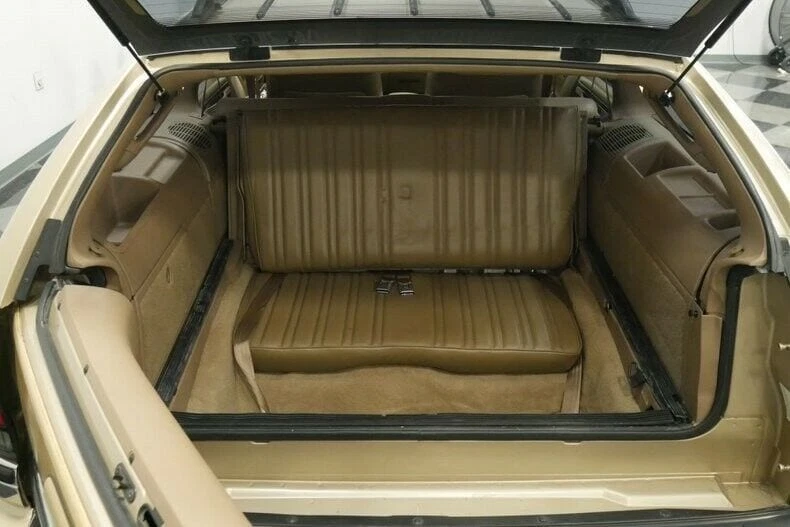
There's more seating all the way in the back.
Roughly 225,000 1991-1996 Roadmasters rolled off the line. Production peaked in 1992 at slightly over 85,000 vehicles. Sales slid to about 23,000 in the final year of production, the only model year to include an on-board diagnostic (OBD) port.
Bonus advice: The 1991 Roadmaster station wagon debuted with a 5.0-liter V8 producing 170 horsepower. Buick switched to a 180-HP 5.7-liter engine in 1992. Don’t overlook these models.
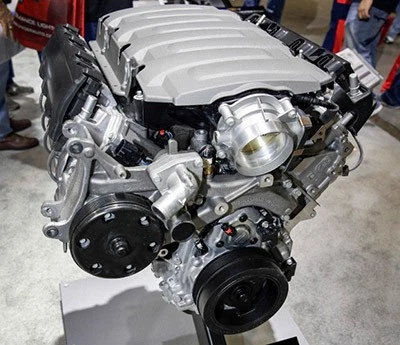
Bolt-in Ponies! Chevrolet's Gen 5 LT1 crate engine cranks out 460 horsepower and 465 pound-feet of torque. (Photo: Chevrolet.)
Tip #2: Roadmaster Restomods Are Very Doable
There’s nothing exotic or excessively expensive about the Roadie. Most parts are plentiful and affordable. Modifying it isn’t a sin.
An upgrade to the decades-old stock suspension system is often the best place to start. You’ll find Roadmaster suspension kits and shock absorbers - opens in new window or tab. from a wide range of manufacturers, including AC Delco, Bilstein, Gabriel, Monroe, KYB, and Sachs. Tightening up a saggy ride is relatively simple.
You can squeak out zero-to-60 times in the seven to eight-second range in well-maintained stock LT1 Roadmaster wagon. But that’s considered slow by today’s standards.
If you want to build a sleeper, buy cheaper. Skip the stock LT1 1994-1996 models. Instead, find an earlier roller, drop in a more modern and powerful Chevrolet crate engine - opens in new window or tab., and hook up a free-flowing aftermarket exhaust system. With every rumble and flutter, the kids will demand, “C’mon Mom, launch it!”
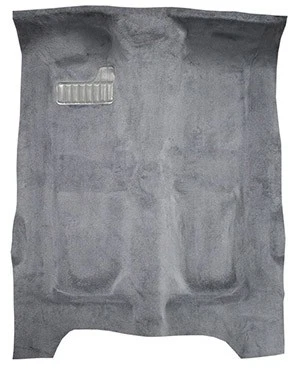
Aftermarket Roadmaster carpet sets are available in a wide range of colors. Choosing the mass backing option adds insulation and reduces road noise.
Tip #3: New Carpeting for the Roadmaster
The Roadmaster is a living room on wheels. Its bench seats rival sofas. But take note: They can be quite disgusting after 100,000 miles of family travels.
While refreshing the interior with new carpeting - opens in new window or tab. is a worthwhile weekend chore, swapping out the upholstery is a chore best left to the pros.
Tip #4: Skip the Patina
A well-worn patina - opens in new window or tab. might look cool on a rat rod. But it does no favors for the Roadmaster, and an onslaught of UV rays takes its toll on handsome faux-woodgrain flanks.
Although NOS - opens in new window or tab. GM woodgrain vinyl kits can be elusive to find, the base material is not unobtanium. When glory fades, hope remains. If your Roadmaster begs for an exterior refresh, you’ll likely opt for a roll of Burma Teak 3M Di-Noc vinyl - opens in new window or tab. as many do.
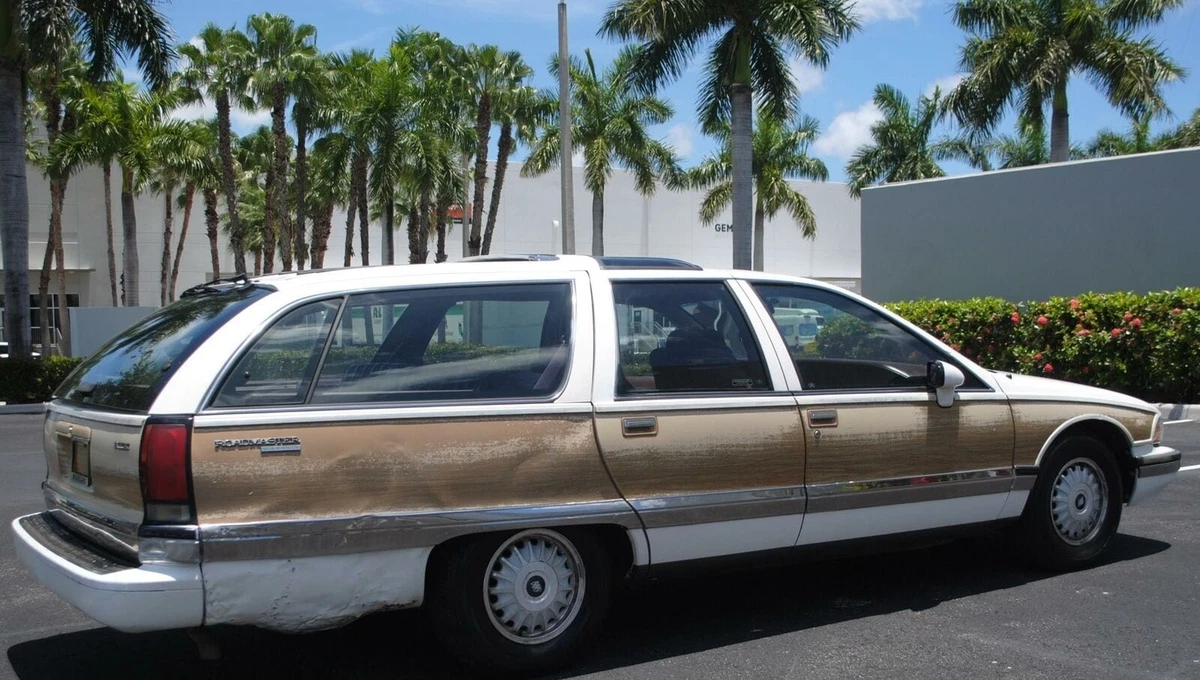
After 211,549 miles and 27 years have taken their toll on this 1993 Roadmaster Estate Wagon’s Burma Teak woodgrain panels.
Tip #5: Update the Roadie to a 21st Century Head Unit
Here’s money that will be well-spent: Upgrade the Buick Roadmaster to an audio system with a state-of-the-art double-din touchscreen head unit - opens in new window or tab. that supports Apple CarPlay or Android Auto. While you’re at it, a new set of speakers are in order.
A new head unit - opens in new window or tab. also makes the Roadmaster more practical. The ‘90s Buick wagon’s girth makes for a roomy interior, but it’s not easy to park this land yacht. Plugging a multi-camera system into that new head unit will make life easier when you’re on a run to the big box store.
Tip #6: Hit the Road!
There’s a lot to love about the Roadmaster Estate Wagon, but you’ve got to love it for what it is: a gigantic whale of car, capable of hauling eight in comfort and style. It’s a family cruiser of epic proportions. With an interior so capacious, it’s also found a second life with many contractors, from house painters to carpenters.
But the raison d’etre for the Roadmaster is the family road trip with loads of gear. With the factory towing package, the 1994-1996 Roadmaster can handle 5,000 pounds. With a few tweaks, you can up its capacity to 7,000 pounds.
So load up the kids, strap on a couple of dirt bikes, Jet Skis or an Airstream trailer - opens in new window or tab., and hit the road. What are you waiting for?
About the author

Share your feedback
This article is meant to provide general guidance only. Automotive maintenance, repair, upgrade, and installation may depend on vehicle-specifics such as make and model. Always consult your owner's manual, repair guide for specific information for your particular vehicle and consider a licensed auto-care professional's help as well, particularly for advance repairs.