Rhode Island Museum Celebrates Early Breakthroughs in Automotive Engineering
Culture
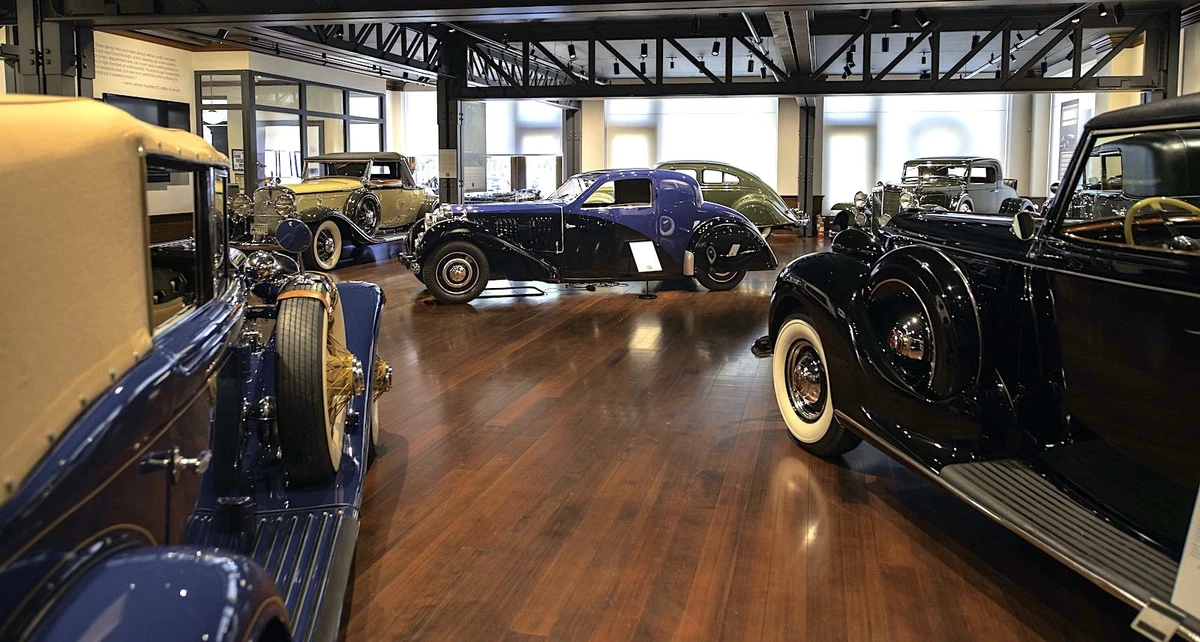
The 50 years between the launch of the horseless carriage and World War II was a period of incredible innovation and advancement. The industry went from cars with less than a single horsepower to dual-overhead-cam six-cylinder engines in vehicles reaching 100 mph or more.
Donald Osborne, CEO of the Audrain Automobile Museum, curated the extraordinary new show, “Early Landmarks in Automotive Engineering - opens in new window or tab..” The exhibit runs at the museum in downtown Newport, Rhode Island, through March 5. The ground floor of the historic building is crammed with historically significant automobiles.
Here are highlights from the exhibit, with expert commentary from its curator.
1886 Benz Patent Motorwagen Replica
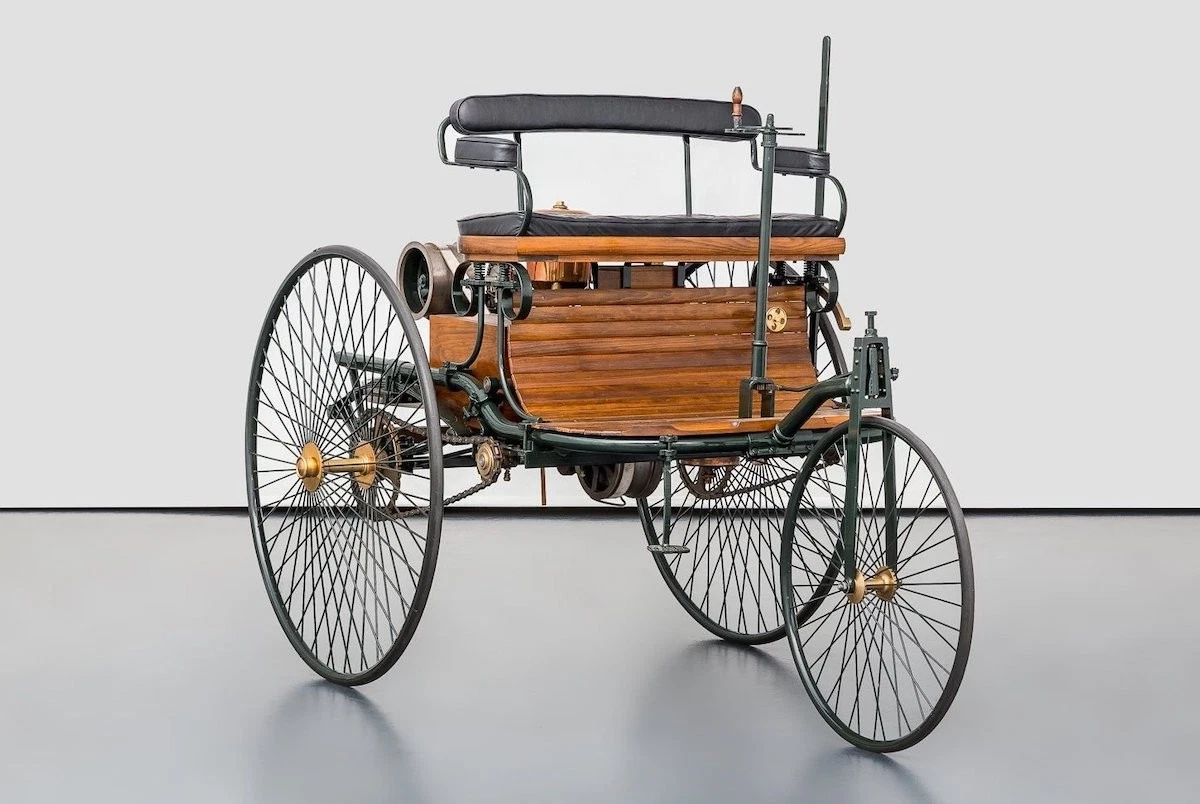
Karl Benz’s wife, Bertha made a legendary 130-mile run in the 1886 Benz Patent Motorwagen. (All photos from Audrain Automobile Museum)
This model was the world’s first production automobile. Twenty-five were built between 1886 and 1893. The Benz Patent Motorwagen proved that cars were good for more than puttering around the builder’s workshop.
Osborne said:
In 1888, Carl Benz’s wife Bertha took a Patent Motorwagen on a 130-mile round trip from Mannheim to Pforzheim, Germany, to visit her mother. It was an overnight trip—nobody had ever done that before.
The trip was an accidental publicity boon. Bertha hadn’t even bothered to tell her husband she was making the journey. Gasoline was then available through pharmacies, and Bertha stopped to buy fuel at the Stadt-Apotheke in Wiesloch, Baden-Wurttemburg—a landmark that still exists.
1899 Crouch Steam Runabout
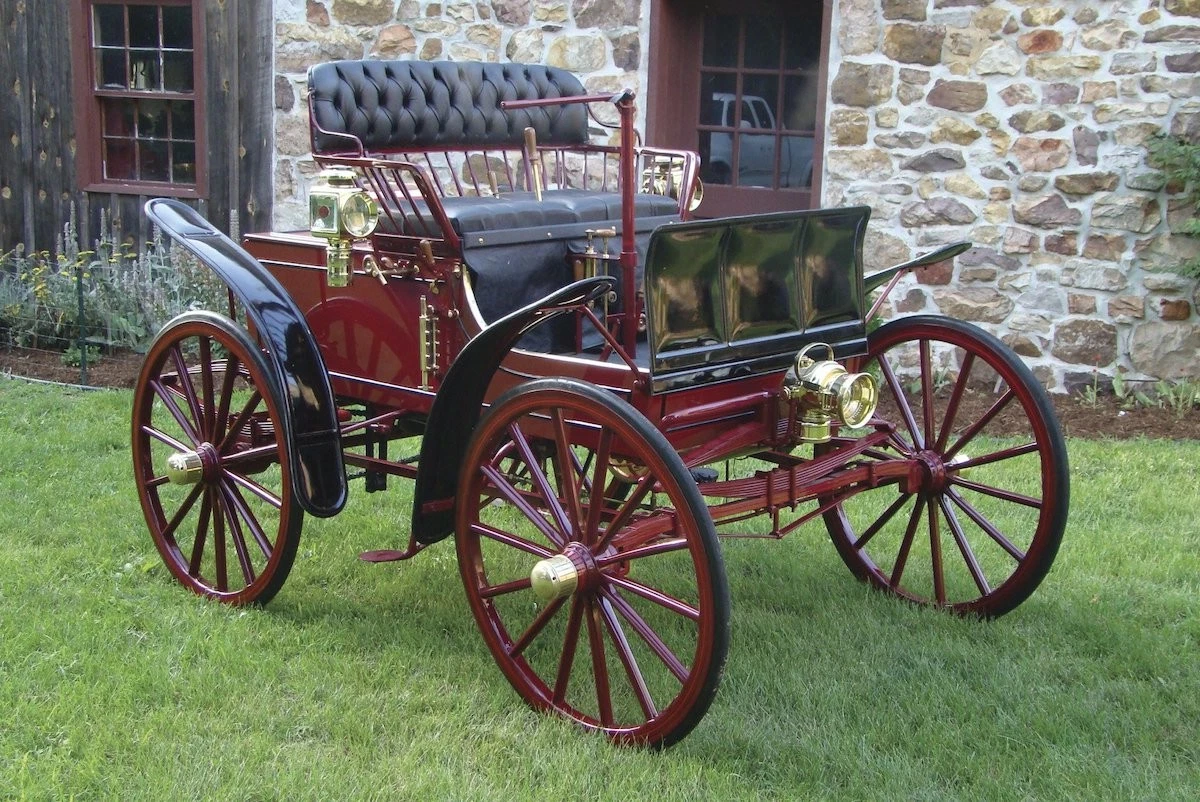
The 1899 Crouch Steam Runabout demonstrated that alternative power was a force until at least 1912.
Only three Crouch steamers were made, and the exhibit displays the single surviving example. The car, which made 14 horsepower, was built in Pennsylvania by W. Lee Crouch, who also produced internal-combustion vehicles. This one went to a scrap dealer before World War II but was saved and restored.
Osborne explained:
We wanted to show some examples of alternative propulsion, though they wouldn’t have called it that back then. Propulsion could be anything you wanted. Steam cars were more capable than gas cars before World War I.
1904 Curved Dash Oldsmobile
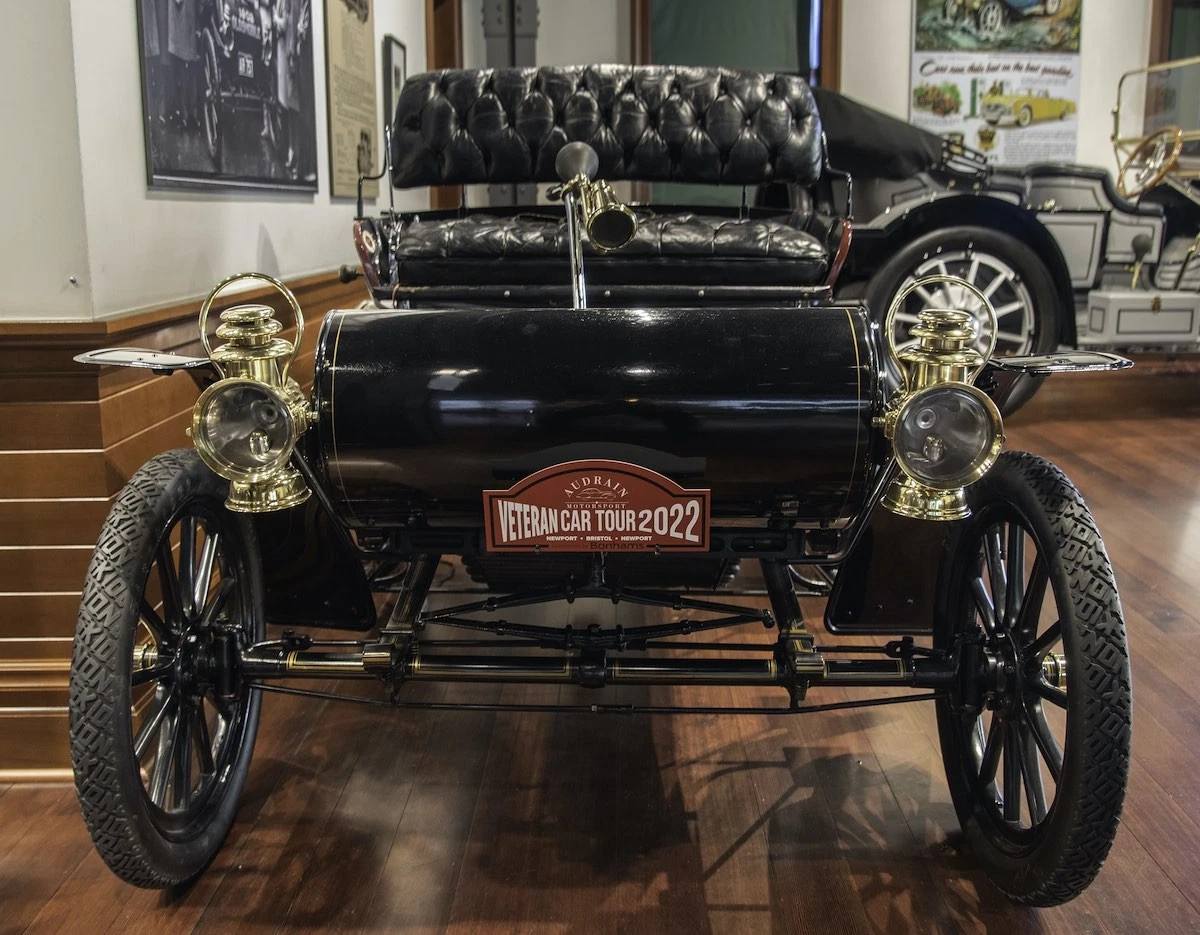
The iconic 1904 Curved Dash Oldsmobile was built in large numbers before the Model T.
This car is one of the more recognizable antique automobiles. Its image is often brought out when the early days of motoring are invoked.
Osborne said:
It was the first to sell in mass numbers, before the Ford Model T—which we also have in the exhibition. The Olds was the best-selling car of 1903. It’s a standard horseless carriage, built as automakers were evolving from that concept.
The Model T, Osborne added, was an innovation because it was assembled by unskilled labor. Notably, the parts were precisely engineered and interchangeable.
1910 Underslung Traveler
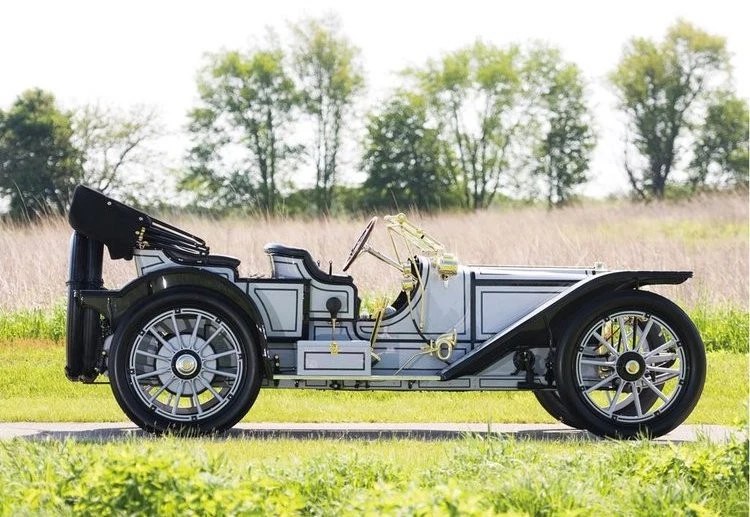
The 1910 Underslung was lower than any other car at the time.
These cars were very fast, like the Stutz - opens in new window or tab. of the period. Osborne explained that the Underslung was lower than any other car, thanks to the frame and spring arrangement. Fenders wouldn’t be higher than hoods again until after World War II.
1912 Rauch and Lang Roadster
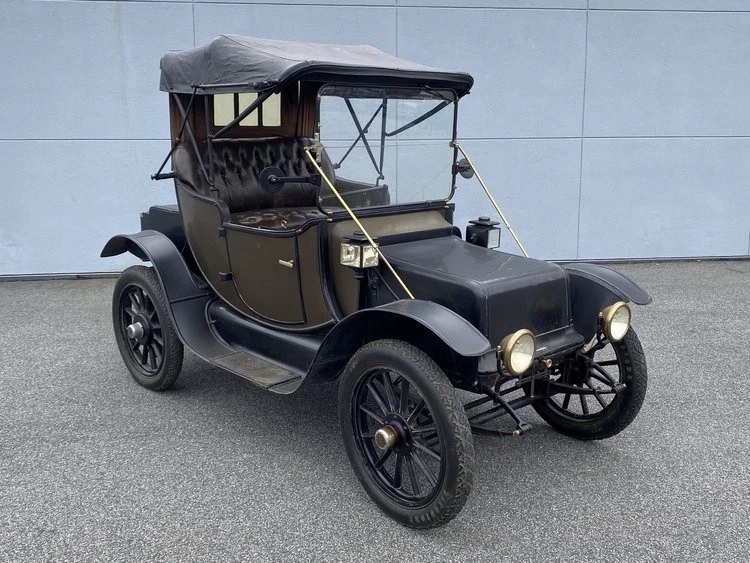
The 1912 Rauch and Lang electric roadster was expensive and doomed after the self-starter was invented.
1912 was the peak for early electric vehicles because it was the year that the self-starter, invented by Charles Kettering, appeared in the 1912 Cadillac.
Osborne said:
Cars didn’t have to be cranked anymore, which ended the electric car’s advantage.
The Rauch and Lang was expensive, selling for $2,250 in 1912 when a Model T Runabout - opens in new window or tab. was $900. But like other EVs at the time, it was marketed to women for its safe and simple operation.
1923 Rolls-Royce Silver Ghost Piccadilly Roadster
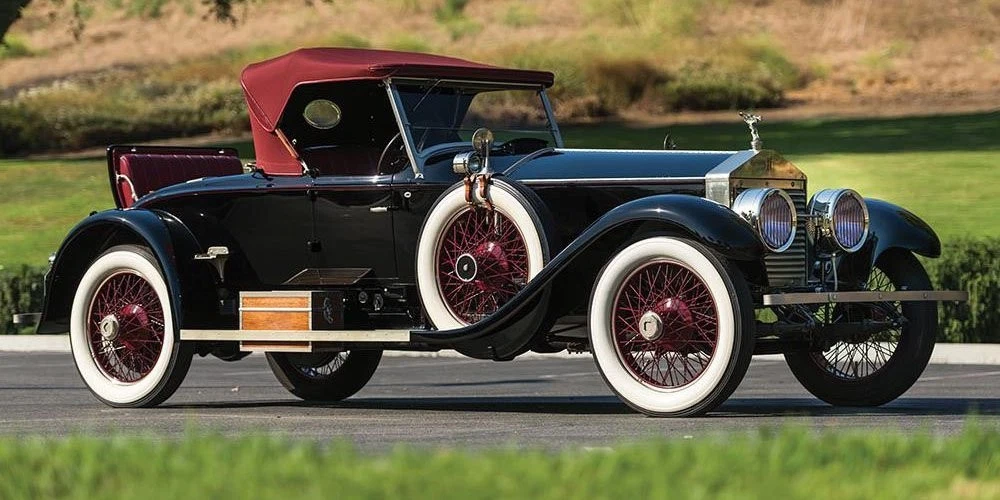
Rolls built the 1923 Rolls-Royce Silver Ghost Piccadilly in Springfield, Mass.
From the start, Rolls-Royce - opens in new window or tab. cars featured precision craftsmanship and engineering. That was, of course, reflected in the price. Ghosts were tough—they were used as armored cars in World War I. The handsome roadster in the show is American-made in Springfield, Mass.
Osborne said:
They offered a great deal of smoothness and refinement for the period.
The first owner was in Boston, but this Rolls ran the California deserts for 30 years. It was restored by owner Dr. James Stickley and exhibited at the 2003 Pebble Beach Concours.
1930 Cord L29 Phaeton
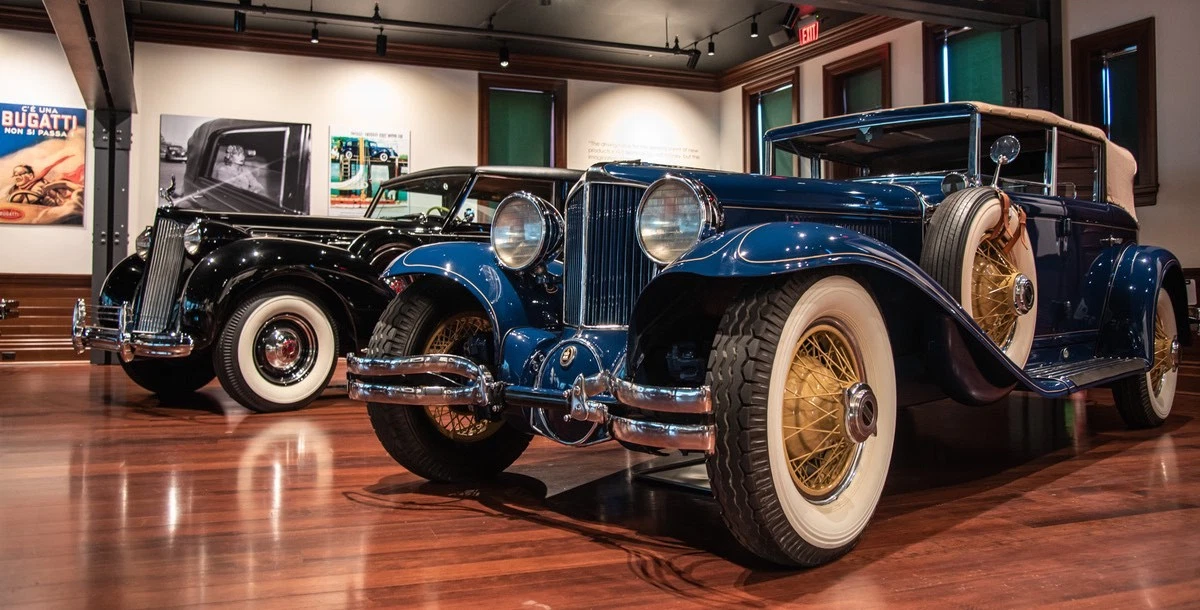
The 1930 Cord L29 Phaeton is an early front-wheel drive car.
The Cord Phaeton was the first successful American production vehicle with front-wheel drive, which lowered the center of gravity and made for better handling. The iconic “coffin nose” Cords were also front drivers.
Osborne explained:
At the time, only Ruxton and Cord offered front-wheel drive on the American market. Though it was also on the innovative Citroën Traction Avant by 1934.
1930 Duesenberg Model J Murphy Touring Cabriolet

This 1930 Duesenberg Model J Murphy Town Cabriolet was a shuttle between mansions for Doris Duke’s mother.
Any Duesenberg - opens in new window or tab. Model J is special, but this one has a strong Newport connection, originally purchased by Nanaline Holt Inman Duke, Doris Duke’s mother. The car made a statement when used as transportation between her mansions in New Jersey and Newport.
Osborne told us:
Considerable work has been done recently on this car. It completed the Duesenberg tour in northern California a few years ago.
1935 Chrysler Airflow C-2 Imperial Coupe
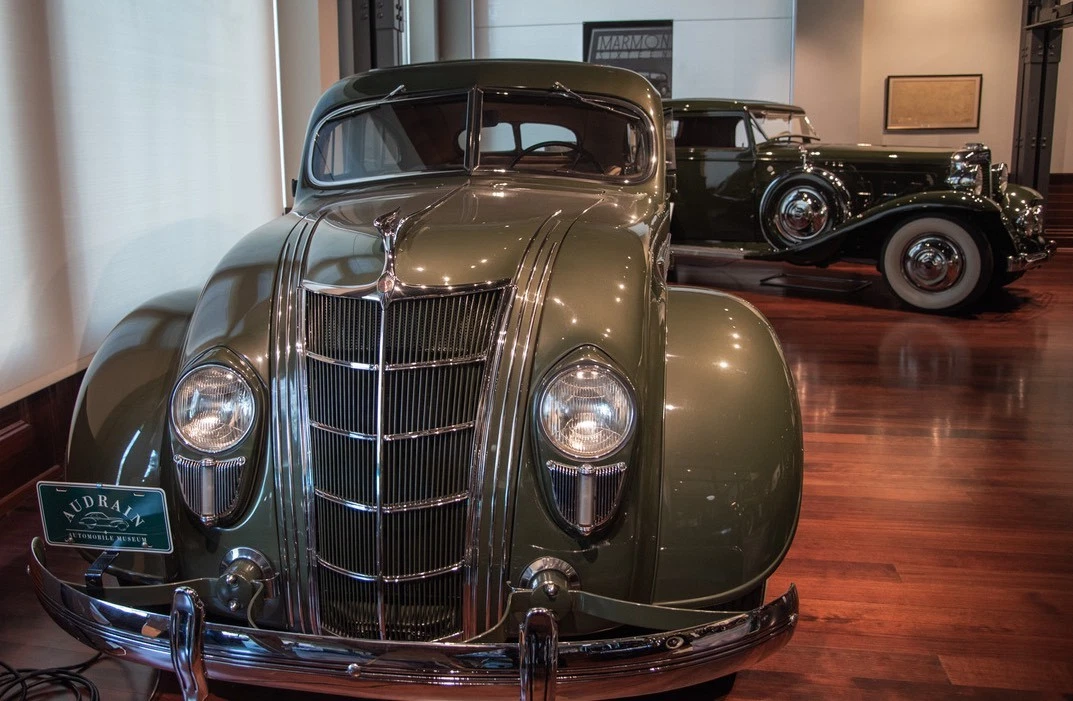
The 1935 Chrysler Airflow C-2 Imperial Coupe combined aerodynamic design and unit construction, but the car was trouble-prone.
This car is featured in the show’s section, “Airplanes for the Road.” It’s an early example of aerodynamic design. The Chrysler Airflow - opens in new window or tab. had an innovative all-steel semi-unitized construction.
Osborne commented:
The innovation may have been overdone because early examples were not well-built—they were unreliable and had leaks. Other aerodynamic designs from around the same time were very successful, though.
1939 Alfa Romeo 6C 2500 Sport Touring Coupe
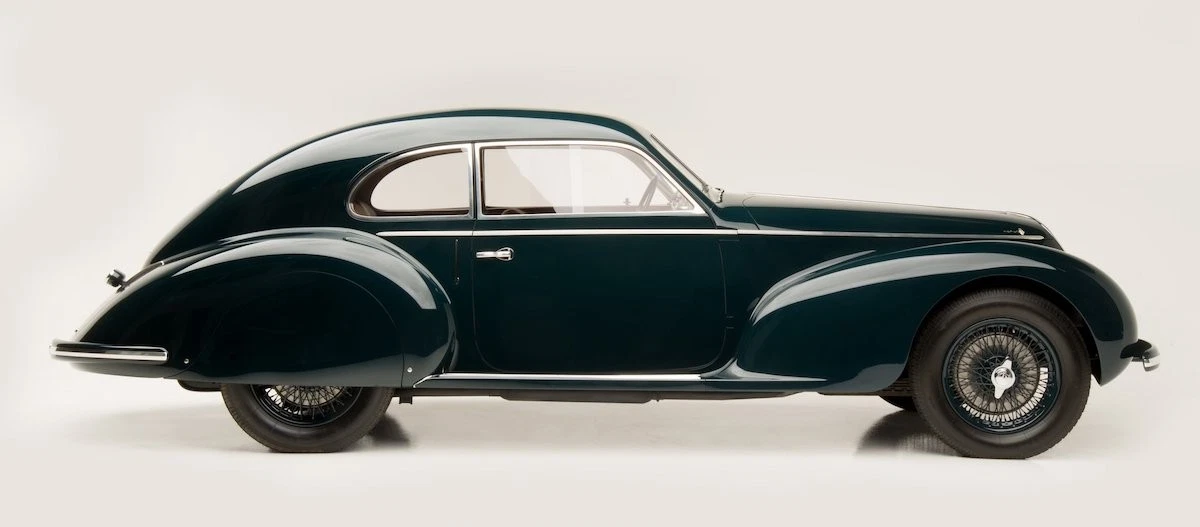
The 1939 Alfa-Romeo 6C 2500 Sport Touring Coupe was advanced for the period.
The streamlined design looks post-war and was far ahead of its time. Osborne notes that Alfa Romeo - opens in new window or tab. was one of the few manufacturers that continued to design and produce cars during World War II. Most re-introduced 1941 models when the hostilities ceased.
Osborne said:
It’s all about Italian ‘Superleggera’ construction. The 95-horsepower dual-overhead-cam six is in a lightweight alloy body built around tubes. It’s a long way from the horseless carriage.
Antique Cars on the Road in April
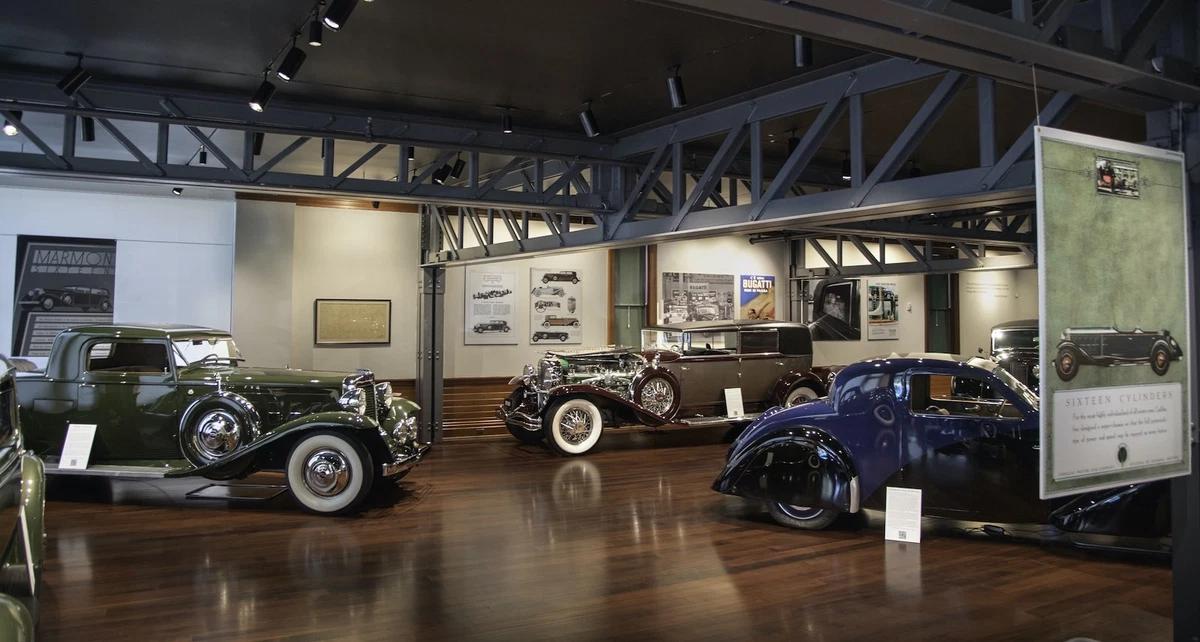
Audrain Motorsports will host the second annual Veteran Car Run (with Bonhams) on Sunday, April 30. Registration is open - opens in new window or tab.. It’s a 50-mile round trip from the museum in Newport, Rhode Island, through Middletown, Portsmouth, and Bristol. The event is open to cars built before 1908 and limited to two people per car.
About the author

Share your feedback
This article is meant to provide general guidance only. Automotive maintenance, repair, upgrade, and installation may depend on vehicle-specifics such as make and model. Always consult your owner's manual, repair guide for specific information for your particular vehicle and consider a licensed auto-care professional's help as well, particularly for advance repairs.