What We Learned About the Z at Nissan’s Proving Grounds
Performance
Sports Cars
News
Featured
Classics
Asian
It was a bold step in fall 1969 when Nissan took the wraps off the Datsun 240Z - opens in new window or tab.. That was a time when Japanese brands were struggling to grab a toe-hold in the American market. It was also perceptive move, because the Chevrolet Camaro and Ford Mustang were proof that performance-oriented small cars could sell well, despite the nation’s big-car bias at the time.

Datsun 240Z
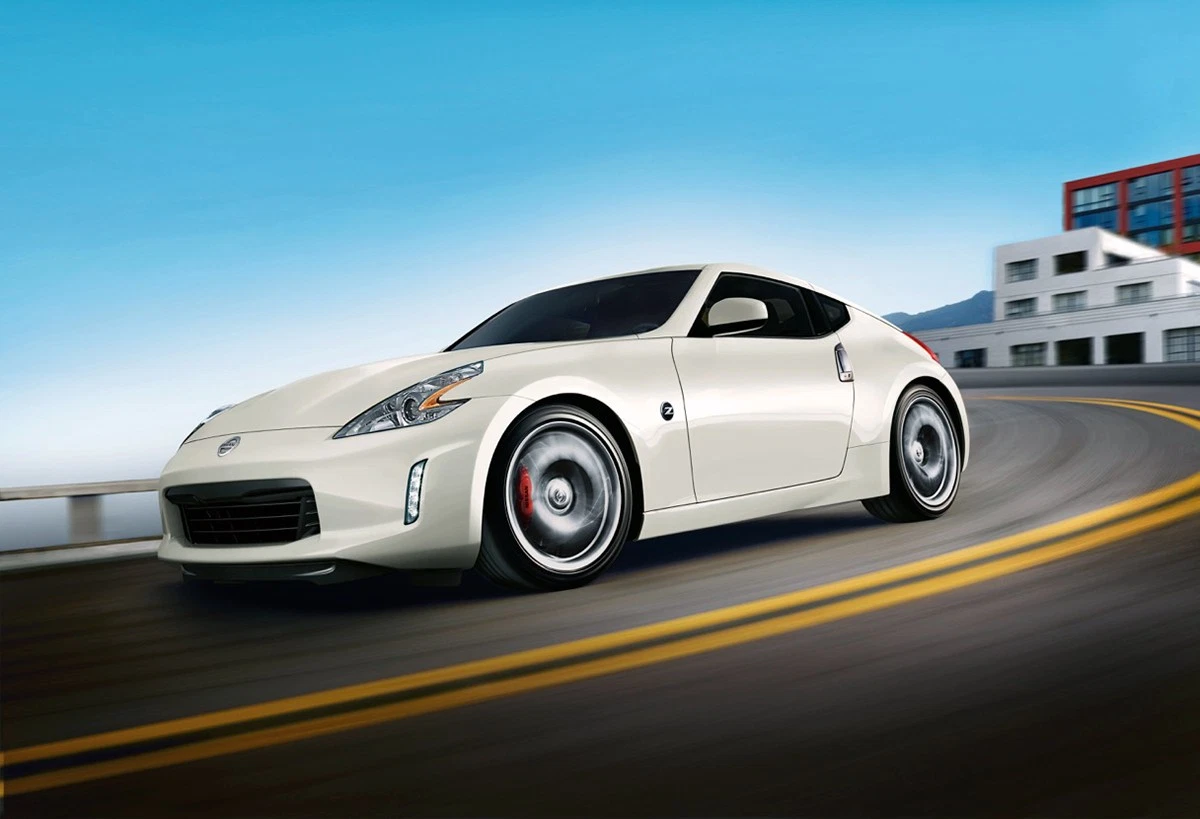
“There were not a lot of stylish sports cars, the Jaguar E-Type - opens in new window or tab. being the exception,” said Bruce Robinson, Nissan senior project engineer who worked with engineers at Nissan’s southern Arizona proving grounds to develop the current 370Z - opens in new window or tab. (shown at the top of this page) and its predecessor, the 350 - opens in new window or tab.. “The six-cylinder, four-speed 240Z was much less expensive than the Jag,” Robinson told us last week during our visit to the proving grounds. “At the time I was working for GM and it blew my Opel GT out of the water. Performance at an affordable price remained the key to Z success throughout the years.”
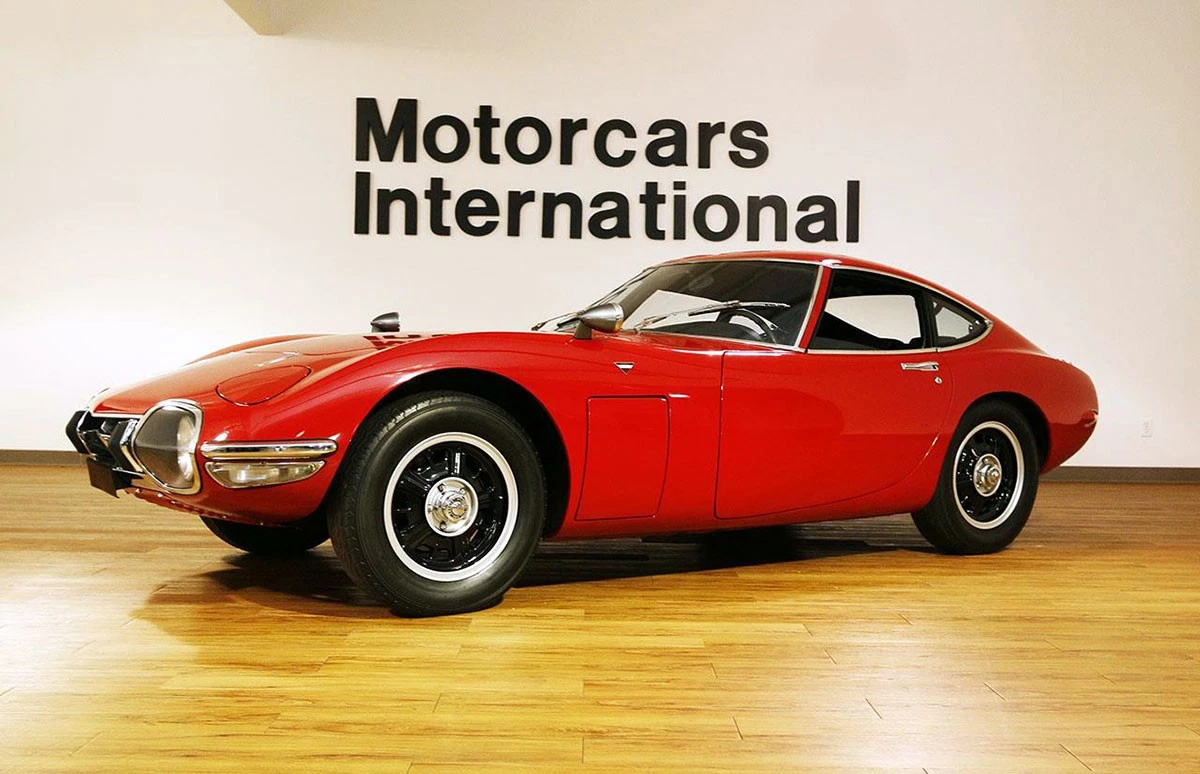
This 1967 Toyota 2000GT, listed on eBay for $1 million earlier this year, was designed by Albrecht Goertz, who went on to create the Datsun 240Z. This model makes obvious references to the Jaguar E-Type.
These thoughts about the Z’s heritage, while not necessarily indicative of the Z car’s future, are insightful. With the current model in its eighth year of production, enthusiasts are wondering what to expect next.
Lessons from the Past
It hasn’t always been a smooth ride for the Z. In 1989, Nissan’s response to Mazda’s MX-5 Miata - opens in new window or tab. was the twin-turbo 300ZX - opens in new window or tab.. There was a lot to love about the 300: its power and performance gave Porsches and Corvettes a run for the money. But veering away from Nissan’s original two-seat, value-driven formula turned out to be a bad decision. As the Miata grew in popularity, Nissan watched its audience shrink, discontinuing the model for the US market in 1996.
When Nissan introduced the 350Z for the 2003 model year, product planners went back to the car’s roots, delivering an affordable two-seater with exceptional performance.
“Sports cars were a very competitive segment at the time,” said Robinson. “During development, we were looking at the Porsche Boxster, BMW Z3 and Z4, and Mazda RX-8. Zero-to-sixty was a key metric in America where acceleration is king. We also focused on steering feedback and being true to the driver’s hand.”
Robinson explained that body structure was a big deal. “People who aren’t in the industry don’t realize how important the underlying structure is,” he said. “We put belly bands - opens in new window or tab. to close up the U in the driveshaft, a brace inside the cargo area, and added a strut-tower brace - opens in new window or tab..”
Nissan was also the the first automaker to introduce throttle blipping for better track performance. Throttle blipping keeps revs high when a driver corners so he doesn’t have to quickly clutch twice—downshifting through the corner and then upshifting again into the straightaway.

Nissan 350Z
Because its primary market was the United States, Robinson and his team did a lot of the validation at Nissan’s Arizona proving grounds: a 3,000-acre facility with 33 miles of test tracks, covering durability, marketability, ride comfort, vehicle dynamics, grades, a city course, and high-speed oval.
“Our test cycle far exceeds the life of the automobile,” explained Doug Payne, lead technician for test track operations. “At least 25 drivers get behind the wheel of any given vehicle, since different drivers will react differently to vehicle performance.”
Z-car development included a test mule and two prototypes, each going through weeks of road testing at the 24-hour facility before venturing onto public roads in the San Francisco area. During his career at Nissan, Robinson has also made more than 100 trips to Tochigi, Japan to test drive the Z on the automaker’s home turf. He is looking forward to the next iteration of Nissan's iconic two-seater. Regardless of the direction it takes, the Z will likely remain a defining vehicle for the brand—even a half-century after its introduction.
About the author

Share your feedback
This article is meant to provide general guidance only. Automotive maintenance, repair, upgrade, and installation may depend on vehicle-specifics such as make and model. Always consult your owner's manual, repair guide for specific information for your particular vehicle and consider a licensed auto-care professional's help as well, particularly for advance repairs.