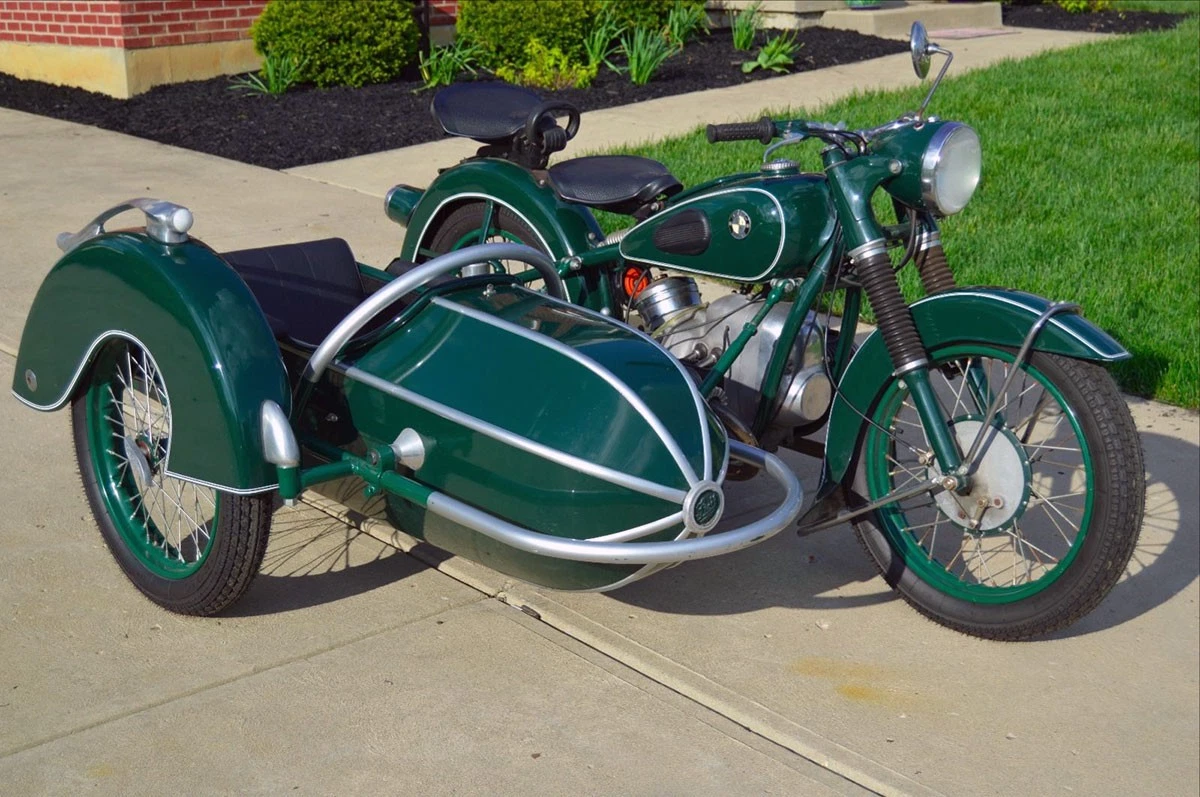
BMW’s motorcycles of the early 1950s hinted at a return to normalcy for post-War Germany: the country in ruins and resources too limited for citizens to afford automobiles. Motorcycles rolling out of the Bavarian assembly plant were both transportation and a source of national pride. The 1953 R51/3 listed now on eBay - opens in new window or tab. is a clean original example from this transitional period.
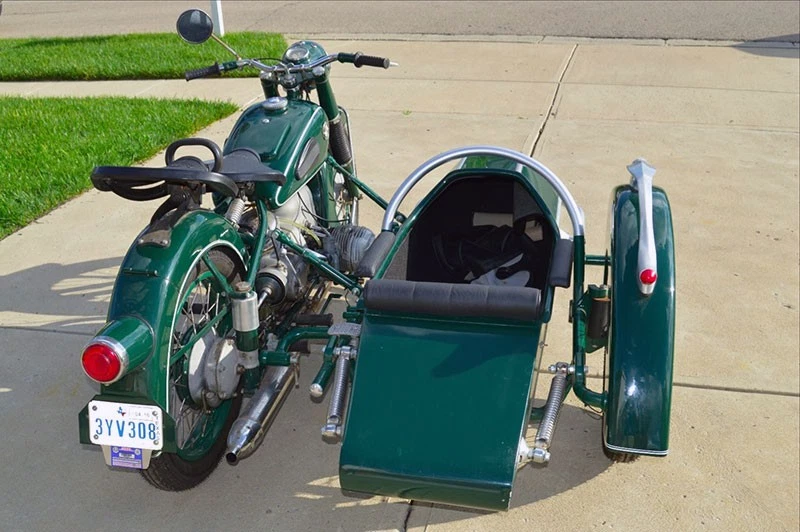
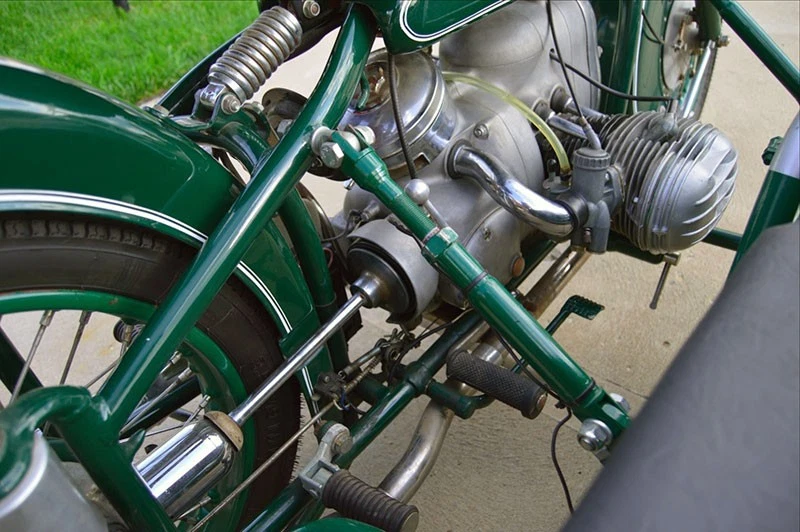
In 1950, BMW introduced the R51/2, its first post-War 500 cc model. A year later, the manufacturer replaced it with the R51/3 - opens in new window or tab.: a model with a four-year production run. Engineers eliminated the two chain-driven camshafts on the R51/2, using a single cam driven by gearwheels from the crankshaft. The R51/3 shared its predecessor’s front telescoping fork and dual plunger rear shocks.
Similar in appearance is the more powerful 600 cc R67, the most noticeable difference being cylinder fins. The R/51 has eight rounded fins, whereas the R67 has nine larger and pointed cylinder fins.
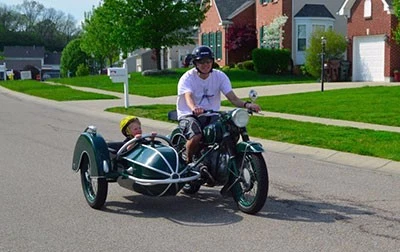
The Steib - opens in new window or tab. sidecar is typical for a big twin BMW of this period. The cab is constructed of pressed, contoured metal plates. An adjustable spring suspension makes riding more comfortable. Polished aluminum piping is a Steib signature.
The BMW’s current owner purchased it while on assignment in Turkey in 2004, and has since overhauled the engine using OEM pistons rings and clamps and had the cylinders re-bored to 3rd oversize. The motorcycle’s carburetor and magneto have also been rebuilt to return the bike to solid running condition.
BMW in the USA
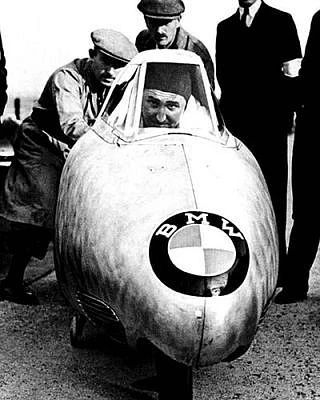
Photo of Ernst Henne in 1937. He had set a world speed record on a supercharged 750 cc BMW. Americans wanted to bring some of that magic to the US.
Following World War II, BMW faced what might have seemed insurmountable odds as it sought to return to its pre-War glory. Allied forces familiar with the manufacturer’s mechanical talents relocated its engineers to the United States and Soviet Union. During the war, BMW’s R75 flat twin - opens in new window or tab. motorcycles were so superior that the US government commissioned Harley-Davidson to produce a similar design: the 1942 Harley-Davidson XA.
Without its engineers or blueprints, BMW was forced to counter-engineer its first post-War motorcycle the 250 cc R24, basing it on the pre-War R23 with its rigid rear end. The BMW R51, was its first new design.
A brand that had never been satisfied with middle-of-the-road had no intentions of changing direction. When Germany re-introduced its Motorcycle Grand Prix races, held during alternate years at Hockenheimring - opens in new window or tab. and Solitudering, BMW was there, dominating sidecar racing throughout the 1950s.

Sixty-five years after its introduction, the BMW R51 remains a force to be reckoned with, its boxer twin four-stroke overhead valve engine boasting a top speed of 87 miles per hour. With a curb weight of 419 pounds, the R51 is lean and agile, ready for road or track. The bell-shaped front fender endures as classic motorcycle styling.
About the author

Share your feedback
This article is meant to provide general guidance only. Automotive maintenance, repair, upgrade, and installation may depend on vehicle-specifics such as make and model. Always consult your owner's manual, repair guide for specific information for your particular vehicle and consider a licensed auto-care professional's help as well, particularly for advance repairs.