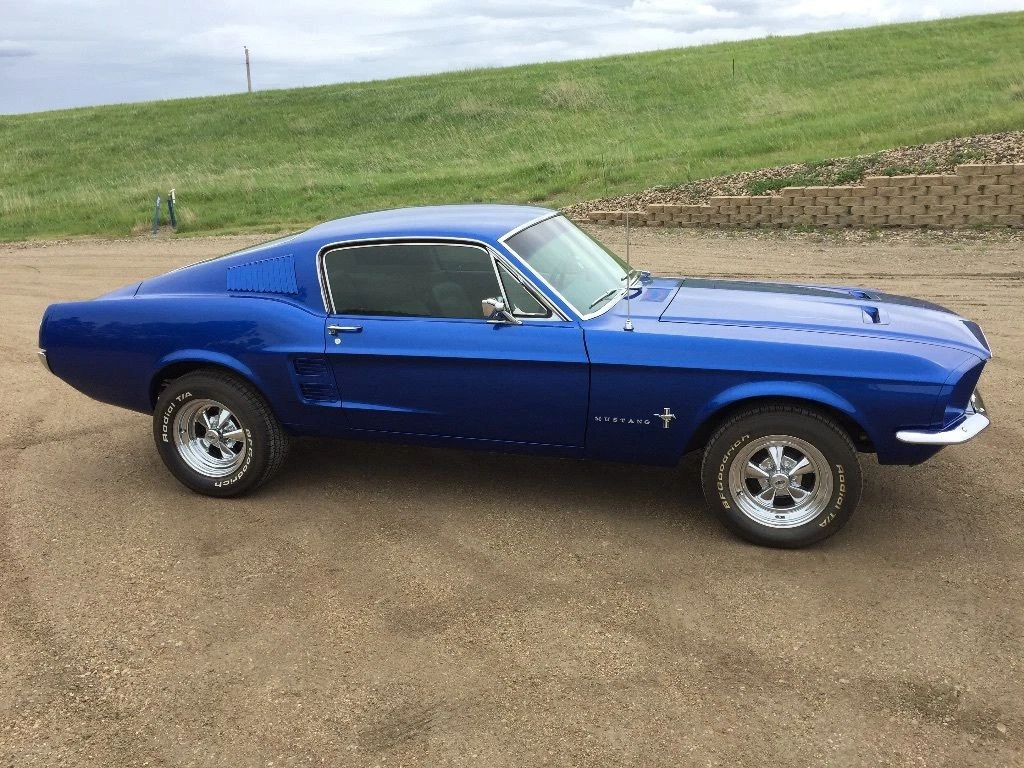
When Peter Yates’s film Bullitt, starring Steve McQueen, debuted in 1968 it lifted the car chase to a whole other level, and in the process, it turned two already pretty cool cars—the Dodge Charger and Mustang fastback—into legends.
The ’67 Mustang would have been a milestone without Bullitt (which used a pair of very similar ‘68s, one of which—thought lost—resurfaced in Mexico). Ford decided it had to up its game that year because the Mustang would soon face long-hood-short-deck competition from the Camaro, Mercury Cougar, and Plymouth Barracuda.
The ’67 benefited from the Mustang’s first styling change, resulting in a cleaner look. They widened the strut towers to accommodate the engine, and that meant a fairly radical front-end redesign—which also improved the handling quite a bit.” - Lou Manglass, president of the Northeast Georgia Mustang Club.
That basic design lasted until the Mustang II in 1974.
And ’67 was the year factory Mustangs became serious muscle cars. “It was the first year of the big-block engine, the 390, then the largest motor Ford had,” Manglass said. “It was later complemented by the 428 Cobra Jet and Super Cobra Jet. The big block changed the whole complexion of the car.” The classic 289 Hi-Po motor that featured in the Shelby Cobra and Sunbeam Tiger was in its last Mustang year in 1967.
Most agree that the ’67—and especially the fastback—was a beefier and tougher Mustang. The fastback looked shark-like, with vertical slats/gills built into the roof and a new concave tail with lights to match. The ’67 was two and a half inches wider and a half inch taller than the ’66. It had a wider track and a wider and deeper grille with a mesh insert. The sides have go-faster scoops painted in the body color. The fastback now sported a roofline that continued back to the trunk lid.
And the appearance was backed up under the hood. With 320 horsepower, it could keep up with the Super Sport Chevelles and ‘Cudas. Zero to 60 for a ’67 Mustang with the 390 was an impressive (for the year) 7.4 seconds, and the car topped out at 115 mph.
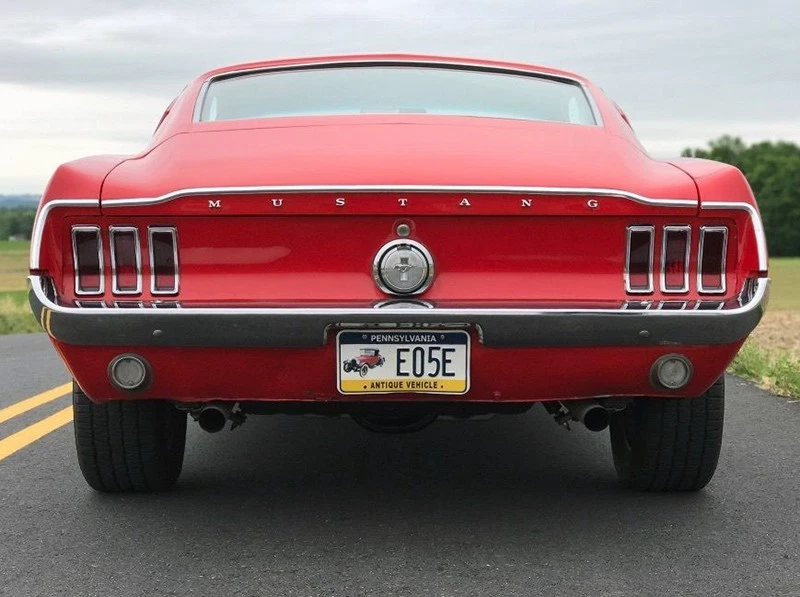
The tail became concave, with matching taillights.
Jeff Mays, president of the 13,000-member Mustang Club of America (192 regional clubs), says the ’67 is an intense object of desire for pony car fans. “That’s the body everybody wants,” said Mays, himself the former owner of a ’67 fastback with a 390 and a four-speed manual. “It was a great car,” he said. If a fastback so equipped had a flaw, it was that the 11 mpg fuel economy meant it was unable to pass a gas station. “It’s a good thing they didn’t have a gas-guzzler tax back then,” Mays said.
The ’67 fastback, in standard and luxury versions, started at $2,692. That was $231 more than a coupe, and it was a hit with the public. The 71,042 produced were about a sixth of total production that year.
The ’67 Mustang fastback is well catered to by eBay Motors, and enthusiasts should be able to find any Mustang fastback parts they need - opens in new window or tab., as well as a roster of available fastbacks models - opens in new window or tab..
Not missing a trick to up the bottom line, Ford also offered the GT package. As is often the case, it was more about appearance—including badges and striping—but also featured special driving lights and a dual exhaust. Fastback customers could make their cars look even better with a special chrome-plated rear panel that fit around the taillights (it’s often retrofitted by owners today).
An Enduring Star
But it’s the movie that gave the Mustang fastback a huge boost. “The Bullitt car chase is a big feature of the car,” said Manglass. “It’s forever and ever talked about.” The spotlight got brighter earlier this year with the discovery of one of the two movie cars—in highly abused condition and residing in a Mexican junkyard - opens in new window or tab.. It’s been verified as the car that did much of the actual driving in the movie.
According to car historian Ken Gross, that missing car is “the Holy Grail of the Mustang car crowd,” and could be worth at least $1 million if auctioned.
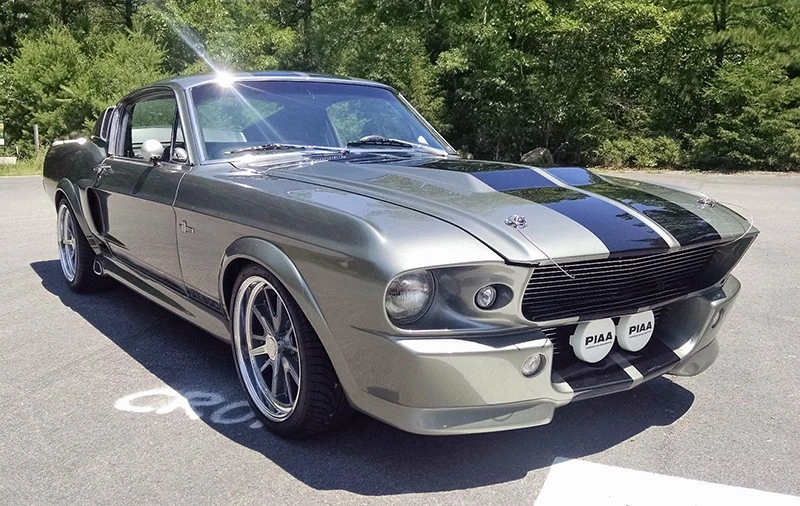
Buyers are going crazy for Gone in 60 Seconds “Eleanor” clones.
But that’s not the fastback’s only starring role in a movie. “Eleanor,” the Mustang driven by Nicolas Cage in the remake of Gone in 60 Seconds, was mocked up to look like a ’67 Shelby GT500. One of the 11 cars used during filming was sold in 2013 for $1 million - opens in new window or tab..
Carroll Shelby’s GT500, which used a 428-cubic-inch Cobra Le Mans V8 in place of the 390, is the ultimate ’67 Mustang fastback, with a zero to 60 time of 6.5 seconds - opens in new window or tab.. “It was a race car for the street,” said Heidi Geise of the Pierce Country Mustang Club in Washington State. Car and Driver tested one, described it as “an adult sports car,” and concluded, “The GT 500 accelerates powerfully at any legal speed, gets off the mark with little wheelspin despite the absence of a limited-slip, and shifts very crisply.”
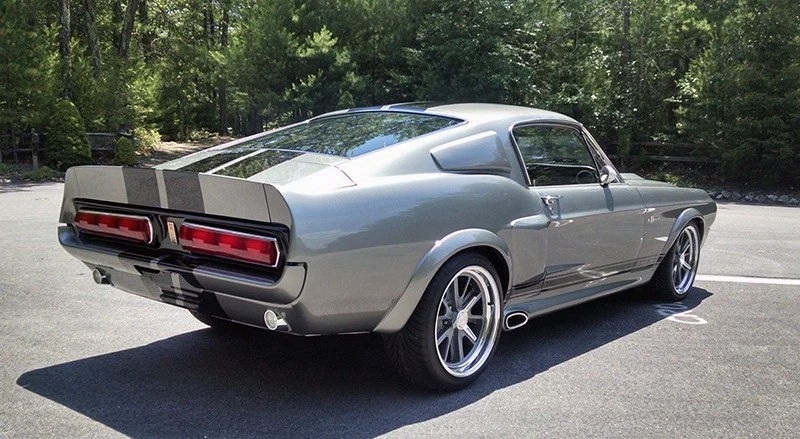
The GT500s got a distinctive tail treatment from Shelby.
The Mustang was also going racing. According to Mays, the 390 was “the gateway for Ford getting the Mustang on the drag race track.” Some 50 lightweight fastbacks were built in 1968 for Stock/E and Stock/C competition, and these were fiercely competed, often with the 427 on board. Today, a lightweight ’67 is as much a holy grail car as a Bullitt movie prop.
The Mustang fastback has proven its enduring popularity, and the dawning of the hairier, big-block versions occurred in 1967. “That’s why it has a special place in a Mustang guy’s heart,” said Mays.
About the author

Share your feedback
This article is meant to provide general guidance only. Automotive maintenance, repair, upgrade, and installation may depend on vehicle-specifics such as make and model. Always consult your owner's manual, repair guide for specific information for your particular vehicle and consider a licensed auto-care professional's help as well, particularly for advance repairs.