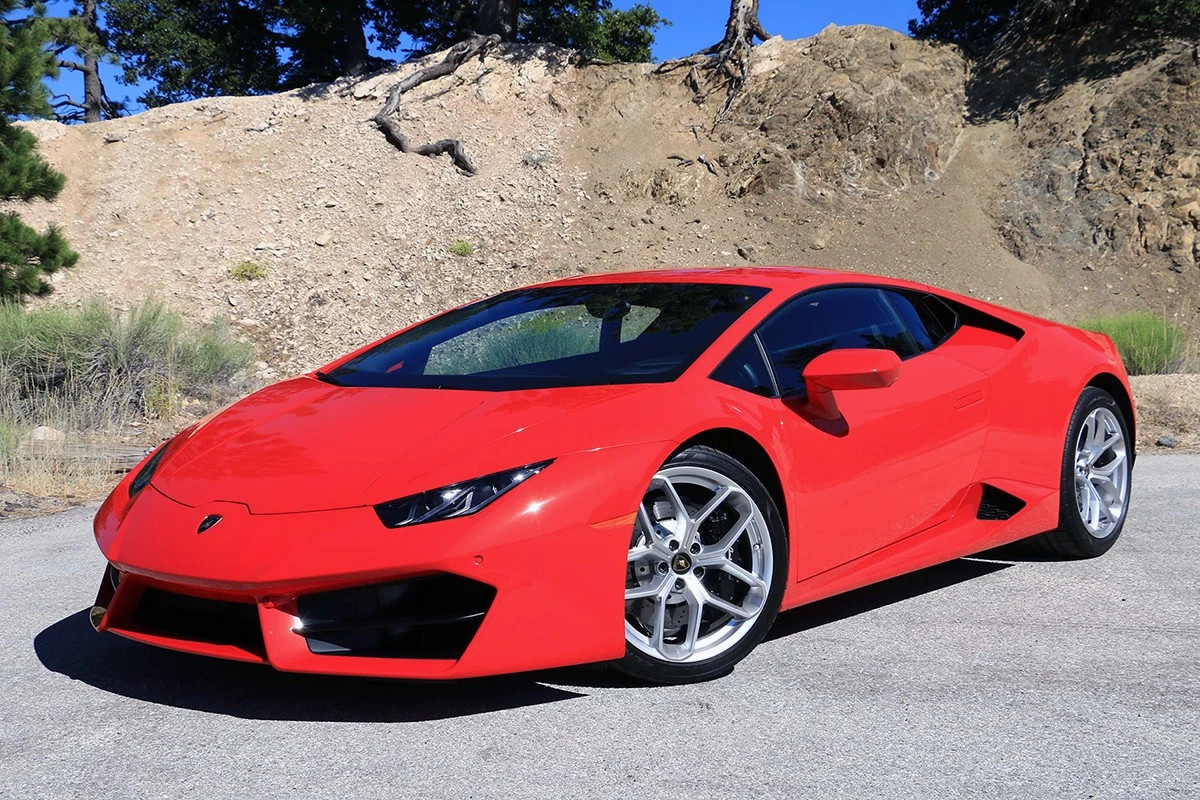
Automakers want even their most exotic high-performance vehicles to remain accessible to common drivers. That can be tricky balance. If a supercar becomes too civil, you might lose some of the desirable element of calculated risk that makes driving hard so much fun. But of course, safety matters. Fortunately, with the rear-wheel drive 2016 Lamborghini LP 580-2, engineers adeptly ride the line between losing grip and losing control, and thereby producing a graceful drift machine. We enjoyed every thrilling moment behind the wheel, from the second we fired up the Huracán’s 571-horsepower V10 engine, set the drive mode to Corsa, and buried the hammer down the twisting tarmac of Angeles Crest Highway on outskirts of Los Angeles.
Stephan Winkelmann, former chief executive at Automobili Lamborghini, didn’t mince words about the company’s intentions with the LP 580-2 at the model’s debut earlier this year. “This is the purest expression of a Lamborghini to date, with class-leading technological refinements,” he said. “It is a serious car for serious drivers. It is maximum driving fun.”
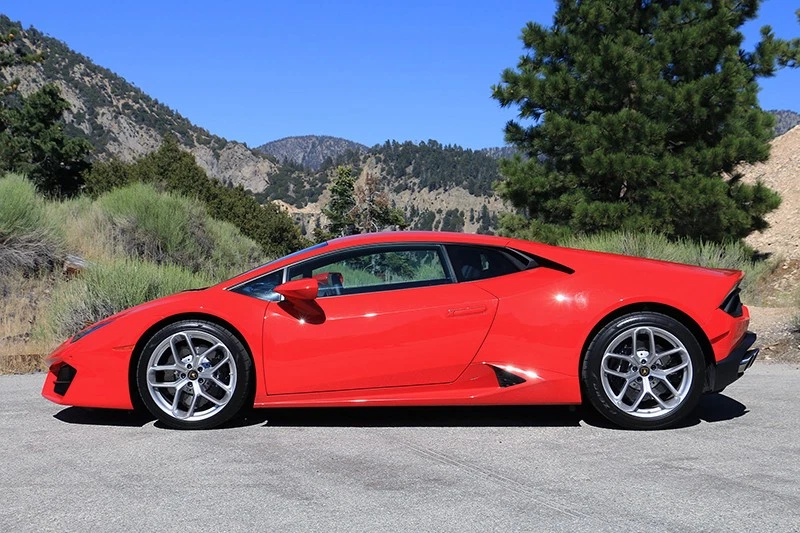
There’s no doubt that this rear-drive Huracán feels more visceral than its all-wheel drive brethren. Without the front wheels working in tandem with the rears to pull the car forward, the brute force of the vehicle’s power plant shoved us down the road as we fired off gear changes with the paddle-shifted seven-speed dual clutch transmission. Each downshift was accompanied by a crackling bark from the quad-tipped exhaust system.
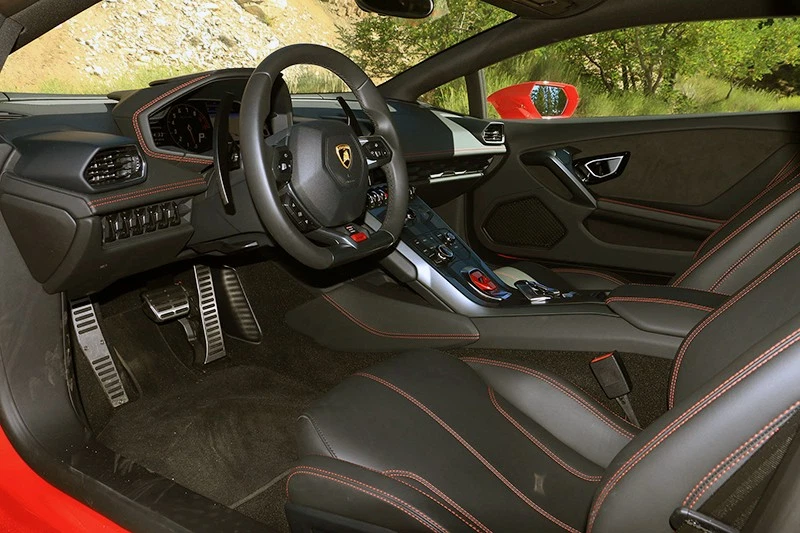
With less mass sitting over the front end, the steering felt more responsive than the all-wheel drive Huracán—urgently darting from corner to corner. The LP 580-2’s uniquely tuned steering and suspension works in tandem with Lamborghini’s Piattaforma Inerziale (also known as stability control) to allow the rear to rotate while simultaneously sensing when to increase traction if the driver runs out of talent.
While the technology serves as a safety net, many cars with similar driver assistance systems have nonetheless kissed the guardrails. As eager as we were to find the limits of the incredible piece of Italian machinery, we didn’t want to run the risk of scuffing up the striking Rosso Mars red paintwork.
The performance was thrilling and the look is undoubtedly striking, but perhaps the most interesting fact about the LP 580-2 is that it’s a so-called base model. As such, it reduced the price of a new Lamborghini down just below $200,000—in the direction of the more affordable Porsche 911 GT3. At a starting price of $199,800, the Lamborghini LP 580-2 is not exactly thrifty, but the new lower cost of entry suddenly makes the Lamborghini a viable option to cross shop with a larger subset of high-end sports cars. And with a wider audience comes increased scrutiny, putting more pressure on the company and its 200-mph creation.
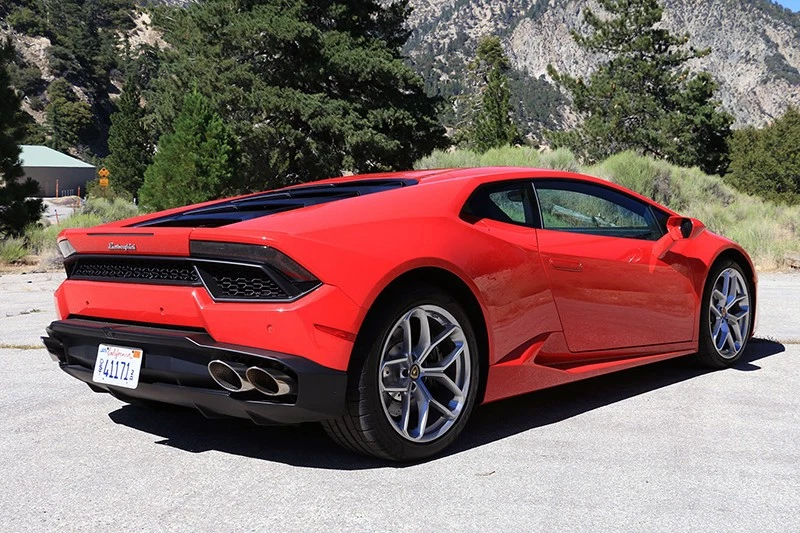
No matter how it’s scrutinized or driven, we expect to see more Lamborghinis like the Huracán LP 580-2 on the road in the coming months and years. Exclusivity has its place, but when a car is this good, it deserves to be experienced by as many people as possible—whether its fans are behind the wheel or simply admiring the sleek powerful Lambo as it whizzes by.
About the author

Share your feedback
This article is meant to provide general guidance only. Automotive maintenance, repair, upgrade, and installation may depend on vehicle-specifics such as make and model. Always consult your owner's manual, repair guide for specific information for your particular vehicle and consider a licensed auto-care professional's help as well, particularly for advance repairs.