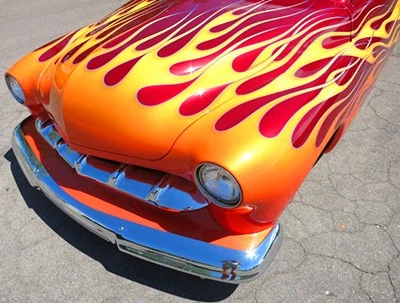
Award-winning 1951 Mercury Coupe
Building and customizing hot rods became a legitimate movement after World War Two. That’s when young people across America started to strip-down and soup-up old Fords, Chevrolets, and Mercurys. But it took a few more years, until the mid-1950s, before hot rods became high art. Customizers finished off their chopped-and-lowered creations with an overlay of stripes and scallops—and (best of all) flames.
Flames were originally designed to flow along the sides of the engine compartment—as if they were shooting out from the engine block. Traditionalists favored quasi-realistic yellow, orange, and red tones, which provide a dramatic contrast with base body paint. Some flame designs, in keeping with the technological era, mimicked motifs from fighting airplanes.
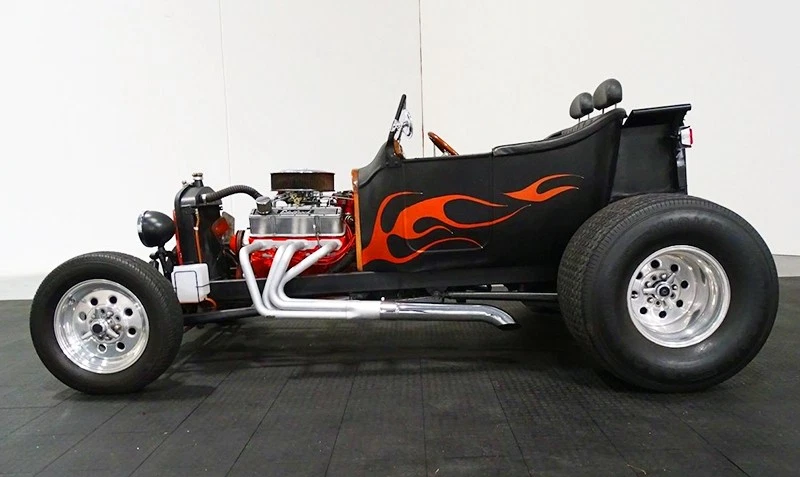
1923 Ford T Bucket
Typically, a painter would sketch out a design on one side, and when happy with it, use pinstriping tape - opens in new window or tab. to finalize the look. Tracing paper was then employed to copy the design to the other side. With careful masking, the car artist would apply the paint to craft the look. This book available on eBay, “Up in Flames: The Art of Flame Painting - opens in new window or tab.,” tells the compelling history of hot-rod flames with plenty of examples to drool over.

The 1934 Ford coupe from “The California Kid.”
Fiery designs cooled down during the 1960s when muscle cars took on more power but plainer exteriors. The 1974 movie “The California Kid” rekindled the desire for flames. The film’s iconic ’34 Ford already looked cool, but flames added an essential extra touch.
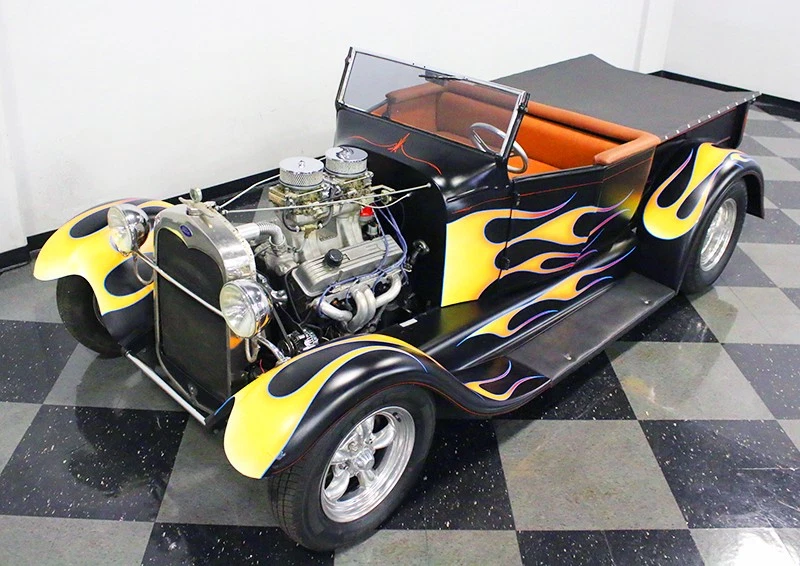
Flame designs endure today, but with great variation from the traditional designs. As you likely know, hot-rodders don’t always show restraint, evidenced by the recently listed 1923 Ford Model T Roadster Pickup (shown at the top of this page). Its flames extend the entire length of the body.

A more subtle approach is to use so-called ghost flames, as seen in this 1999 Plymouth Prowler.
Of course, there are no firm rules for automotive art. All sorts of colors and tints can replace the traditional red and yellow hues. Want something more subtle? Consider using a “ghost” flame that blends into the body. You can go the direction of realism as well—with red-hot flames that almost beg for treatment from a fire extinguisher.
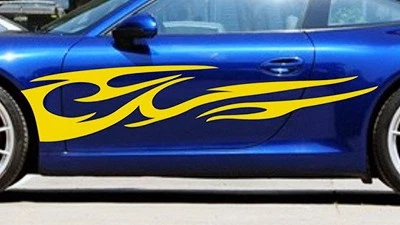
Flame decals are a cheap and easy way to try some flames on for size.
Some owners opt to apply decals or magnetic flames - opens in new window or tab., which provide flexibility because they are easy to remove. If you don’t like the look, just peel them off and go back to the stock look.
So when you throw another log on the fire during this holiday season, pause to enjoy the flickering flames. They might inspire you to embellish your ride in the new year.
About the author

Share your feedback
This article is meant to provide general guidance only. Automotive maintenance, repair, upgrade, and installation may depend on vehicle-specifics such as make and model. Always consult your owner's manual, repair guide for specific information for your particular vehicle and consider a licensed auto-care professional's help as well, particularly for advance repairs.