Headlight assemblies have been available since federal regulations changed in 1984. Before that, the rules required a sealed beam headlight - opens in new window or tab. made from glass. New headlight assemblies have replaceable bulbs. Headlight assemblies also give designers more latitude in developing the look and styling of the new vehicle.

Headlight Assemblies Were Not Originally Allowed

In 1940, federal regulators standardized the headlights in American vehicles, requiring dual filament seven-inch sealed headlamps. This was referred to as a T-3 lamp. When the headlamp failed, the entire unit had to be replaced.
In 1957, the rules changed to allow two headlamps on each side—one for high beams and one for low beams. State legislatures had to change their statutes as automakers adopted that look.
Starting in 1975, smaller rectangular headlamps were approved. They could be either dual filament (one bulb on each side of the car) or two headlamps on each side. Despite these changes, headlamps were still all sealed glass, and when the headlight failed, the entire lamp had to be replaced.
In 1984 the regulations - opens in new window or tab. allowed for headlight assemblies. This meant that individual lamps could be replaced as needed. Automakers quickly started to incorporate headlight assemblies into new vehicles.
What Is a Headlight Assembly?
The four main components of a headlight assembly are:
- A housing that holds all the lighting fixtures, including the clear lens and optics or reflectors built into the unit
- A lamp that emits the low beam of light
- Another lamp for the high beam
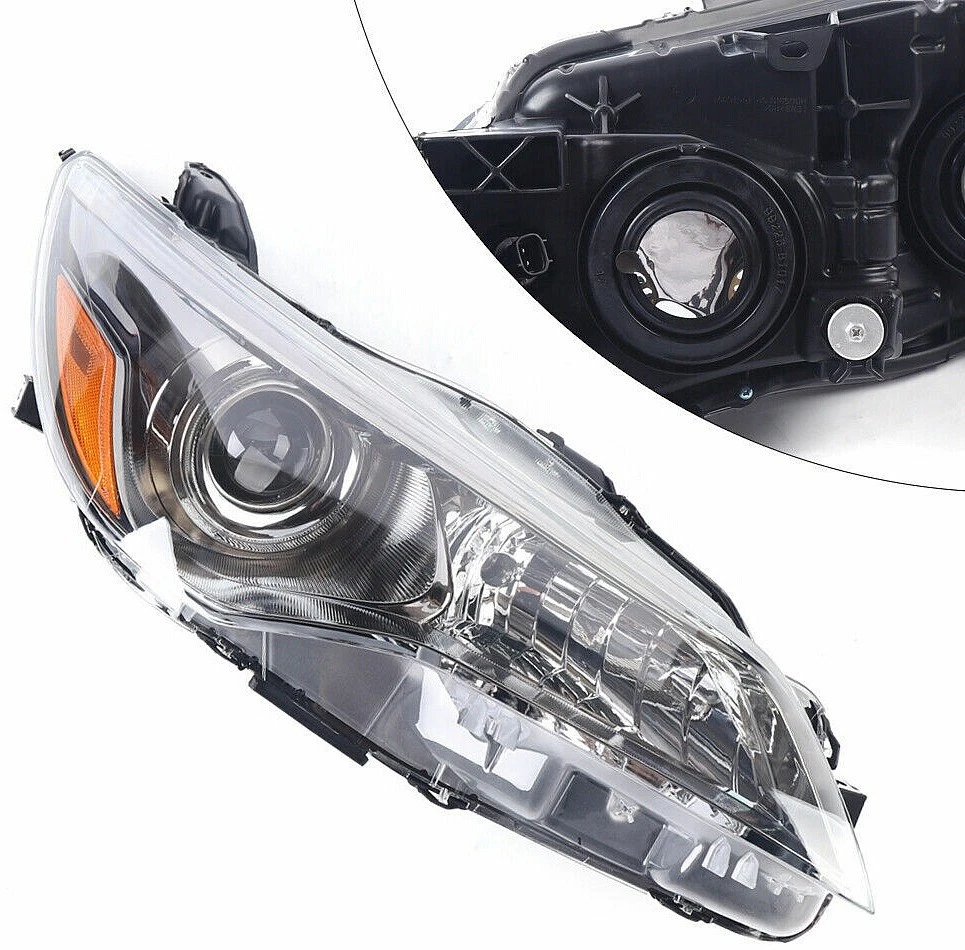
Headlight assembly - front and back
Usually, replacing a bulb is as simple as removing an electrical connector and twisting the bulb out from the back of the assembly. Then twist in a new lamp, attach the connector, and the headlight assembly is back in operation.
An owner can upgrade the lighting from the factory standard by swapping out bulbs. Before you do, check out this cautionary note - opens in new window or tab..
Aftermarket vs. OEM
Original equipment manufacturer (OEM) assemblies typically are more expensive since they are offered by the automaker. When you buy an OEM unit, you can be assured that it will fit and is similar to the original. Aftermarket assemblies should have the exact fit and function, but often at a lower price. The assembly might have different materials than the OEM unit, and any optics and reflectors might not be as precise or accurately reproduced.
Can a Headlight Assembly Lens be Restored or Replaced?
Many headlight assemblies use a plastic lens. Over time, after being exposed to harsh UV rays, sand, and road debris, the lens can become yellow and cloudy. This could impede the lighting and be unsightly. There are numerous ways to clean the lens - opens in new window or tab. at an economical price.

Cleaning fogged headlights is a popular D-I-Y task.
If the lens develops a crack or the housing breaks, it is usually best to remove and replace the whole unit - opens in new window or tab.. If the lens is cracked, moisture eventually enters the unit and compromises the fixture. To remove an assembly, first disconnect all electrical connectors. Then remove the screws that hold the assembly in place. Once all the fasteners are removed, the entire unit should come out easily. Check your owner’s manual for complete details.
How Much Does a Headlight Assembly Cost?
A headlight assembly generally costs between $350 and $500 per fixture. Most vendors sell the replacement bulbs separately.
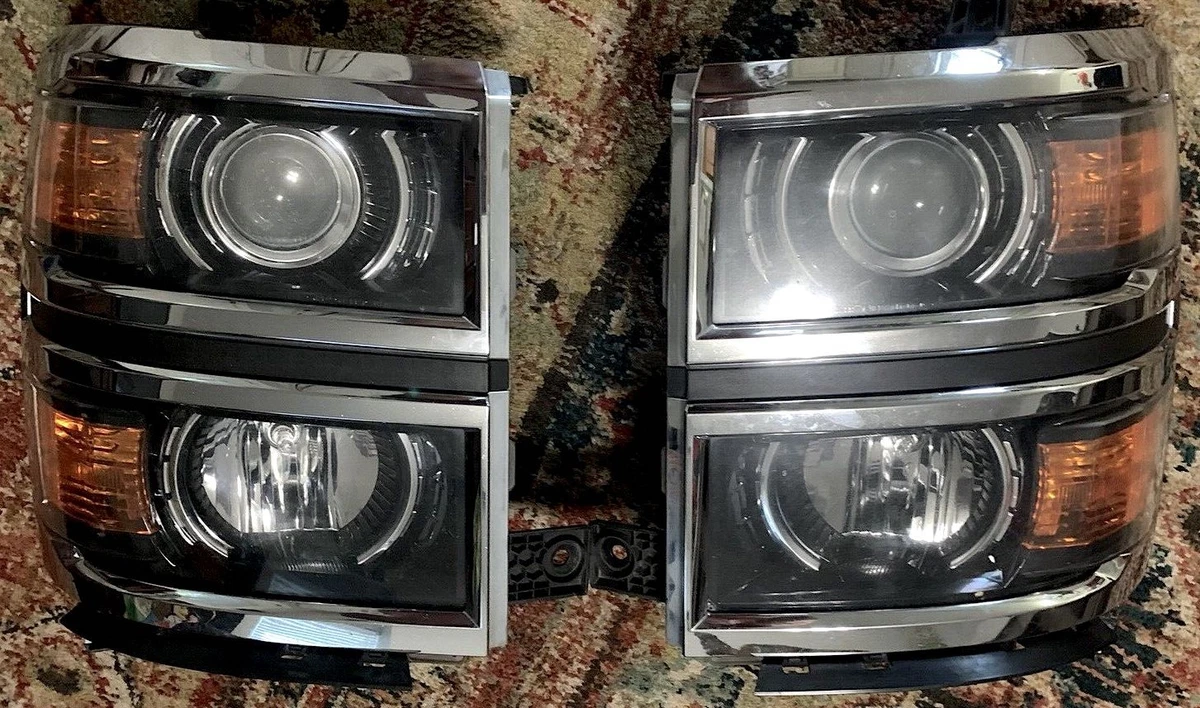
If you want to stick with stock, but are on a budget, consider a set of used headlight assemblies.
Headlight assemblies have seen significant styling change since first entering the market in 1985. eBay Motors has plenty of choices for you to consider when the need arises to replace a headlight assembly.
About the author

Share your feedback
This article is meant to provide general guidance only. Automotive maintenance, repair, upgrade, and installation may depend on vehicle-specifics such as make and model. Always consult your owner's manual, repair guide for specific information for your particular vehicle and consider a licensed auto-care professional's help as well, particularly for advance repairs.
Recommended for you
Find answers and inspiration

If Your Car Has a Blown Fuse (And How Replace It)

A Headlight Restoration Kit Brings Back Brilliant, Clear Lights

8 Ways to Make Your Beater Look Bad

Hacks to Restore a Headlight Lens

Underglow Lights Give Your Car a Special Glow

J.W. Speaker Headlights Shine the Way

Portable Generators Power Up Your Overlanding Campsite

How to Choose the Right Headlight Bulb
4 min read
Complete Guide to HID Headlights

Fog Lights Add Visibility in Bad Weather

Deciding to Buy Original or Aftermarket Auto Parts: Quality and Selection

The Lowdown on LED Tail Lamp Replacement
4 min read
Your Crossover Can Become an Overlanding Rig

How to Use Headlights: Not As Obvious As You Think
4 min read
How to Pick the Right “Parts Car”

How to Change a Headlight Bulb
6 min read
The Difference Between Projector and Reflector Headlights

How to Clean Headlights: Buy a Kit or Do It Yourself?

Types of Headlights: HID, Xenon, and LED

How To Buy New Old Stock (NOS) Parts on eBay

Car Wiring Harnesses and Adapters: Tips and Tricks

When and How to Adjust Your Headlights

Bright Gift Idea: An Off-Road LED Light Bar

Common-Sense Rules for Low Beam vs. High Beam Headlights

Should You Convert Halogen to LED Headlights?

Replacement Headlights: A Choice and a Warning

Deciding to Buy Original or Aftermarket Auto Parts: The Basics

Style Your Ride with Tinted or Smoked Headlights

Performance Mods for the Nissan Leaf

Tantalizing Taillights: Upgrade Your Turn Signals

LED Headlights on Cars: Installing, Aiming, and Troubleshooting

Puddle Lights Brighten the Experience of Getting into Your Car

Sylvania Headlight Restoration Kit Revives Bright Light

Halo Headlights Add Stylish Rings of Light

Deciding to Buy Original or Aftermarket Auto Parts: The Online Transaction

Checklist: 8 Steps For Winter Car Prep

Signs That You Should Replace Your Headlights
5 min read
Taking Your Car to the Track: The Ultimate Guide

Brake Lights and Tail Lights: a Complete Guide

A Guide to Sealing Your Vehicle’s Headlights

Online Videos Are a Game-Changer for DIY Car Repair

When to Use Parking Lights vs. Headlights
4 min read
Easy DIY: Upgrade Your Car’s Interior Lighting