
A license plate serves the essential purpose of identifying the vehicle and its owner. But a vintage license plate can also express a car’s history and style.
Most states require the same official license plate in the front and back. But nearly 20 states—mainly in the Southeast—only need a plate in the back. That means you can attach any antique license plate you like in the front.
If you display your car at shows, you might also consider a so-called “Sto n Sho” plate holder - opens in new window or tab. so you can easily remove the plate while it’s on view.
Match Your License Plate to the Right Year
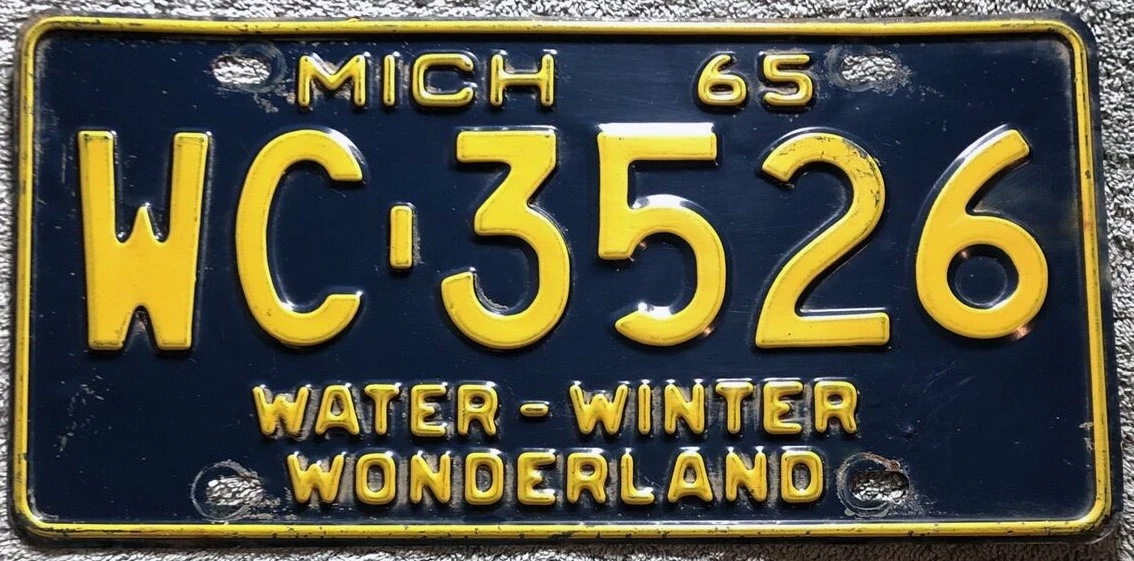
Many owners like having the license plate’s year match the model year of their car. So if you have a 1965 Mustang, you might want the state’s license plate from that year. Most states refer to this trend as a “vintage” plate.
Does Your State Allow Vintage License Plates?
First, you need to verify that your state allows these plates. Next, here's how to locate the appropriate vintage license plate for your car's model year. Typically the state will not produce the older style plate. However, eBay Motors often has older license plates - opens in new window or tab. available for purchase.
Then you need to confirm with the state that the combination of letters and numbers on that older plate is not currently in use. If it’s available, you can often pay a fee to have that old plate used on your classic car. Some states restrict the use of these vintage plates to display cars—not vehicles used for daily transportation. Local rules apply.
California Black Plates

For many years, a California black plate with yellow lettering was a source of pride for collectors in the Golden State. California used the color scheme from 1963 to 1969—the heyday of American muscle cars.
California then switched to a blue background with yellow lettering. However, car owners who had a black plate could keep using it. So, as the years passed, a classic car that sported a California black plate indicated that a vehicle had remained in operation since the 1960s.
California revived these iconic yellow-on-black legacy plates in 2015. (Newer plates added reflective yellow paint.) However, now that California black plates can be placed on any car and model year, the uniqueness of a classic car with these plates is somewhat diminished.
Historic License Plates Across the Country
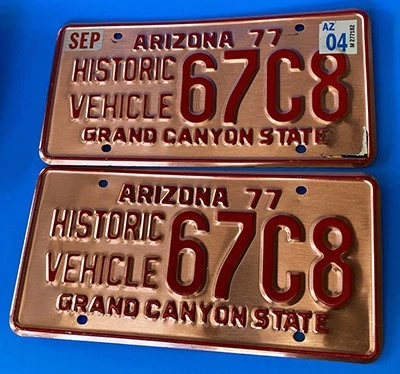
Many states offer a historical plate for vintage cars. However, make sure to read the fine print of the rules in your state.
For example, you can buy an antique plate in Texas, but the vehicle’s use might be restricted to car shows and parades. In addition, these classic plates are only available for cars at least 25 years old. On the other hand, over 500 specialty plate color-style combos are available for all cars in Texas.
New York similarly restricts historical plates to vehicles more than 25 years old and not used for daily transportation.
In Pennsylvania, an antique plate is available for restored vehicles more than 25 years old. Pennsylvania also offers a “classic” plate for restored cars at least 15 years old.
In Arizona, a car must be on a list of vehicles certified by the Classic Car Club of America. Or you could opt for a “historic” plate if your vehicle is at least 25 years old. Those plates are produced on copper for a distinctive look.
Regardless, a brand-new modern license plate on a classic car looks out of place. But with a little research and shopping, you can complete an authentic style with a vintage plate.
About the author

Share your feedback
This article is meant to provide general guidance only. Automotive maintenance, repair, upgrade, and installation may depend on vehicle-specifics such as make and model. Always consult your owner's manual, repair guide for specific information for your particular vehicle and consider a licensed auto-care professional's help as well, particularly for advance repairs.