Some automotive styling trends are practical, such as aerodynamic streamlining that has the double benefit of making cars run more fuel efficiently and look cooler. But other striking designs are simply intended to turn heads and get people into showrooms. Such was the boat-tail car, an auto design trend in the 1920s and 1930s.
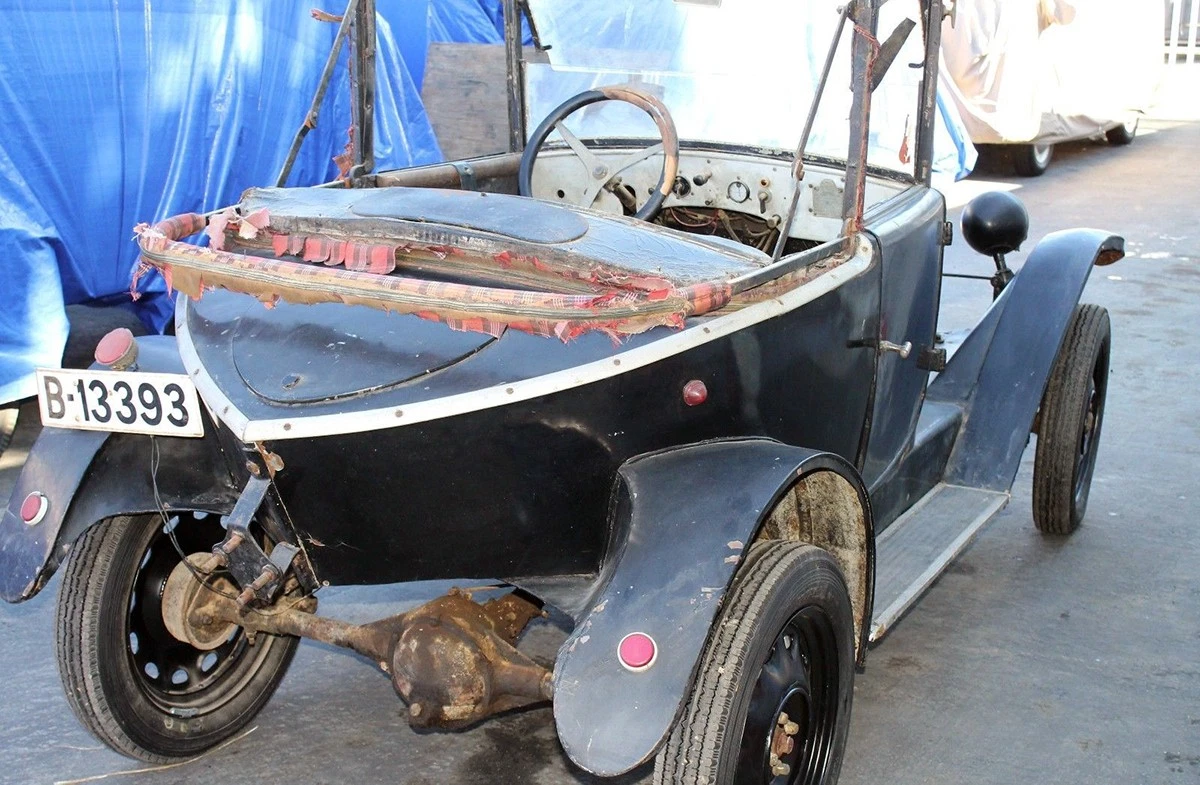
A fascinating boat-tail example from the 1920s, a very boat-like Citroën Deluxe Drophead - opens in new window or tab., is now listed on eBay Motors.
Boat-tails—vehicles that come to a sharp point at the rear like, well, a boat—never made a lot of sense in terms of the use of space. A lot of useful cargo area is sacrificed. But cars of this vintage usually didn’t have built-in trunks, so the concept caught on. They were often called “speedsters,” and maybe the tapered tail helped cheat the wind.
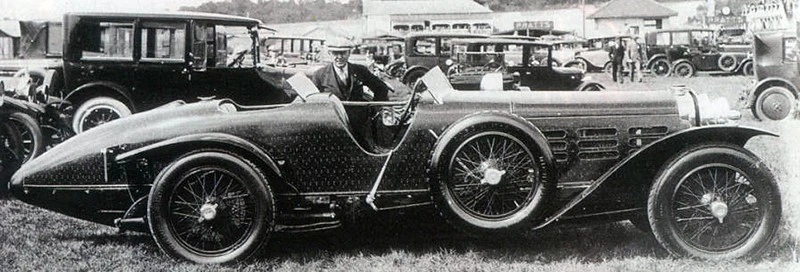
1924 H6C Targa Florio Torpedo
In extreme examples, designers took the boat inspiration further and paneled their cars using shipbuilding techniques. High-end automaker Hispano-Suiza pioneered the technique for its over-the-top 1924 H6C Targa Florio Torpedo, one of the world’s truly great and valuable cars. It was commissioned by André Dubonnet, whose family was wealthy from liquor sales.
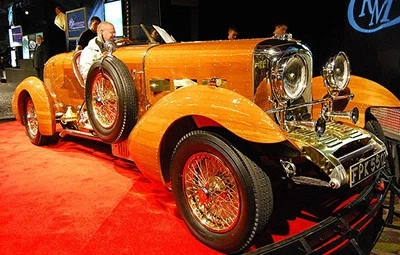
1939 Lagonda Rapide
Another particularly breathtaking example is the 1939 Lagonda Rapide, with its boat-tail body paneled in tulipwood (as is the Hispano). Thousands of brass rivets hold the wood to the coachwork. Perhaps the most famous boat-tail is the Auburn Boat-tail Speedster, a highly sought-after model that was largely the victim of the Depression. Later, kit cars were based on the Auburn.
It’s not surprising that some of these cars were also called “skiffs,” because they look like the exquisite wooden boats of the period. French cars, including Amilcar, Panhard, Renault, and Peugeot, were among the marques sometimes fitted with special wood-paneled boat-tail bodies.
What we have on eBay - opens in new window or tab. is described as a unique boat-tailed 1923 Citroën B13 393, with a custom-made body built in Spain. This one doesn’t have the wood paneling, but its boat-inspired lines are clear, with the added benefit of storage in that impractical tail.
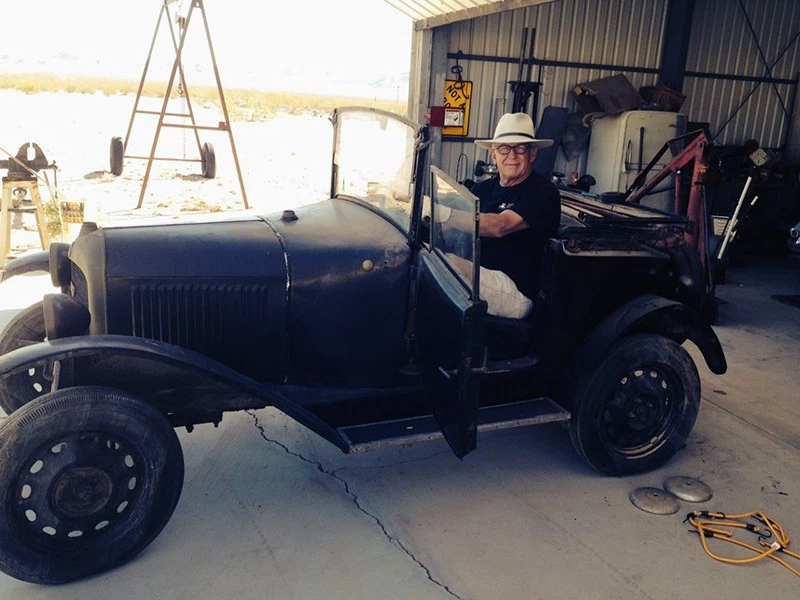
Ten years ago, the Citroën was reportedly driven around the then-owner’s California estate.
It’s unclear if the car’s 1923 date or model ID is correct. The B10 model, Citroën’s first with an all-steel body - opens in new window or tab. (replacing combined wood and metal), was introduced at the Paris show in 1924. The B14, a further iteration, came along in 1926. Was there actually a B13? The car’s body plate does identify it as a B13 393, and the grille shape is similar to the B10, but not the B14.
Brian Mueller, the Citroën’s owner, isn’t entirely sure what model the car is either, and agrees (despite the plate) there was no production B13. He says, “André-Gustave Citroën was a pretty quirky dude, and he made many one-off chassis. Maybe this was one of those.”
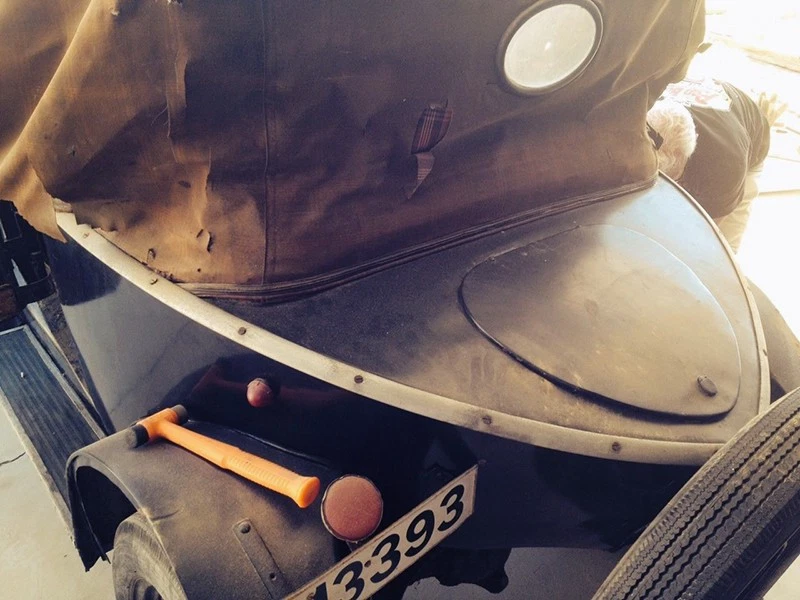
The boat-tail Citroën has stylish lines, and a neat rear storage compartment.
According to Mueller, this well-preserved Citroën—with its body added on balmy Palma de Mallorca in Spain’s Balaeric Islands—was imported more than 50 years ago, and has been stored (in a garage, thankfully) ever since. It was owned by the late Citroën collector Don Runnels, and supposedly still runs—Runnels and his wife supposedly drove it around their do know the four-cylinder engine is free. Despite the fact that Citroën stopped selling cars in the US in 1991, there are plenty of the marque’s parts - opens in new window or tab. available on eBay.
Mueller told us that the car was ordered new by a pair of sisters on the island and that Runnels—who had dozens of Citroëns—bought it directly from them. “We are rapidly scaling back our collection and sadly this one has to be sold,” Mueller says.
About the author

Share your feedback
This article is meant to provide general guidance only. Automotive maintenance, repair, upgrade, and installation may depend on vehicle-specifics such as make and model. Always consult your owner's manual, repair guide for specific information for your particular vehicle and consider a licensed auto-care professional's help as well, particularly for advance repairs.