An Ultra-Rare Museum-Quality Flat Track Motorcycle from Snowmobile Country
Motorcycles & ATVs
Motorcycles

Rokon is a small motorcycle manufacturer in snowy Rochester, N.H. (population 30,000). The company is best known for building the Trail-Breaker, a sturdy off-road motorcycle with big, squishy tires.
The Trail-Breaker gets its off-road ability by having both front and rear-wheel drive. Its ingenious drive system was designed in 1958 by Charles Fehn, an inventor from San Bernardino, Calif. Fehn used a combination of belt, chain, and shaft drives coupled to gearboxes to power both motorcycle wheels simultaneously.

item 1 of 16
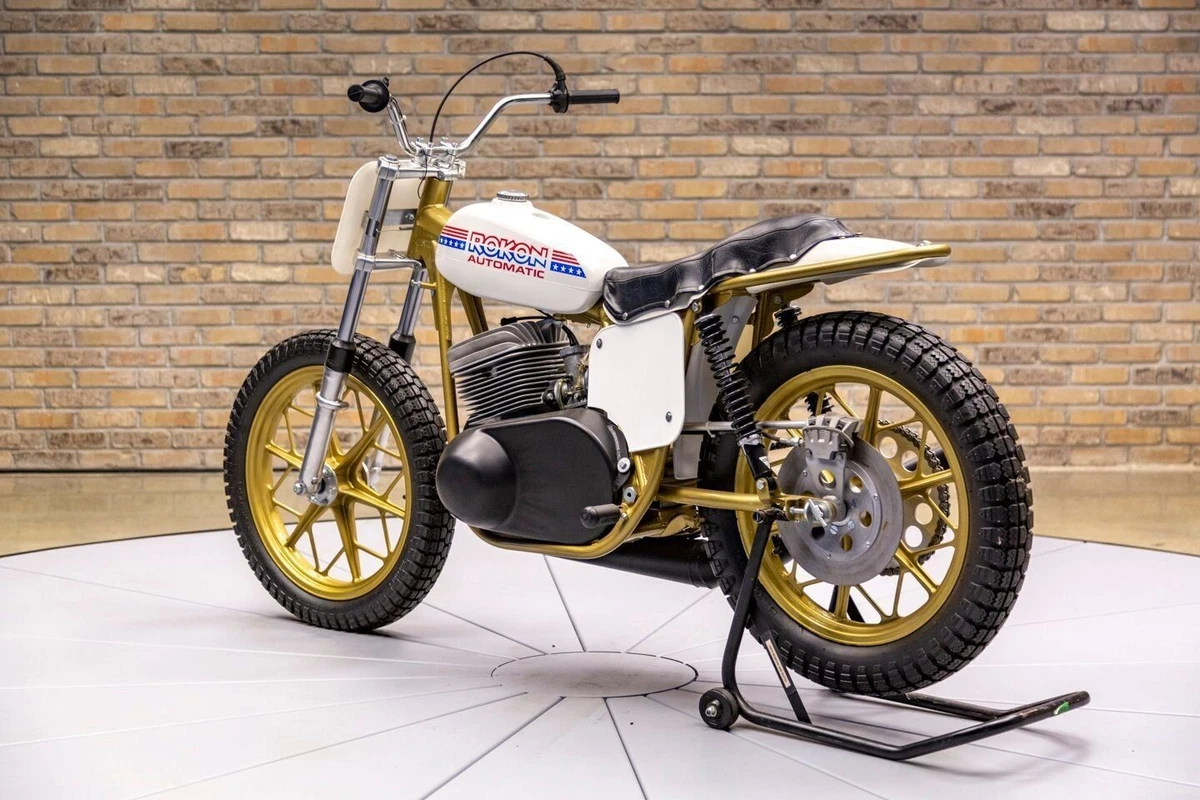
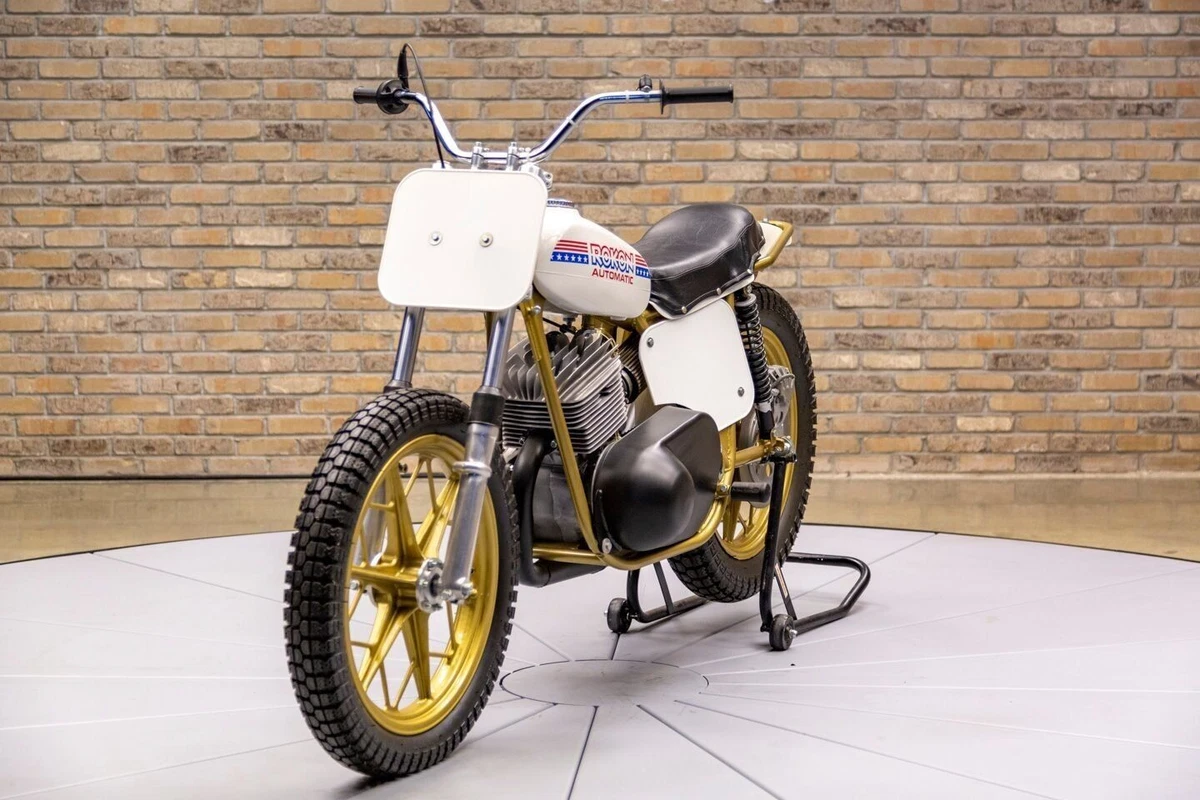
The Trail-Breaker is the company’s mainstay. However, in the early 1970s, Rokon ventured into new two-wheeled territory—producing the striking 1975 Rokon FT340 Automatic Flat Tracker - opens in new window or tab..
A CVT Bike
Before building the flat-track motorcycle, Rokon developed and raced an enduro called the RT340. This experiment with enduro racing and motocross inspired the company to make a fully automatic transmission. That, in turn, led to the RT340 TRC automatic motorcycle, which was powered by a Sachs two-stroke, single-cylinder engine.

Company engineers also sourced a snowmobile-type Salsbury continuously variable transmission (CVT) to power the back wheel of the strictly rear-wheel-drive RT340. Many of these attributes migrated to the Rokon FT340 Automatic Flat Tracker.
Pull the Cord to Start It Up
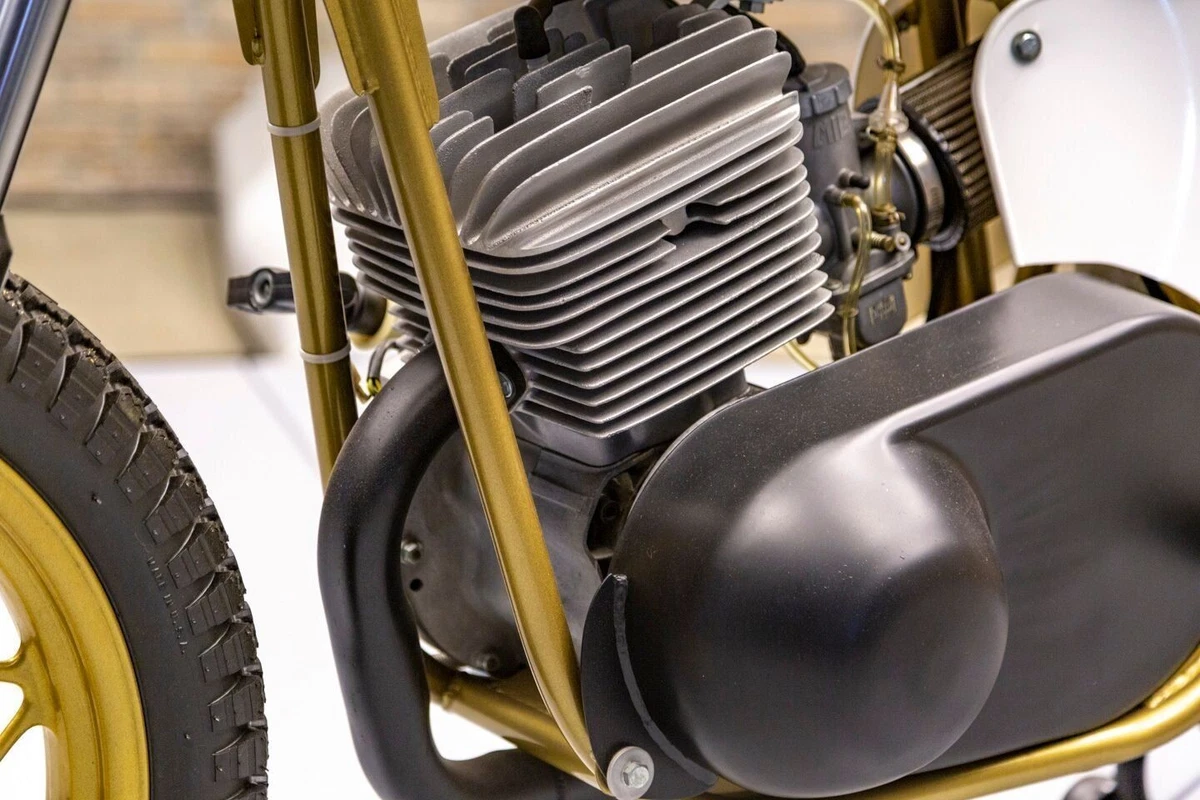
The primary carry-overs on this stunner bike for sale on eBay are the engine and transmission. The FT340 features a 340cc Sachs/Rotax two-stroke engine - opens in new window or tab.. More commonly found on snowmobiles - opens in new window or tab., the engine has a pull cord for starting. It also has an automatic CVT that freewheels while the engine is idling (until engaging around 2,800 rpm).
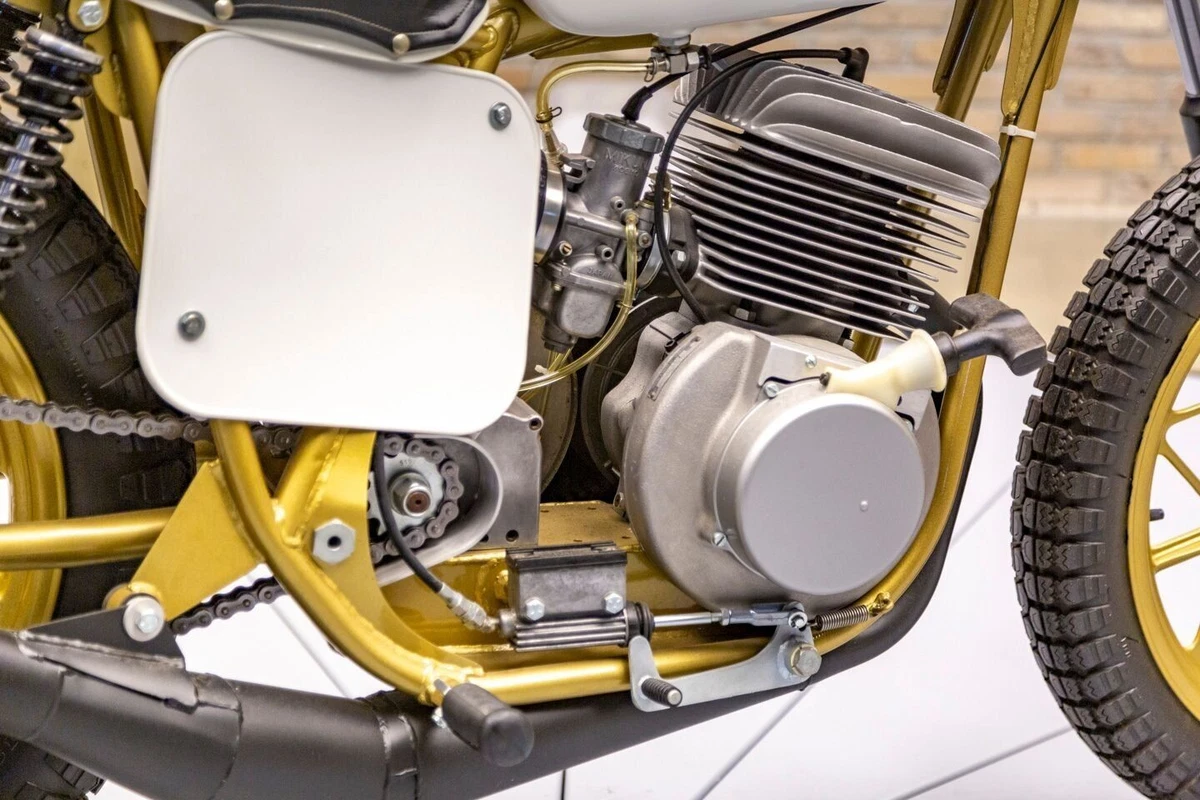
The engine is tuned to run in the 6,000-6,700 rpm range and, according to Rokon, puts out 37 horsepower at the crankshaft. These numbers are easy to test on a dynamometer. But the CVT has a compensator that constantly adjusts for rear-wheel load. On the flip side, if you rolled off the throttle, the transmission would revert to freewheeling mode, eliminating any engine braking, a helpful feature on a standard motorcycle.
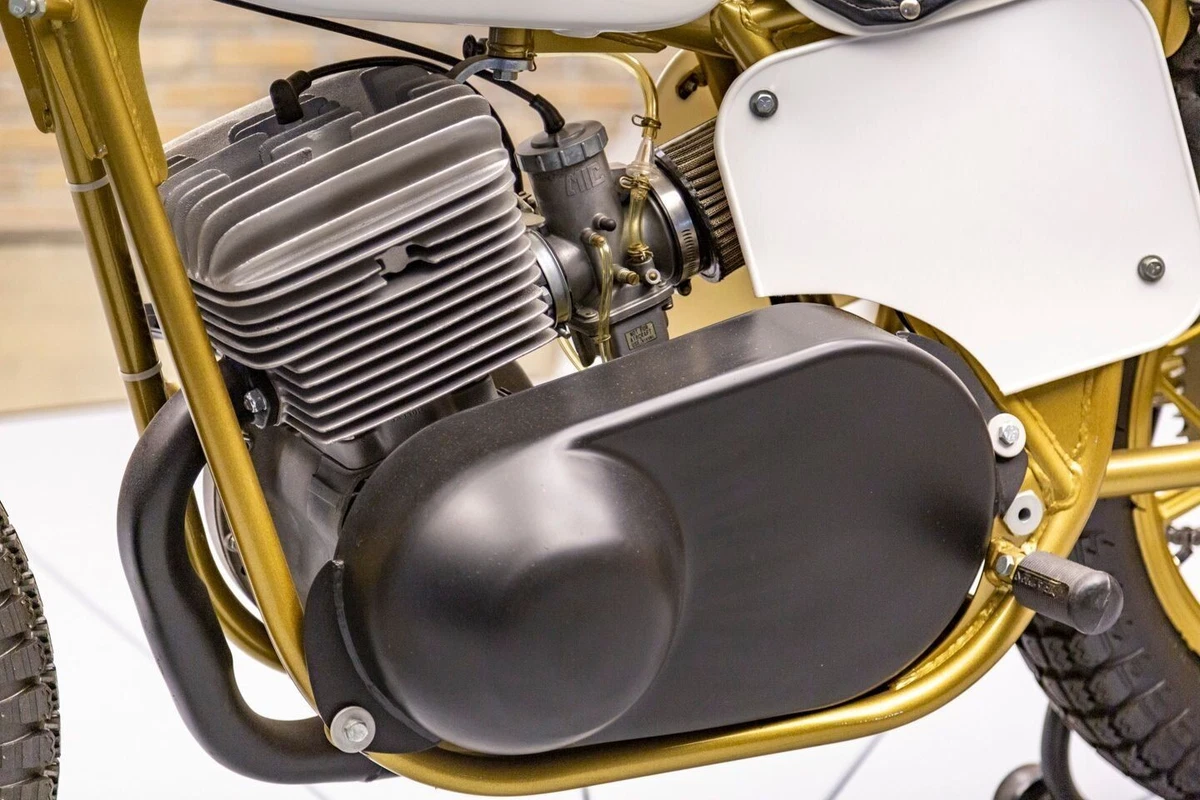
The engine on this Rokon flat tracker looks immaculate. Unfortunately, the seller reports that the bike hasn’t been run since its restoration.
Rokon FT340 Flat Tracker as Design Exercise

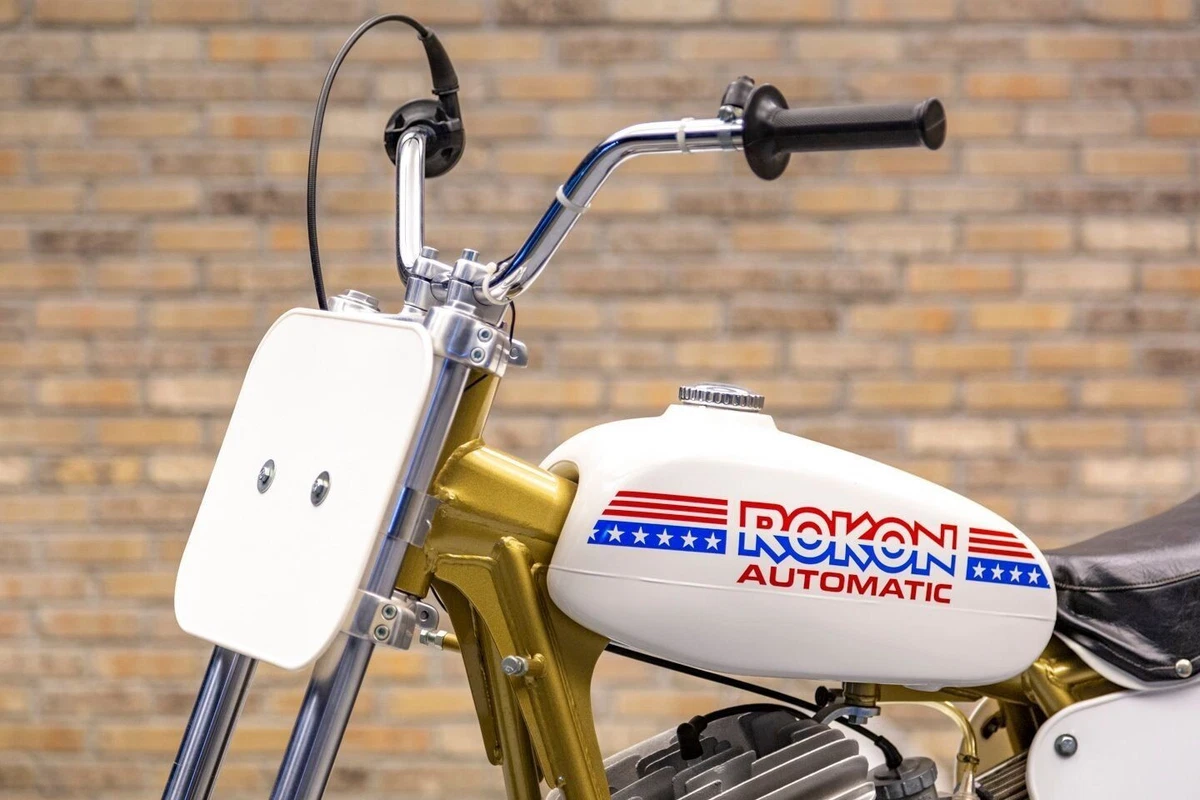
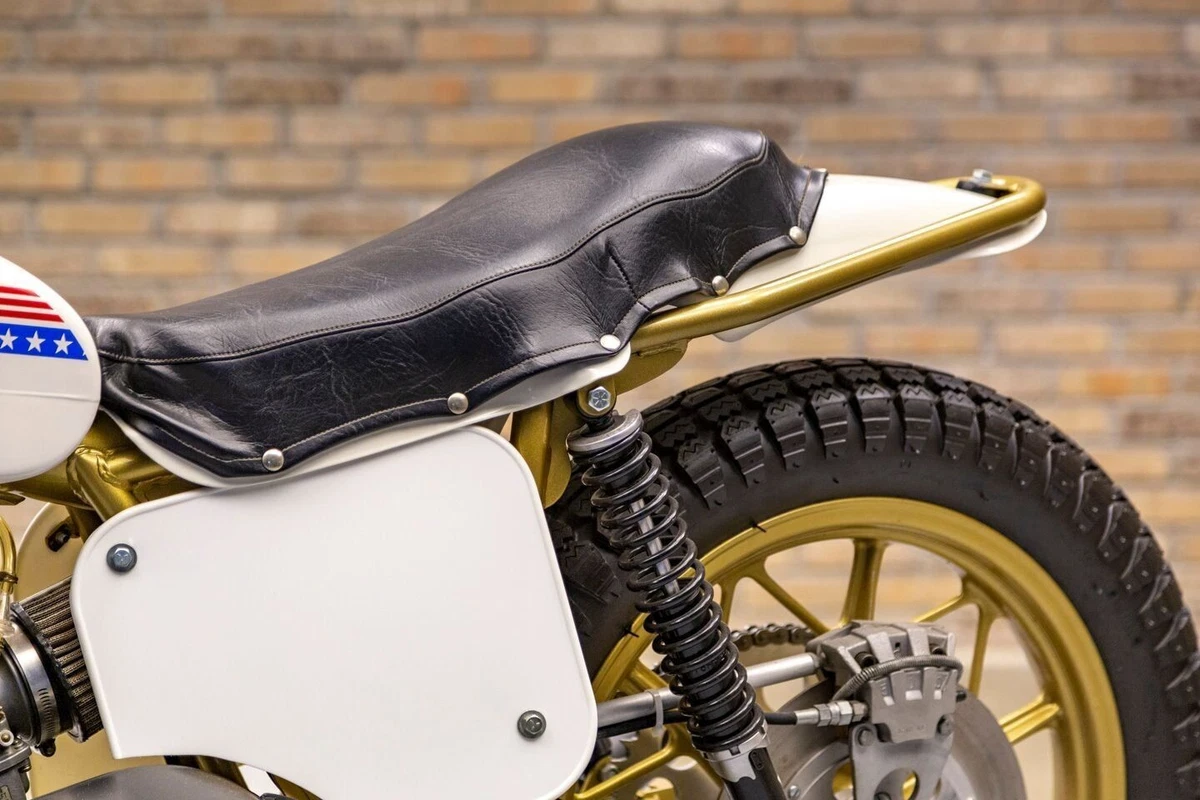
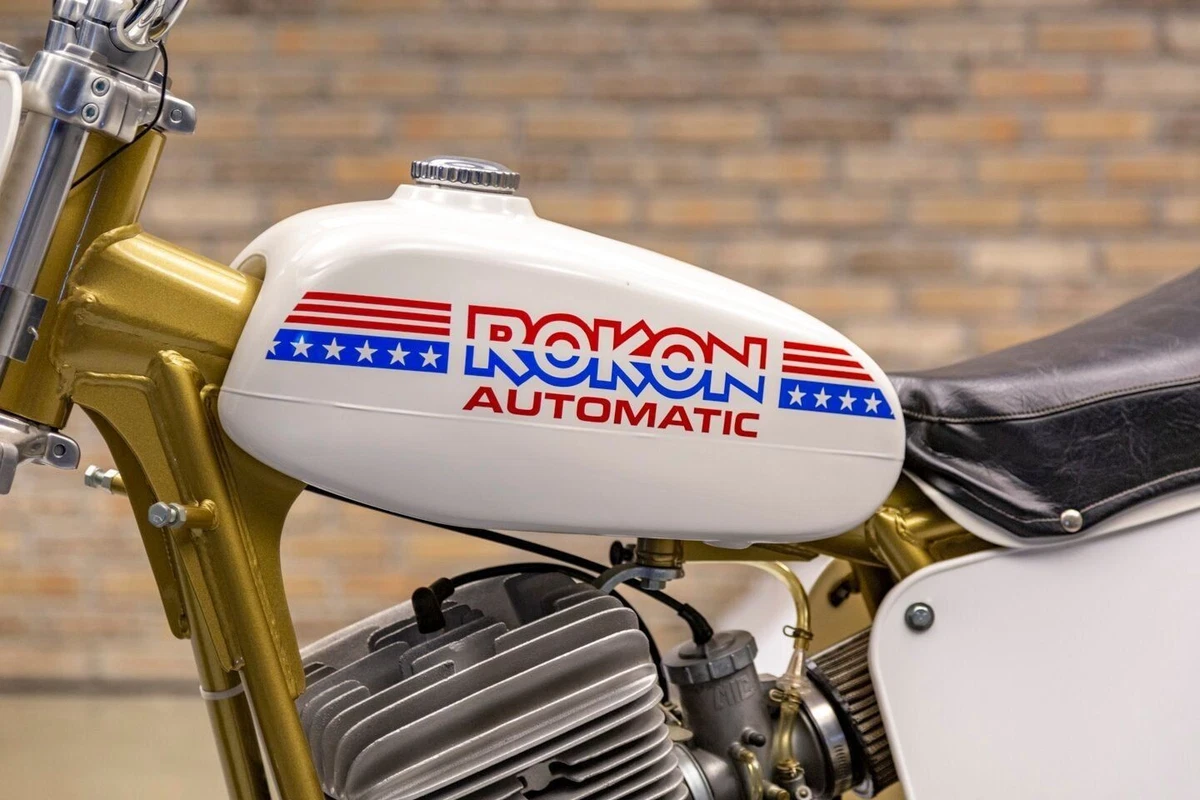
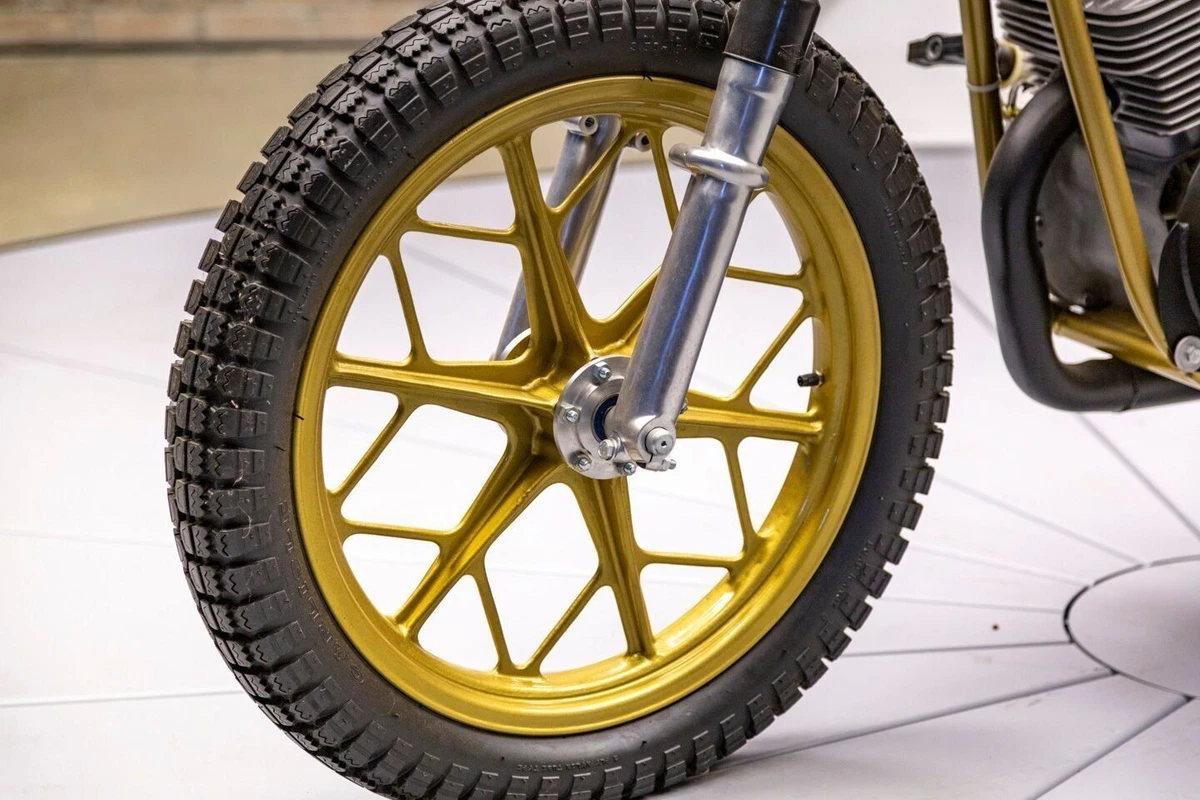
The restoration returned the FT340 Flat Tracker to its original golden glamor, highlighted by a gilded frame and magnesium wheels. The gas tank’s red, white, and blue treatment screams 1970s.
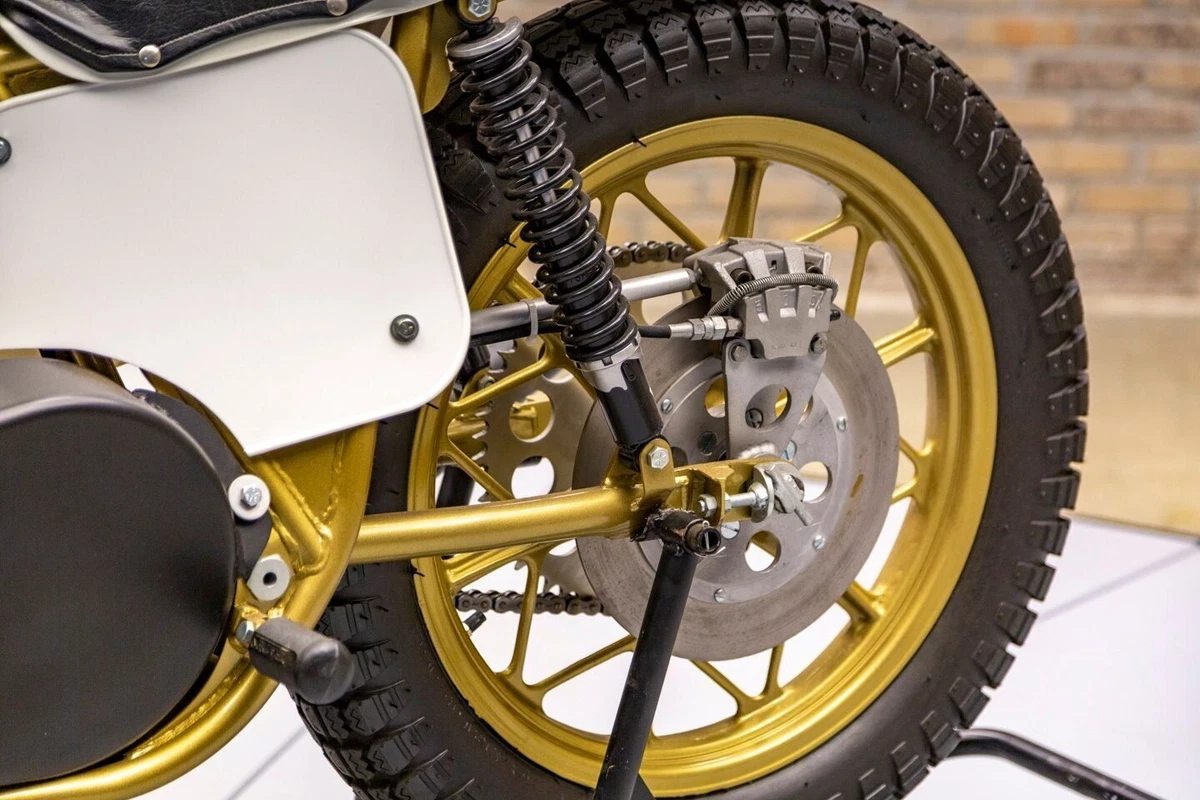
In proper flat tracker form, there’s no front brake. There’s also no clutch lever and cables on the left grip because it’s automatic. And don’t look for a brake lever on the right grip, either. Instead, there’s a lone cable connected to the twist throttle. A single disc on the back wheel handles braking duties. Dual coil-over shocks and a tidy tracker tail round out its racy profile.

Beautiful as the Rokon FT340 Flat Tracker may be, there are telltale signs that it was more of a design exercise than a legitimate flat-track racer. Its exhaust is routed underneath the frame, while most trackers run a high pipe. The suspension is spindly and looks to be on the soft side.
Then there’s the engine. It’s generally running fast except when idling, so it has plenty of torque. But the power band is narrow. The sound is unusual, too, because the engine revs almost constantly while the transmission ratios change according to speed. This makes riding on dirt more challenging because when a rear wheel breaks loose on the CVT Flat Tracker, there isn’t the shift in engine sound that racers expect. And there’s no engine braking.

Those are moot points for this baby, though. It’s one of 33 built by the factory—an obscure piece of flat-track racing history. It’s also a prime example of Rokon’s automatic flat tracker.
The Rokon FT340 Flat Tracker - opens in new window or tab. lived most of its life in museums and hopefully will receive that same type of royal treatment at its new home.
About the author

Share your feedback
This article is meant to provide general guidance only. Automotive maintenance, repair, upgrade, and installation may depend on vehicle-specifics such as make and model. Always consult your owner's manual, repair guide for specific information for your particular vehicle and consider a licensed auto-care professional's help as well, particularly for advance repairs.