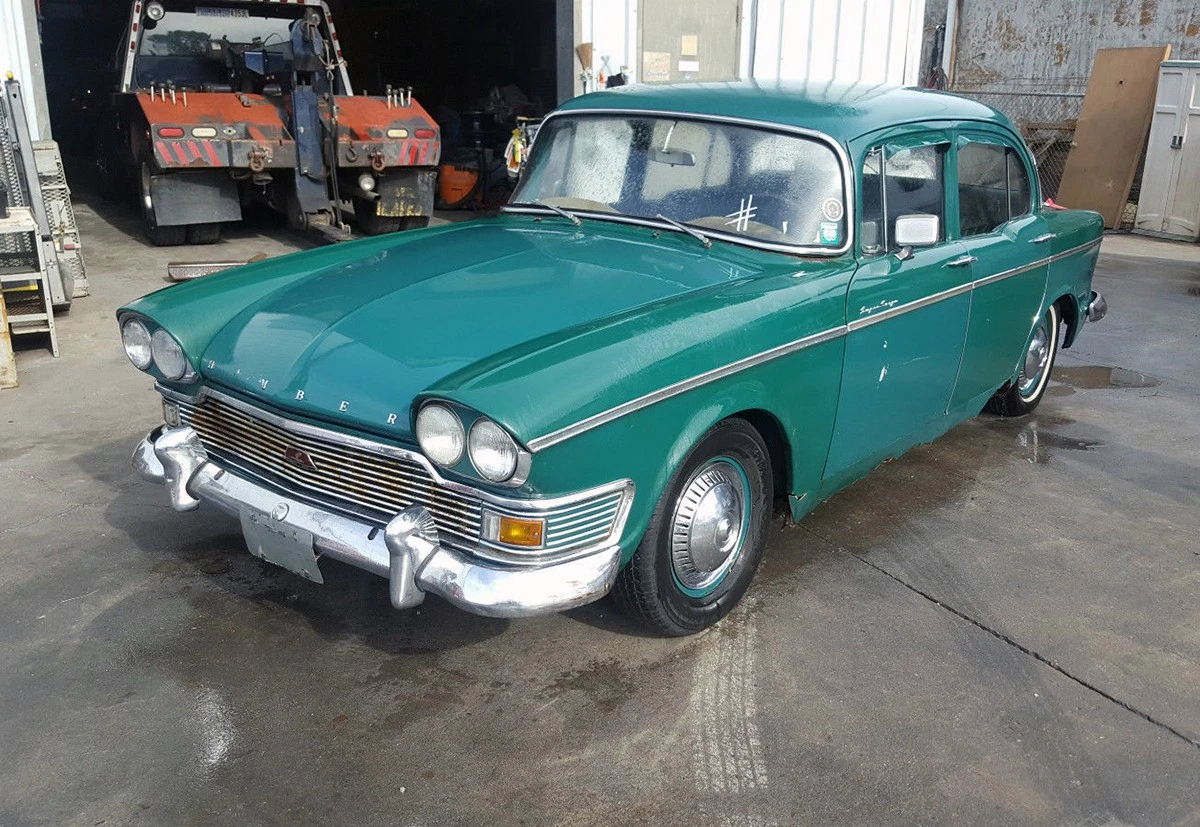
In 1938, the maker of Britain’s Pullman limo put its four-liter six-cylinder engine into the company’s Snipe luxury sedan—and the Super Snipe was born. That model would go through a long series of modifications over three decades until emerging in its final form, the Super Snipe of the 1960s. A limited number of left-hand drive units reached American shores, including the rare 1964 Super Snipe now listed on eBay - opens in new window or tab..
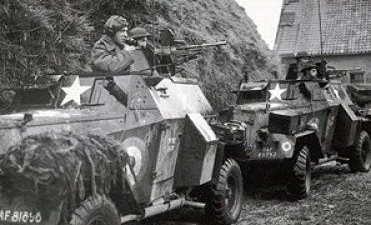
During World War II, the Super Snipe was repurposed as the Humber Light Reconnaissance Vehicle.
It’s not easy to trace all the twists and turns of the Super Snipe over those decades. But we can point to American Delmar “Barney” Roos as an originating force behind the car. Roos previously worked at Studebaker, where he developed eighty-cylinder engines thin-wall engine bearings. Roos spent just a year in England—before returning to the US where, among other projects, he developed the technical design for what became the military Willys MB Jeep.
The idea behind the original Super Snipe was to offer an American-like and powerful, yet affordable, model for businessmen in the pre-war UK. Those plans were interrupted by World War II, when the model was reworked into a British military staff car and reconnaissance vehicle - opens in new window or tab..
After the war, Humber continued to spin out a succession of versions—usually growing in size and power. By 1948, there was the Super Snipe Mark II six-passenger vehicle with bench seating and a pair of smaller round lamps—one for fog and one for passing—below the main headlights. There was the Mark III of the 1950s, which Stirling Moss, the famed British race car driver, took on a 15-country romp through Europe to demonstrate its power and durability.
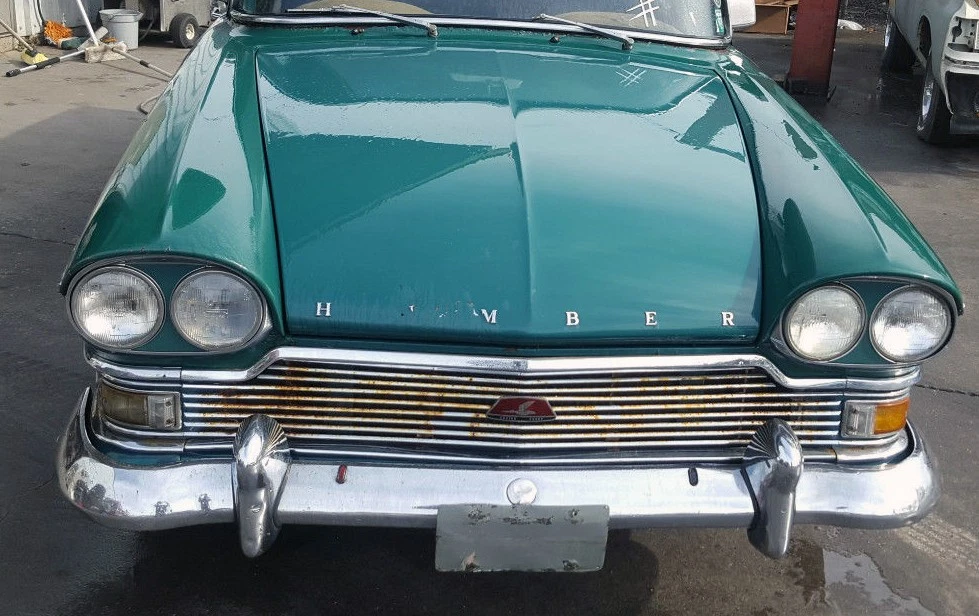
The Super Snipe Series III is reportedly the first British model to use two pairs of headlamps.
Still more versions followed in the late 1950s and ‘60s—including the Series III, which was the first British model to use two pairs of headlamps. That styling revision can be seen in the 1964 example now available on eBay.
Other modifications on that variant include a more stable suspension, a lower hood, and a longer nose (that provided more room for heating and cooling for the fussy American market). The cabin also provided more leg room for big passengers in the backseat. The Series IV took on a closer resemblance to the shape of the 1955 Chevrolet. (See our story on outsized influence of the ’55 Chevy - opens in new window or tab..)
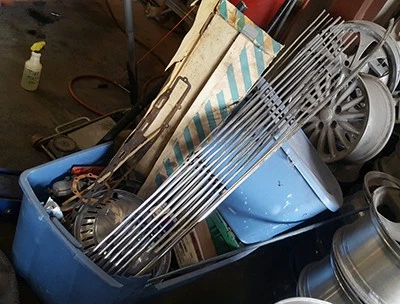
The seller is offering extra front and rear bumpers, front and rear glass, and moldings.
The example now available on eBay - opens in new window or tab. is the 1964 Series V Humber Super Snipe. This model employed power steering and an optional automatic transmission. The cylinder heads of this Super Snipe version were tuned by Harry Weslake, a sports car tuning specialist based in East Sussex. Weslake, who was able to boost power to nearly 140 horsepower, produced a Humber Super Snipe with a “powerful engine allowing it to handle the challenges of smaller lanes where the speeds rise and fall with each change of direction and each corner negotiated,” according to a reviewer in its day.
Production of the Super Snipe was over by 1967 when the manufacturing group was acquired by the American Chrysler Corporation. But its three decades of existence—including its creation by an influential American engineer and its later mimicking of mid-century US auto design—reveals the cross-pond influence of American and British car design throughout the 20th
century.
About the author

Share your feedback
This article is meant to provide general guidance only. Automotive maintenance, repair, upgrade, and installation may depend on vehicle-specifics such as make and model. Always consult your owner's manual, repair guide for specific information for your particular vehicle and consider a licensed auto-care professional's help as well, particularly for advance repairs.