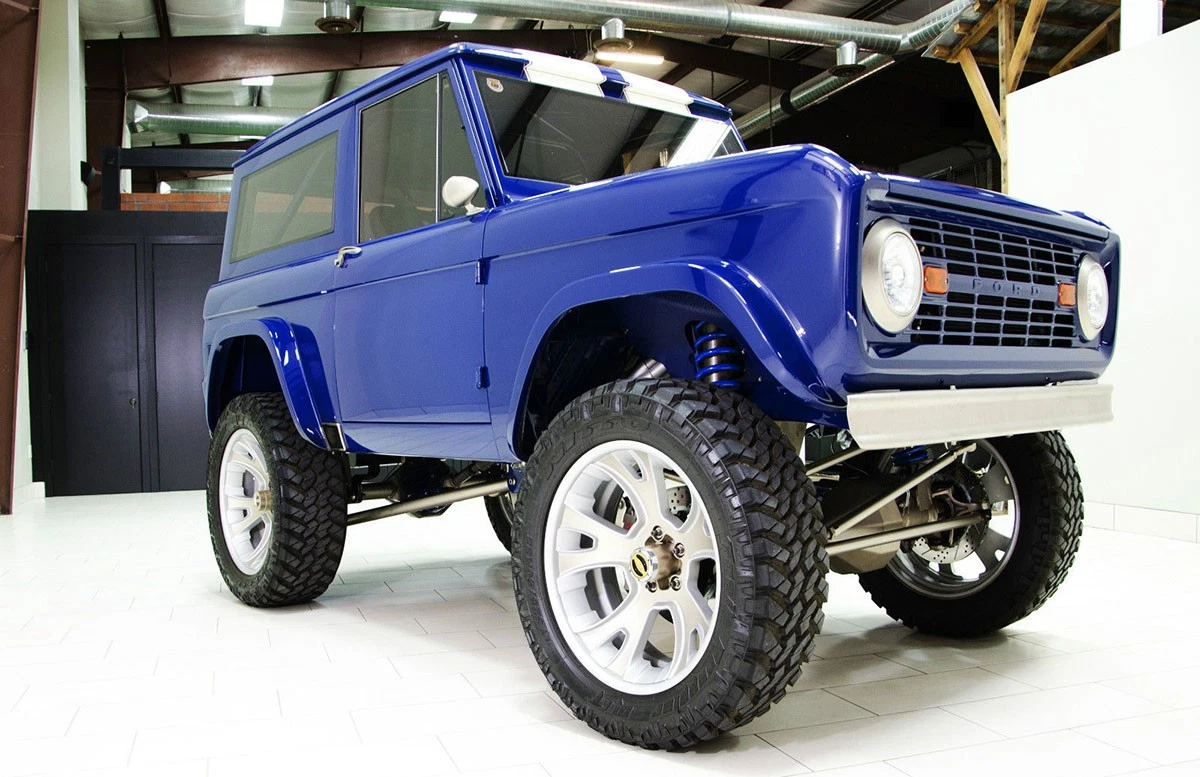
If recent listings on eBay are any indication, first-generation Ford Broncos have claimed center stage at the rodeo. A 1971 roadster with frame-off restoration is listed at $129,000 - opens in new window or tab., a low mileage 1975 with automatic transmission for $59,990 - opens in new window or tab. and a highly modified 1974 model for a whopping $275,000 - opens in new window or tab. (above).

Interior of modified 1974 Ford Bronco selling for $275,000
This isn’t an OJ Simpson thing: his was, after all, the larger, more powerful 1993 model. There’s no doubt that interest in classic four-by-fours is on the rise. Just look at results from the recent Barrett-Jackson auction in Scottsdale, Arizona where a 1944 Dodge Power wagon sold for $187,000 and a 1962 Power Wagon crossed the block at the same price.
Rumors that Ford is reintroducing the Bronco in 2020 are adding to the fever. A group called Bronco6g.com - opens in new window or tab. published drawings of a concept that created quite a buzz; combining round headlamps from early models with design elements from Ford’s 2004 Bronco concept and modern Ford trucks.
Bronco’s Origins
If Ford builds another Bronco, it will be to answer the same competitor as the 1966 model: the Jeep CJ, now known as the Wrangler. International Harvester had jumped into the fray with its Harvester but GM would wait another three years before introducing the K5 Blazer.
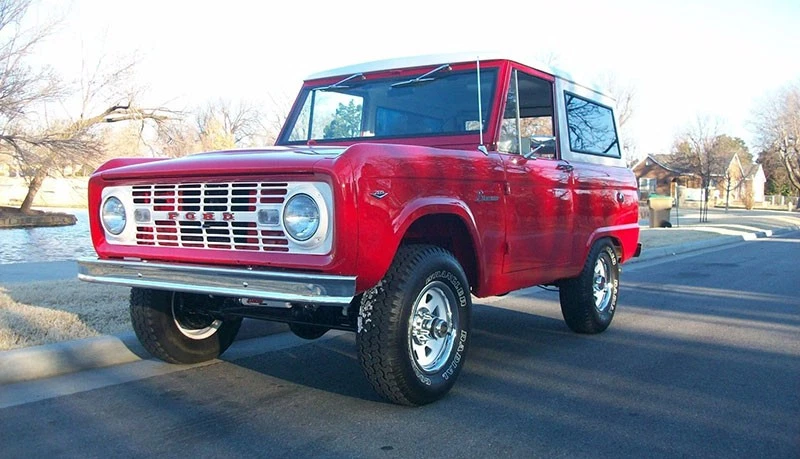
1967 frame-off restored Ford Bronco
The man behind the original Bronco was Donald Frey, who also conceived the Mustang. Unlike the Mustang that was based off the Falcon, the Bronco had a unique frame, suspension, and body. Axles and brakes came from the four-wheel drive Ford F-100 pickup. With its 92-inch wheelbase and 34-foot turning circle, the Bronco was perfect for narrow trails. Construction was simple: a ladder frame with flat glass and bumpers made of C-section. Left and right doors were identical except for the mounting holes.
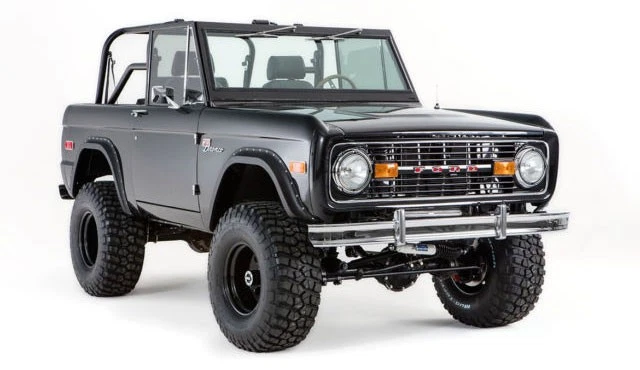
1971 classic Ford Bronco upgraded with a new Coyote 5.0 v8 fuel-injected engine
Initially Ford offered the truck with a straight six-engine only: a variation of the block used in the Falcon. To make it more robust, the Bronco block came with a heavy-duty oil pump, oil bath air cleaner, and carburetor with a float bowl that compensated against tilting. A 289 cubic-inch V-8 came the following year, growing to 302 cubic inches in 1969.
The suspension was also simple: coil springs up front allowing for long wheel travel, and leaf springs in the rear. A transfer case with shift on the fly was standard. Buyers could upgrade to a heavy-duty suspension.
Off-Road Racer
It didn’t take long for desert racers to discover the Bronco. In 1966 Bill Stroppe teamed up with Holman-Moody to use the truck in competition. Over the next five years Stroppe Broncos took first place in the Mint 400, Baja 500, and Baja 1000. In 1971, Ford released a “Baja Bronco,” package for sale through dealerships with a unique red, white, and blue paint scheme and flat or gloss black on the hood. Partially assembled cars shipped from the factory to Bill Stroppe’s shop in Long Beach for performance modifications.
Stroppe added larger fender flares for off-road racing wheels and tires, dual shocks at each wheel, padded roll bar, rubberized steering wheel, front bumper braces, a trailer hitch, spare tire cover and decals. Options on the Stroppe Bronco included power steering and an automatic transmission: both unavailable from the factory. Uptake on Stroppe Broncos was low: with estimates ranging from 450 to 650 vehicles.
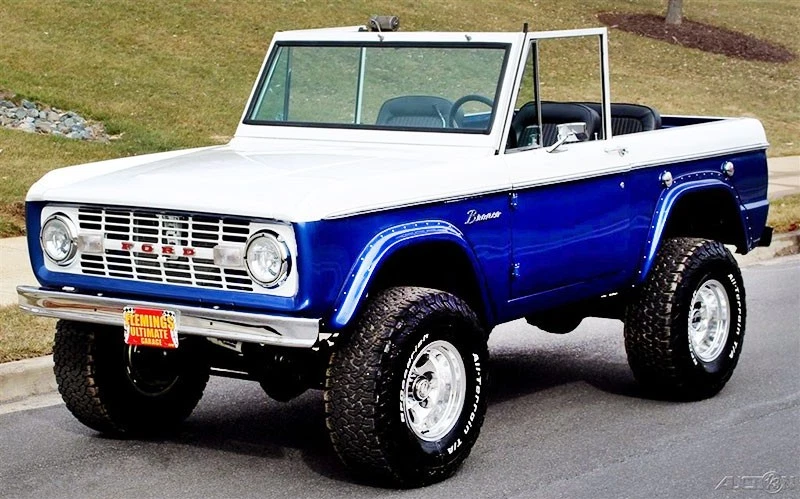
1975 Ford Bronco Pro Touring
The Enduring Open-Air Baby Bronco
Bronco sales in the early years were strong with 23,776 units produced in 1966. But the small SUV took a hit with the introduction of the larger K Blazer and GMC Jimmy in 1969. Ford added a heavy-duty front axle in 1971 and available automatic transmission for 1973. The Bronco got larger brakes and a bigger gas tank. In 1972 Ford dropped the inline six and made the V-8 its sole offering.
In spite of these improvements, the writing was on the wall: Ford needed to make the Bronco bigger and more powerful. The redesigned Bronco II, debuted in 1978. Yet, to this day, the baby Bronco remains an open-air tribute to a different type of counter-culture that found Americans preferring the road less taken.
About the author

Share your feedback
This article is meant to provide general guidance only. Automotive maintenance, repair, upgrade, and installation may depend on vehicle-specifics such as make and model. Always consult your owner's manual, repair guide for specific information for your particular vehicle and consider a licensed auto-care professional's help as well, particularly for advance repairs.