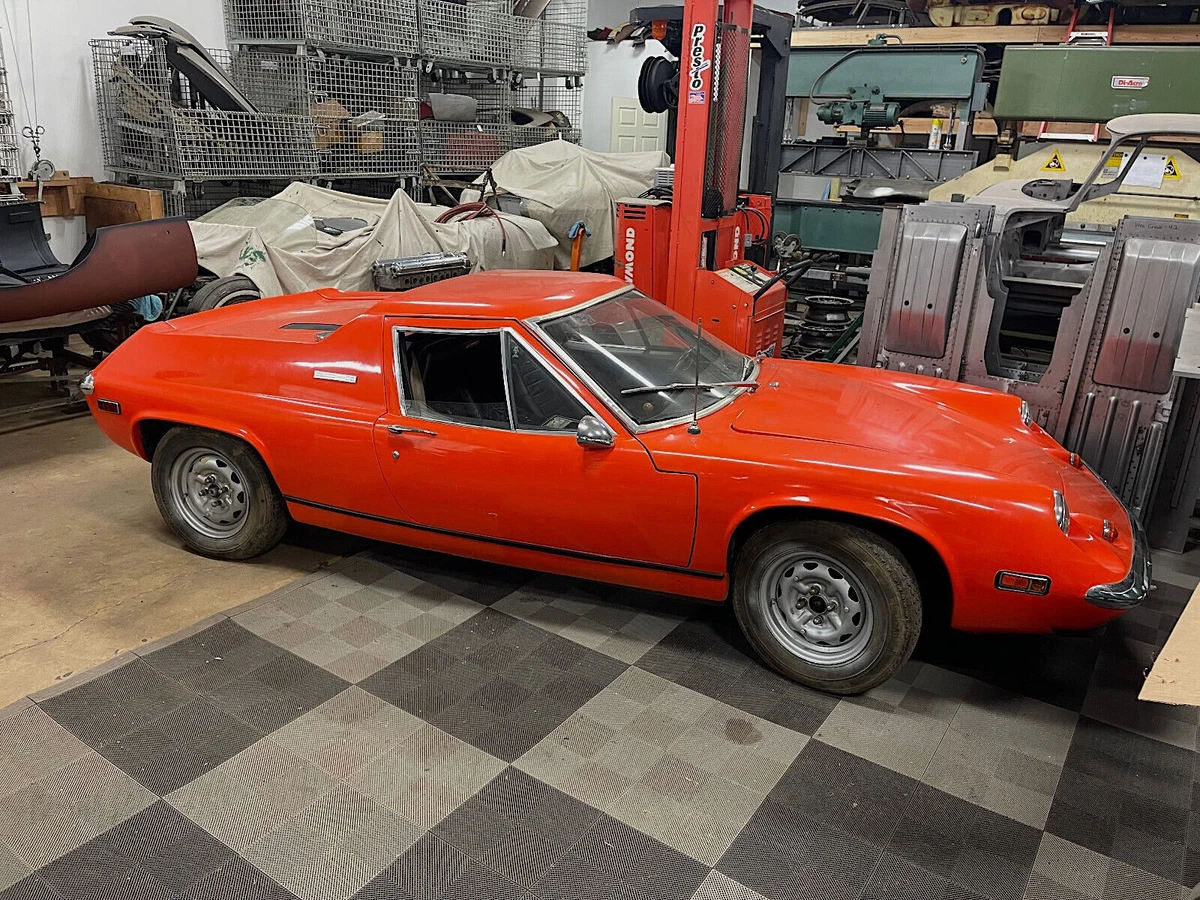
The Lotus Europa isn’t well known in the United States. We Yanks are more familiar with Lotus’ supercar-like Esprit - opens in new window or tab., made famous by James Bond and Pretty Woman. Other Lotus fans are fond of the Elise - opens in new window or tab. or Elan - opens in new window or tab.. Meanwhile, the oddball Europa, which earned the nickname of “world’s fastest bread van,” is mostly overlooked.


item 1 of 23
Consider the Europa recently for sale on eBay, and let us know what you think of its looks in the comments below.
Revolutionary Design

Its peculiar styling stemmed from its status as one of the first road-legal mid-engined cars ever produced. It’s overshadowed by the exotic Lamborghini Miura supercar, unveiled in 1966. The Miura is one of the most beautiful cars ever built.
Lotus didn’t have a powerful V-12 - opens in new window or tab. or the allure of Marcello Gandini’s design talents. Instead, Lotus founder Colin Chapman - opens in new window or tab. intended the Europa to be an affordable mid-engined sports car.
As such, early models used a four-cylinder Renault engine - opens in new window or tab. behind the seats—one initially meant for a front-drive car. As a result, the Lotus Europa's body is practical but not necessarily beautiful. But if you can get past its ugly duckling looks, there’s an engineering swan underneath its lightweight fiberglass body.
Handling Above All Else

Staying true to Chapman’s philosophy of “simplify, then add lightness,” Europa didn’t require much power. The magic came in Lotus’s suspension engineering prowess, which used an advanced backbone frame. This allowed the occupants to sit very close to the ground, lowering the center of gravity and reducing the amount of steel needed for its construction.
The suspension was advanced for its time. It features a double-wishbone and coil-over setup in front, a modified Chapman strut radius arm, and a lower transverse link system at the rear. Reviewers then compared its handling to a street-legal Grand Prix racer.
It is possible that Chapman initially went too far in his quest for lightness because the Series 2 Lotus Europas, like the one that was listed on eBay, added conveniences such as windows that could open and adjustable seats.
This Lotus Europa Needs Work

The car on eBay is an evolution of the Series 2, equipped with a twin-cam engine developed by Ford on which Lotus engineered a DOHC head. Unfortunately, like so many British cars, it could be a long-term project to get it back on the road.
The seller is a Jaguar E-Type - opens in new window or tab. specialist who acquired the Europa in an estate sale that included several Jags and Europas. According to the seller, it was last on the road in 1985. The previous owner took out the engine intending to rebuild it but never completed the work. The car has an intact interior and a steerable, rolling chassis.
This Europa was originally light blue but was repainted orange along the way.
A Looming Challenge

Nearly all the parts needed to rebuild this car are included in the sale. Moreover, the sellers seem very willing to help with initial questions verifying the spec and provenance of the vehicle.
The project will be an adventure. There are engine bits, brakes, and transmission of unknown status. As with any British car of that era, the electronics will test the most dedicated restorer. However, considering the last Europas we saw for auction didn’t have glass, this one is far closer to returning to the road.
Related:
About the author

Share your feedback
This article is meant to provide general guidance only. Automotive maintenance, repair, upgrade, and installation may depend on vehicle-specifics such as make and model. Always consult your owner's manual, repair guide for specific information for your particular vehicle and consider a licensed auto-care professional's help as well, particularly for advance repairs.