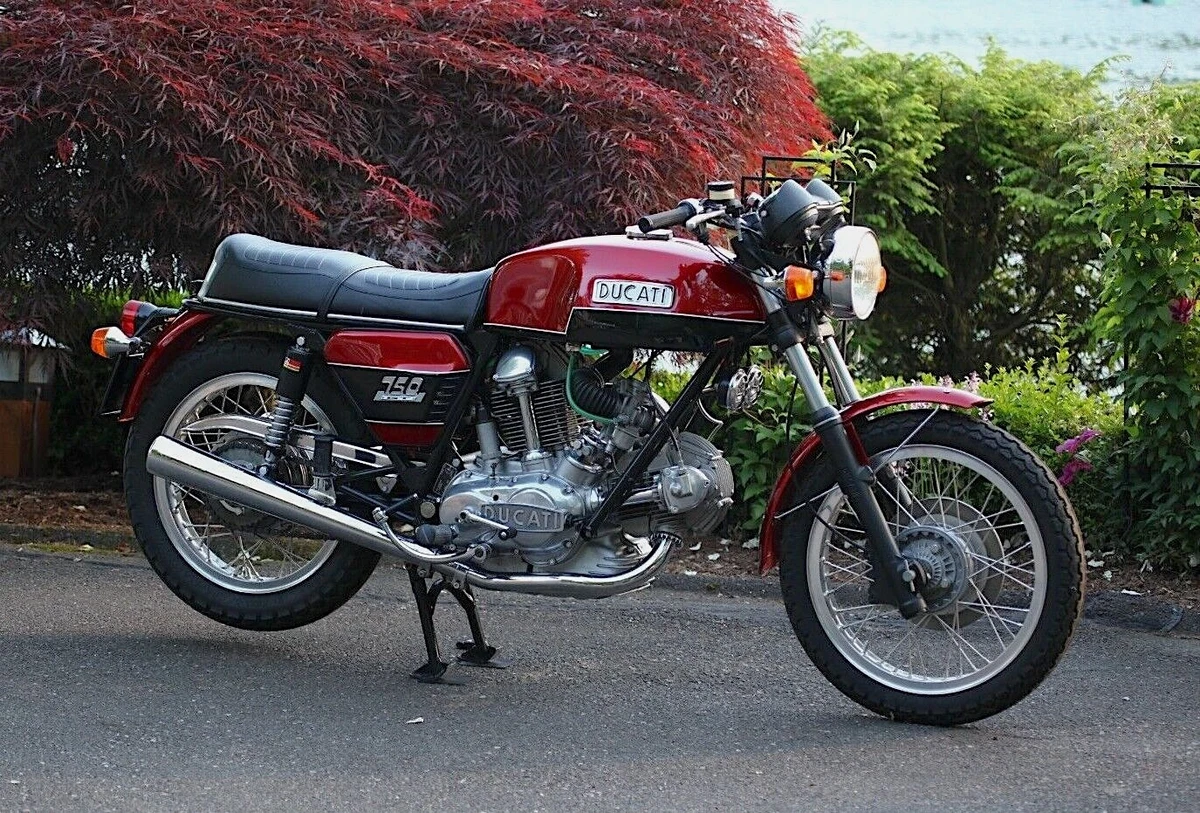
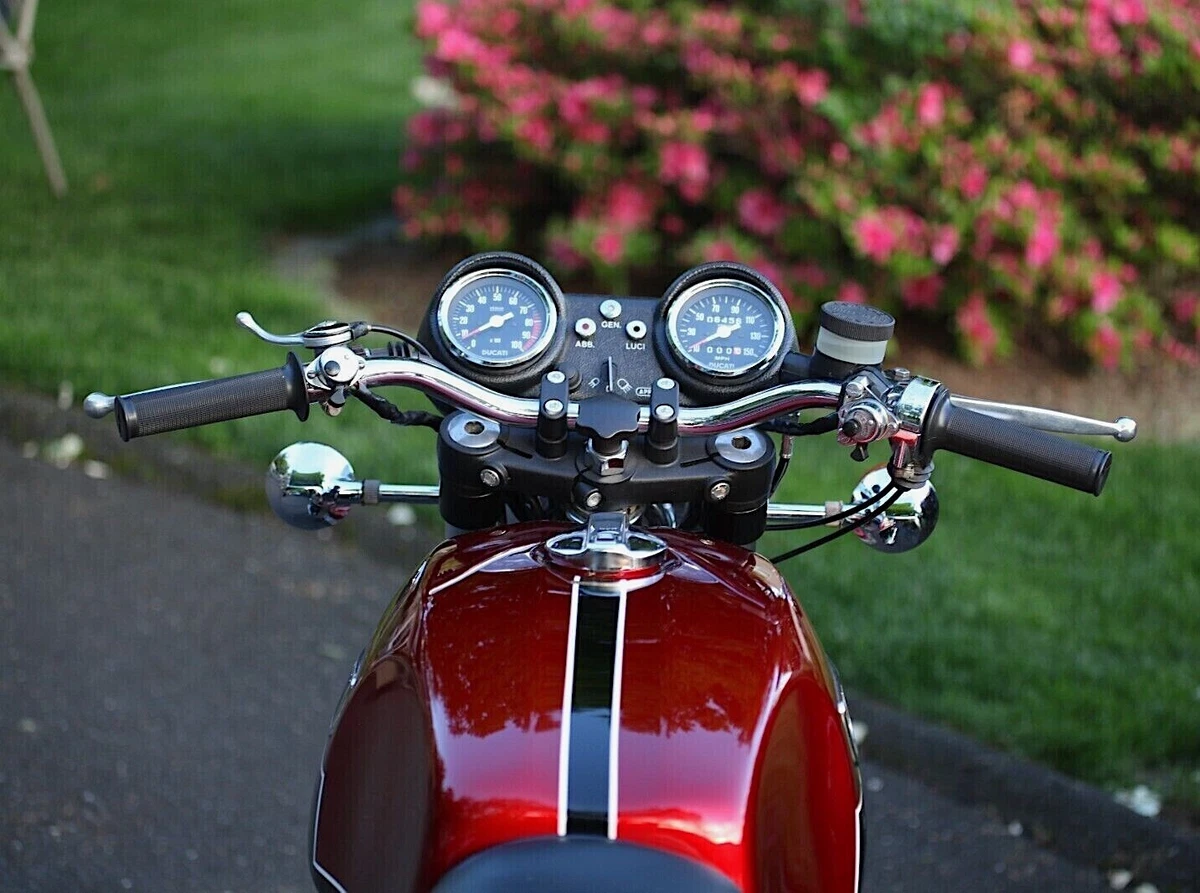
Ducati’s 750 GT was the first in a long line of exotic V-twin machines designed to compete with early superbikes from Norton and Honda. The example recently listed on eBay underwent restoration some years ago. It has been ridden very little since.




item 1 of 14
New Direction
Today, Ducati stands alone as a manufacturer of fine, exotic motorcycles. Whether your riding needs are for touring machinery or something that corners with its pilot’s knee close to—or even, on occasion, touching—the floor, the Bolognese concern stands alone. Nobody builds bikes like Ducati. Light tubular steel frames and eager, sophisticated motors, strong performance, and exemplary handling sit alongside delectable looks—and carry a price tag to suit.

However, this was not always the case. In fact, by the late 1960s, Ducati was in trouble. Taken over by the Italian government, it needed a bike to compete with the Norton Commando - opens in new window or tab. and Honda CB750 Four - opens in new window or tab. at what is now considered to be the dawn of the superbike. Some new thinking was required.
Engineering Genius
Whereas the Commando was an admirable attempt to eke out the last drop of life from aging technology, Honda based the CB750 Four on a fresh idea. We know now that a silky-smooth overhead cam four-cylinder motor is generally the way for larger high-performance bikes. However, the Italians had a different idea, which became their mainstay for decades.
Fabio Taglioni - opens in new window or tab. was Ducati’s chief designer and technical director from 1954 to 1989. Unsurprising, perhaps, for a man who held such prestigious positions for so many years, his name is often followed by the words “design genius.” Though his accolades are many, in this instance, he earns credit for introducing the world to the high-performance V-twin superbike engine. Ducati still makes V-twins to this day, showing no signs of halting the tradition.
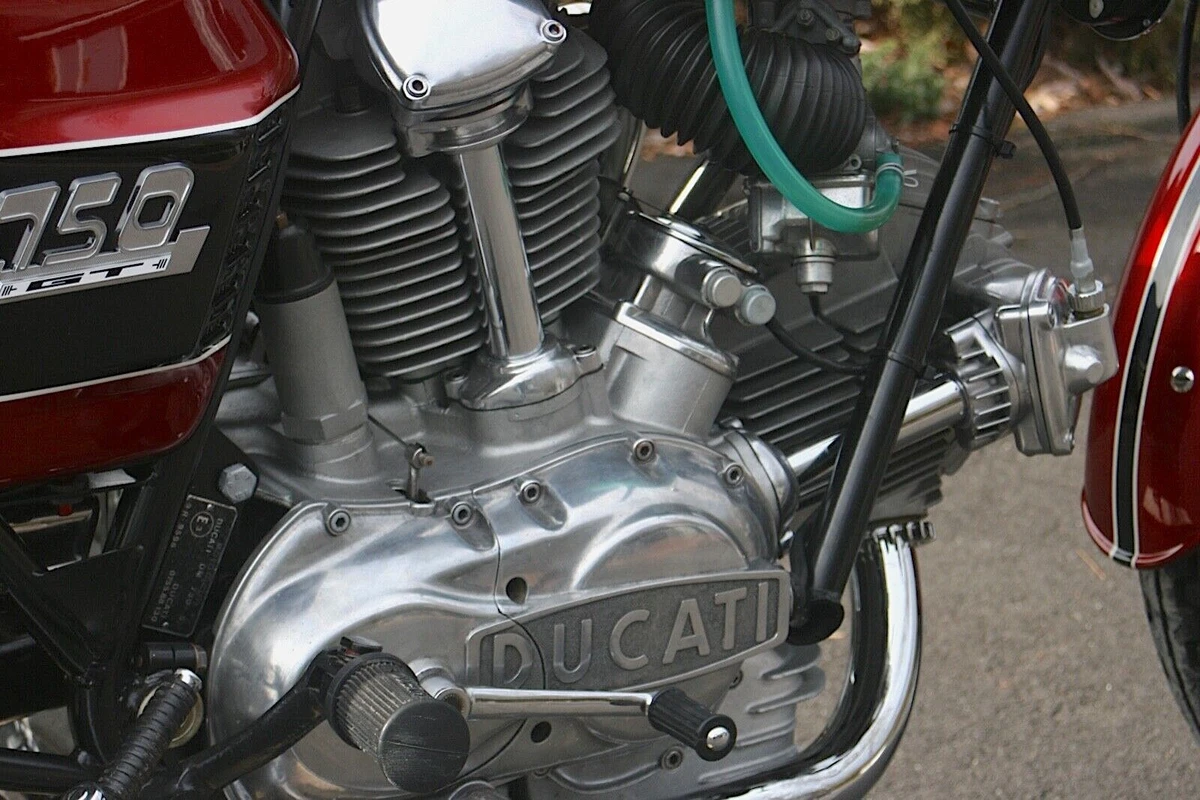
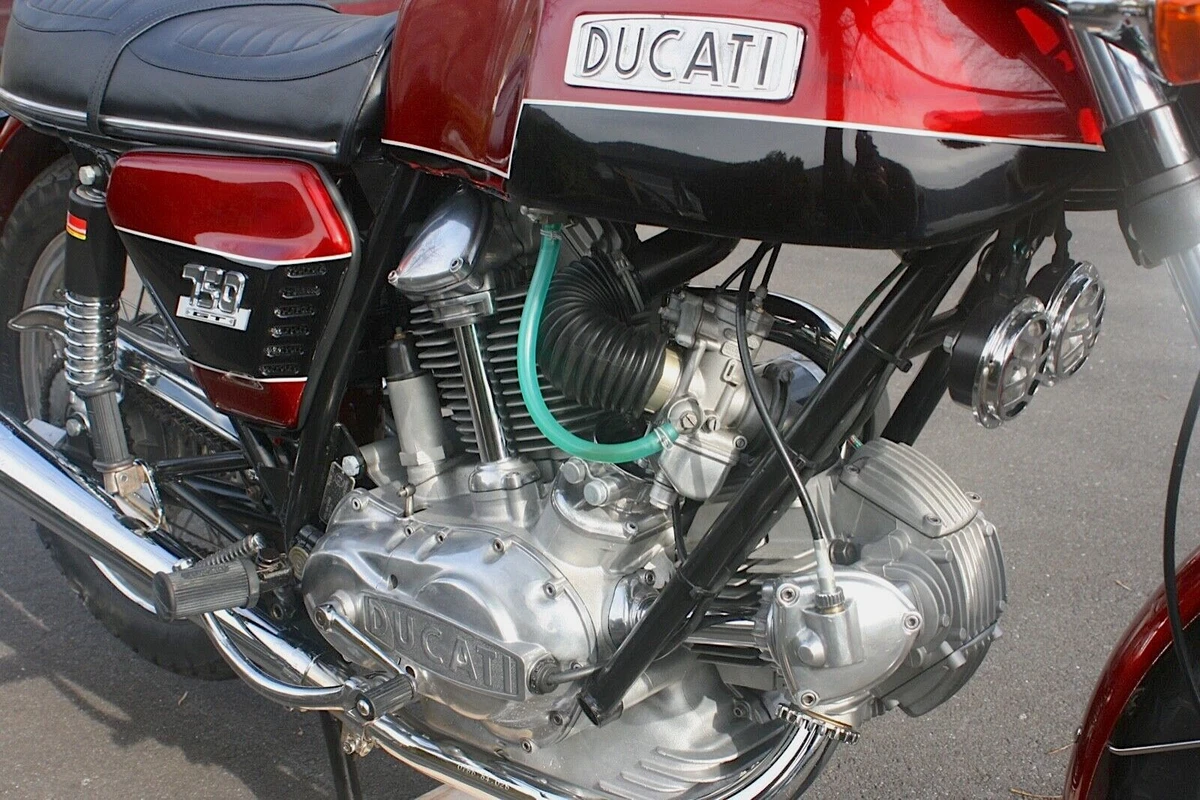
For the 750 GT, he developed a 90-degree V-twin 750-cc motor - opens in new window or tab. by fitting two of Ducati’s existing 350-cc barrels to a new design crankcase. That was neat enough, but the real genius of Taglioni’s design was that, compared to the new yardstick that was the Honda CB750 Four, the GT’s engine design meant a lower center of gravity, plenty of space around each cylinder for carburetors and cooling, and, crucially, a slender frontal area which was critical to achieving high speeds.
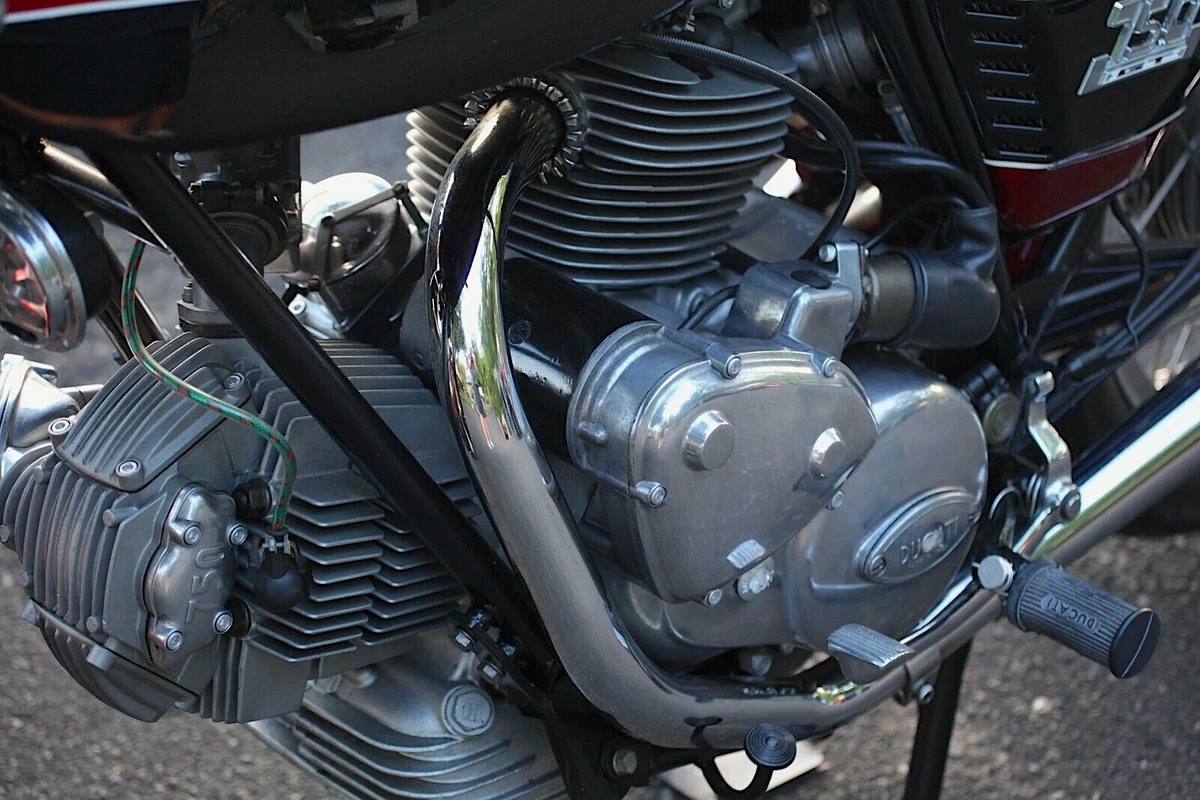
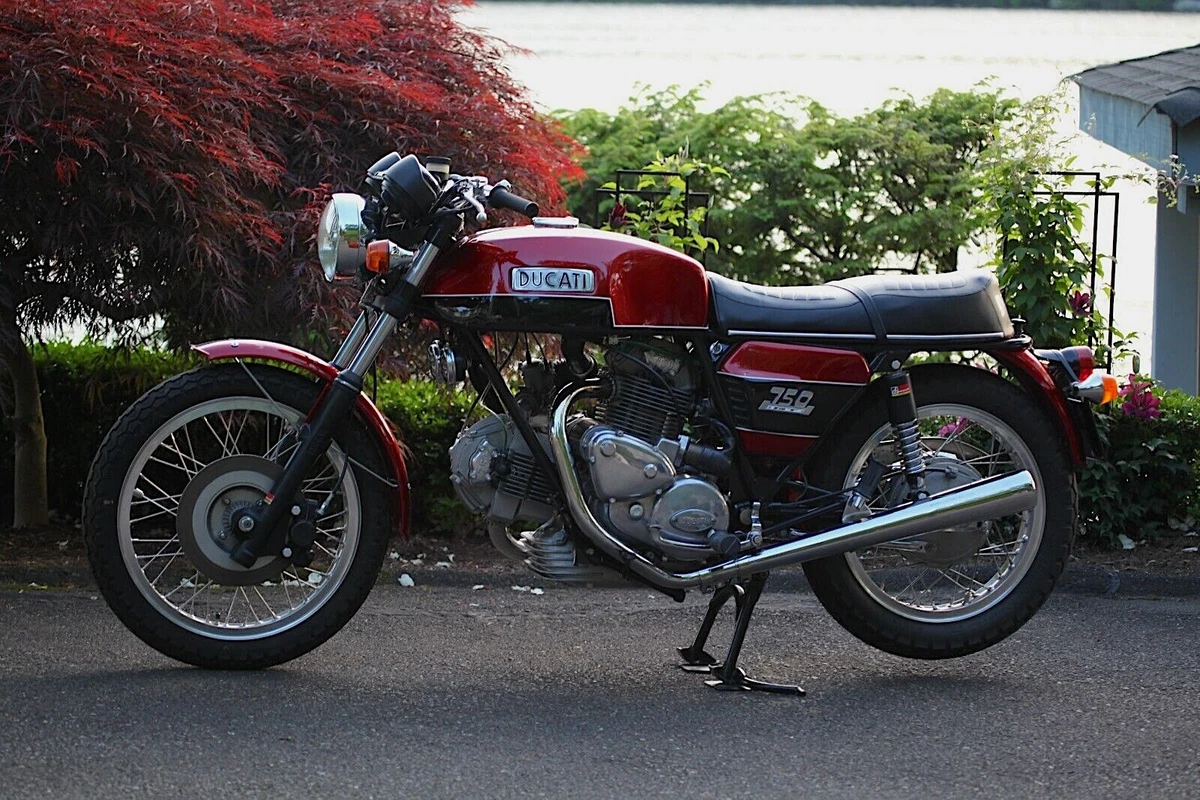
A swift inspection of the frame, particularly the tubes that plunge downwards from the headstock, shows that instead of running beneath the engine to create a cradle, they attach to the front of the engine. This makes the Ducati 750 GT's engine a stressed member, reducing weight and enhancing rigidity. This innovation resulted in 67 horsepower and a performance motorcycle that was universally reported to handle like a dream.
A Full and Thorough Restoration
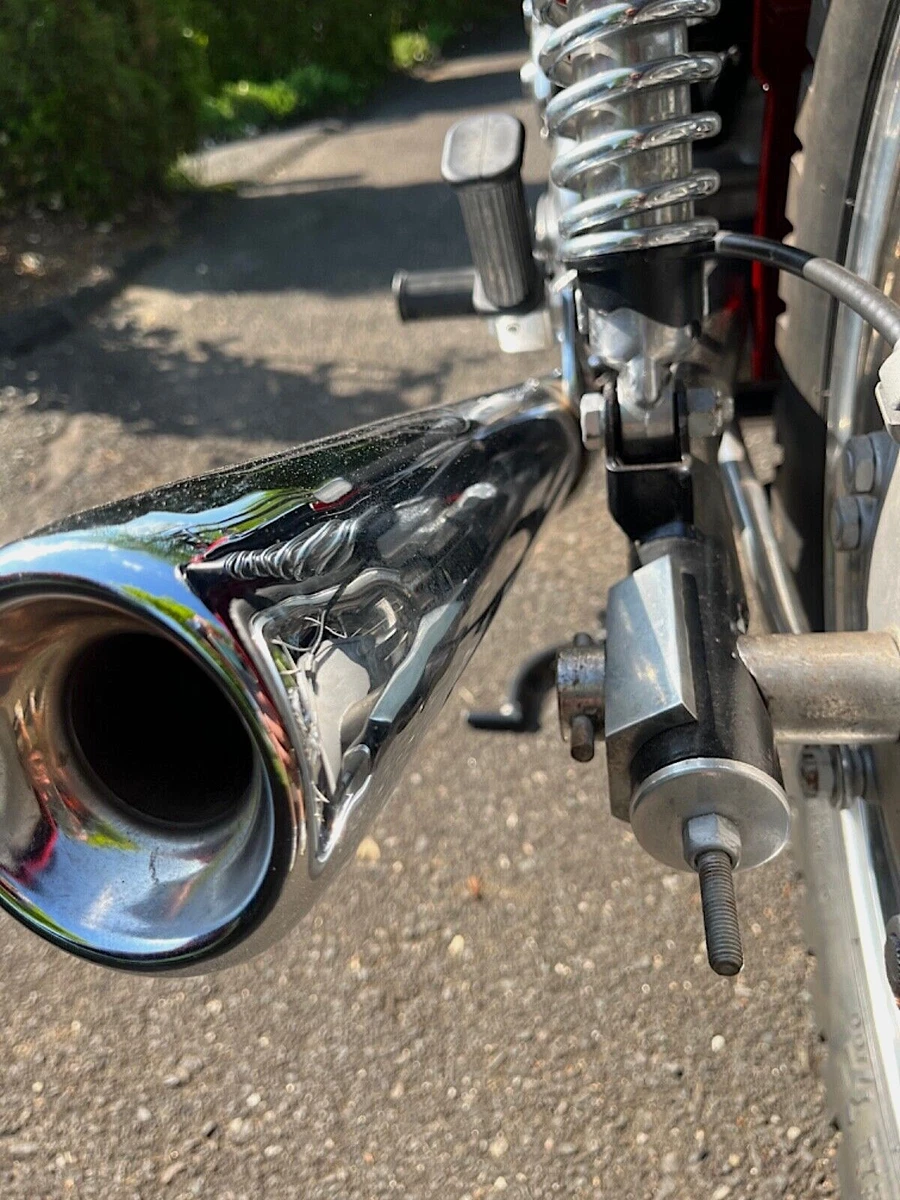
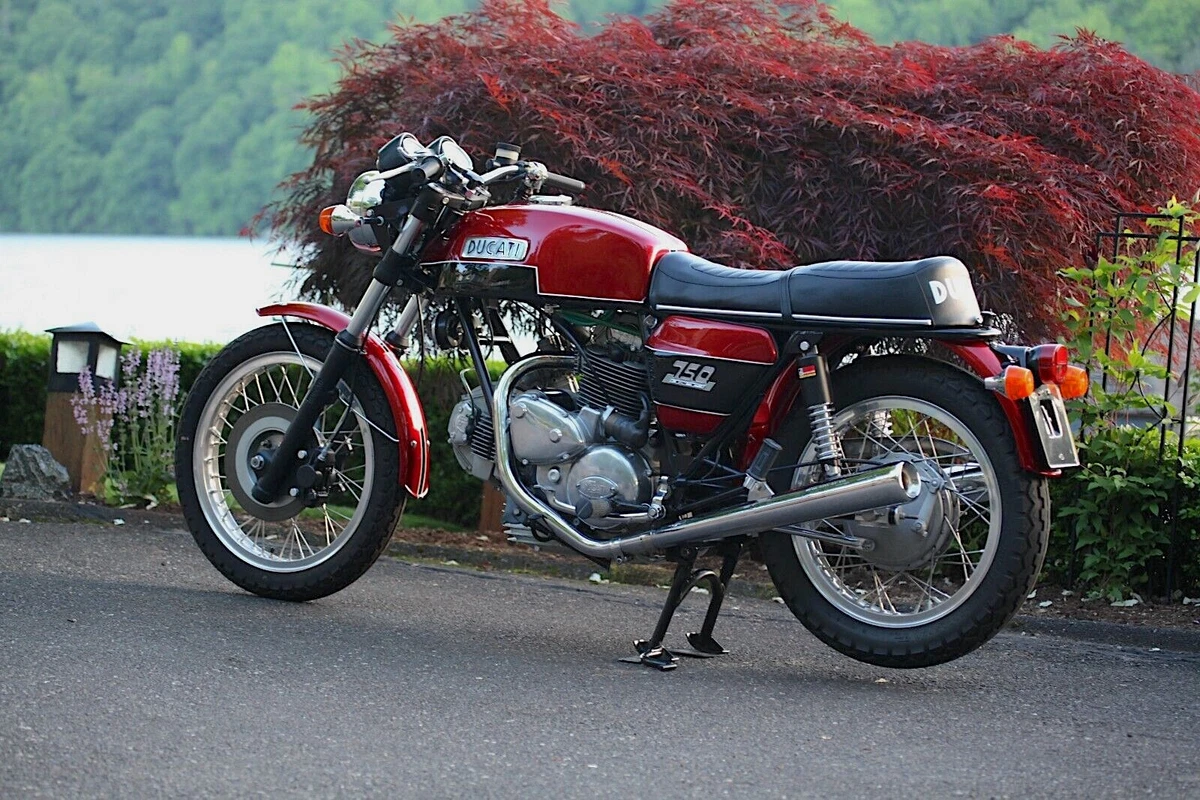
The Ducati 750 GT you see here on eBay was restored some time ago. Photographs show the wealth of detail, from the intricate casting of the engine to the quality of the restorer’s fit and finish.
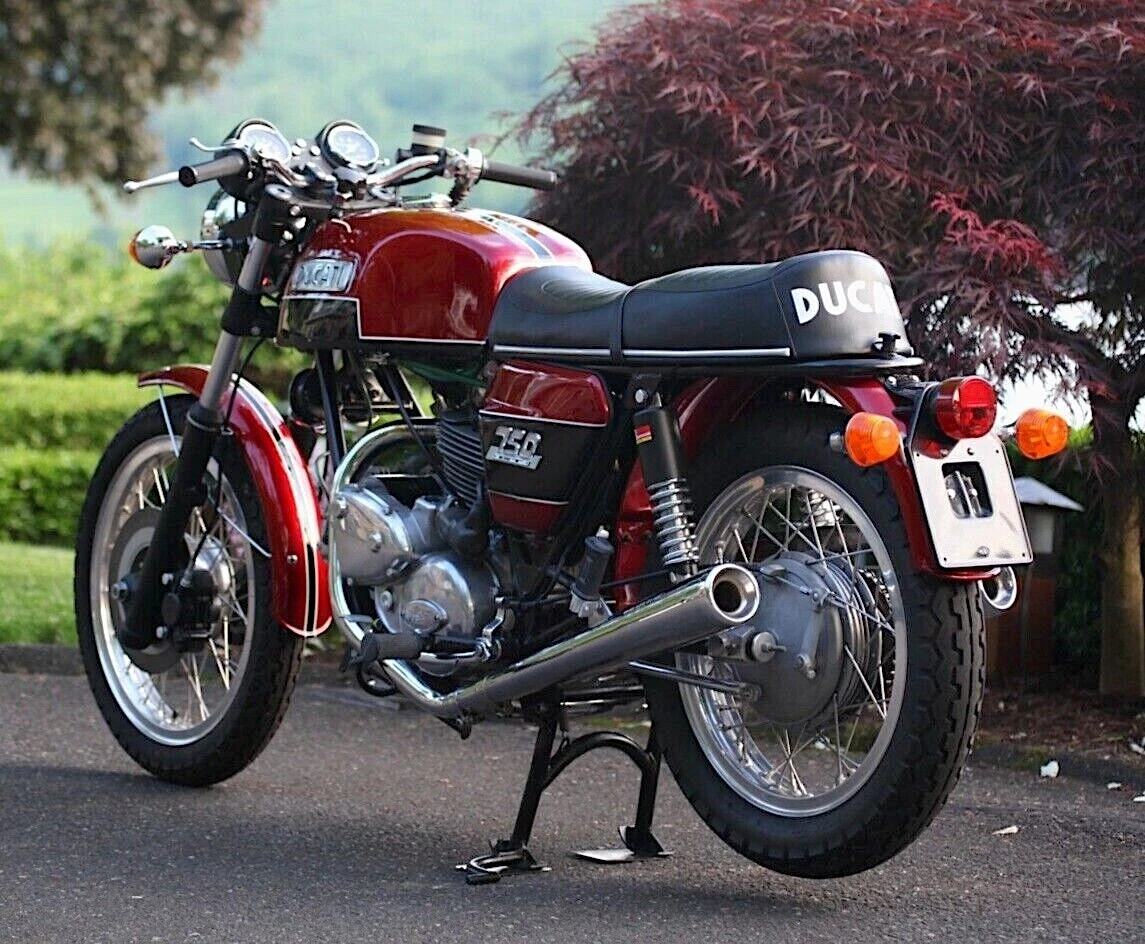
The listing also covers the parts used in the Ducati 750 GT's restoration and confirms that compression is good, the carburetors were recently rebuilt, and the bike runs nicely. Further good news is that the electrical systems all appear to be in good order. The fuel tank was lined to prevent corrosion, which is a splendid idea with vintage machinery.
The seller indicates that checking the safety equipment and tires would be prudent before putting this delectable Italian back on the streets. But as much as it is a fine example of an early superbike, Ducatis are a fashion statement and demand that their owners look the part. Scruffy lids and leathers will not do. Fortunately, eBay has you covered - opens in new window or tab..
About the author

Share your feedback
This article is meant to provide general guidance only. Automotive maintenance, repair, upgrade, and installation may depend on vehicle-specifics such as make and model. Always consult your owner's manual, repair guide for specific information for your particular vehicle and consider a licensed auto-care professional's help as well, particularly for advance repairs.