Rare ’65 Studebaker Wagonaire Offers a Retractable Roof
Culture
Oddities
Featured
Classics
American

The GMC Envoy reprised the Wagonaire’s sliding panel in 2004.
Do you remember the 2004 GMC Envoy XUV and its retractable roof that opened the utility vehicle’s rear to the elements? At the time, GM said that the ability to retract the Envoy’s roof section was “unprecedented.” But The General had overlooked the sliding roof panel offered four decades earlier in the 1965 Studebaker Wagonaire.

Brooks Stevens’ sliding panel concept was introduced on the Scimitar wagon concept.
This pretty 1965 Wagonaire example available on eBay - opens in new window or tab. is not only attractive but practical too because you can carry bulky upright items. Nearly 40 years before the Envoy XUV, the Wagonaire was billed as “three cars in one.” It worked like a wagon, family sedan, and convertible. The GMC XUV’s roof was power-operated, but the Wagonaire’s panel opens manually.
The Wagonaire, available from 1963 to 1966, was created by legendary designer Brooks Stevens, who had pioneered the sliding-roof wagon concept on his odd pillarless 1959 Scimitar concept car shown at the Geneva Motor Show in 1959.
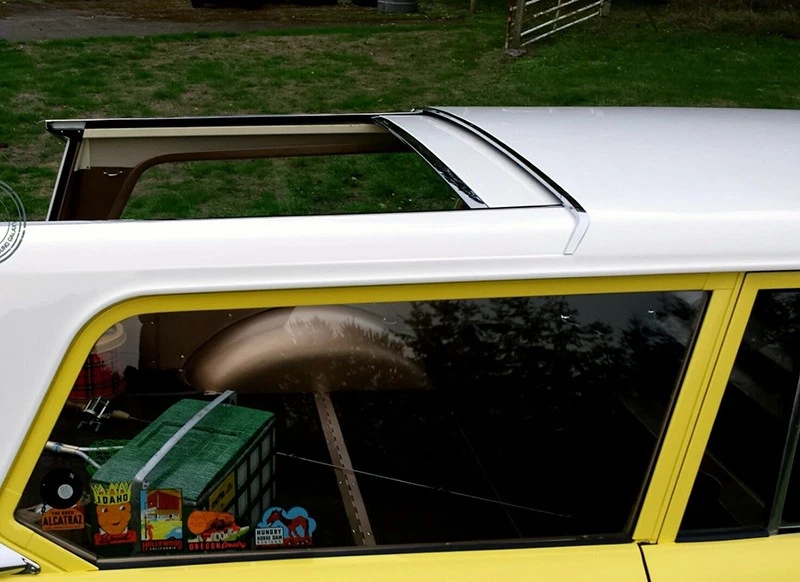
The rear panel slides into the front of the body for carrying tall objects.
The receding roof-panel concept might have caught on, but there were early word-of-mouth complaints about the panel leaking. Studebaker, which was a struggling brand by that time, wasn’t in much of a position to promote its cars (although it had stepped in as a sponsor of Mr. Ed on TV).
The ’65 Wagonaire available on eBay addressed technical issues with the unique roof design. The troublesome rear sliding panel was rebuilt, with new rollers, roof seals, and water drains. The tailgate with a very long handle was also rebuilt with a new window regulator - opens in new window or tab., channels, whiskers, and rollers.

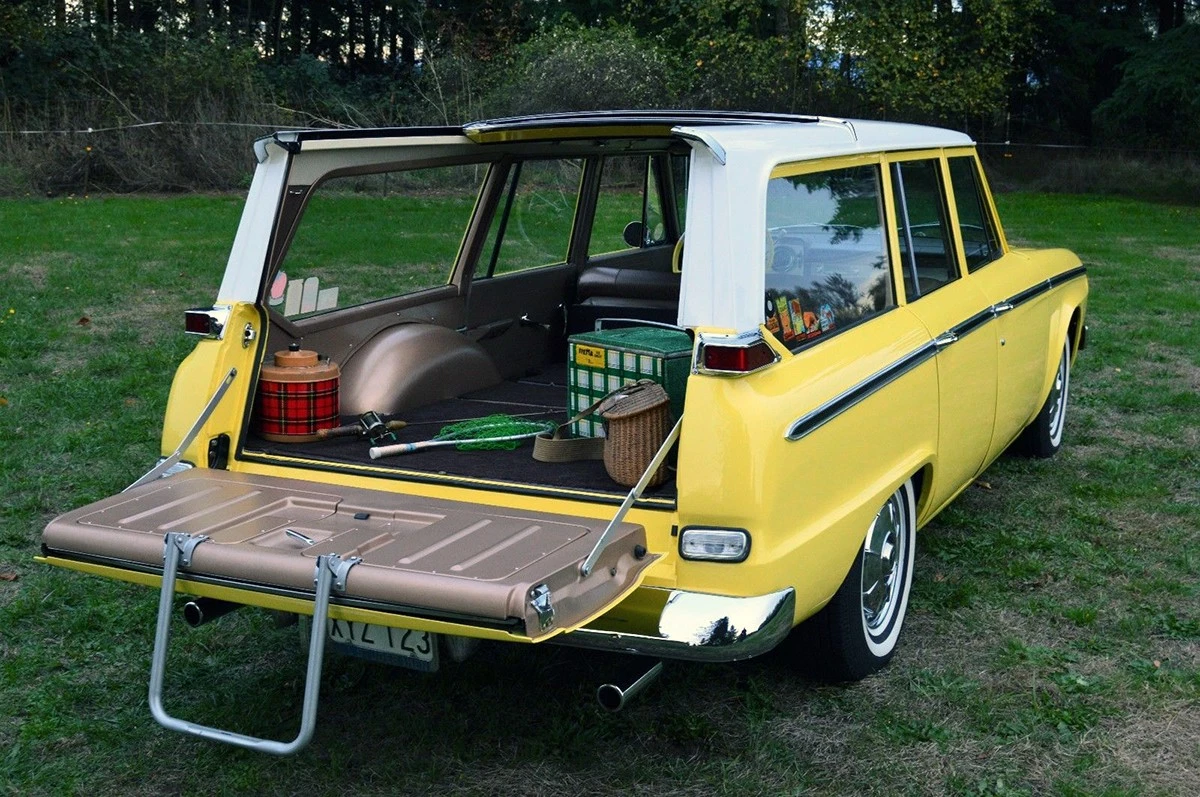
The Wagonaire’s big tailgate with a long handle was also unique.
Versatility and Muscle
High-performance packages were available for the Wagonaire, including an antiroll bar - opens in new window or tab. at the rear, a limited-slip differential - opens in new window or tab., and stiffer springs. This Wagonaire, sourced in Bellingham, Wash. in 2013, is in the spirit of those models because it sports a pristine 275-horsepower, 327-CID V-8 from a 1967 GM product. The engine is built with an Offenhauser intake manifold - opens in new window or tab., PowerPak heads, Edelbrock carb - opens in new window or tab., dual exhaust, and Flow-master mufflers - opens in new window or tab.. A new four-core radiator is also installed.
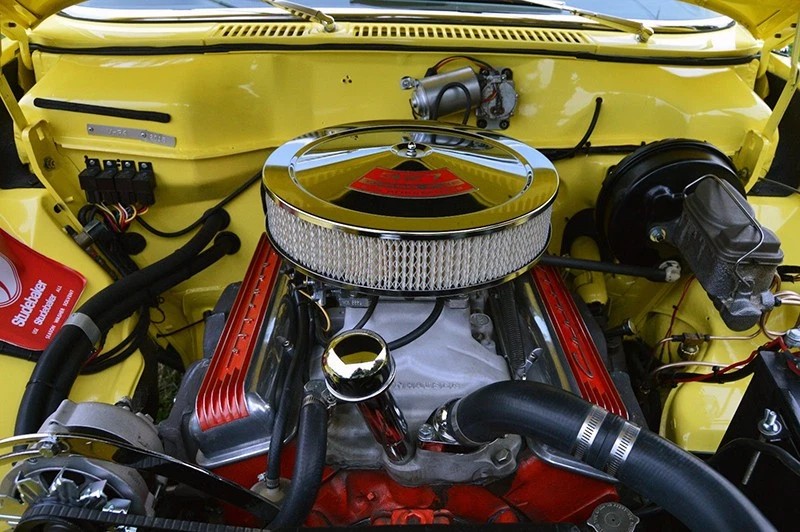
The Wagonaire was extensively rebuilt with many performance upgrades.
The owner reports that GM 350 transmission is “tight, shifts nice and has no issues.” The differential is a Ford Trac-Lock limited-slip unit - opens in new window or tab., and Ford also supplied the rear drum brakes (the fronts are rebuilt GM discs). All the accessories work.
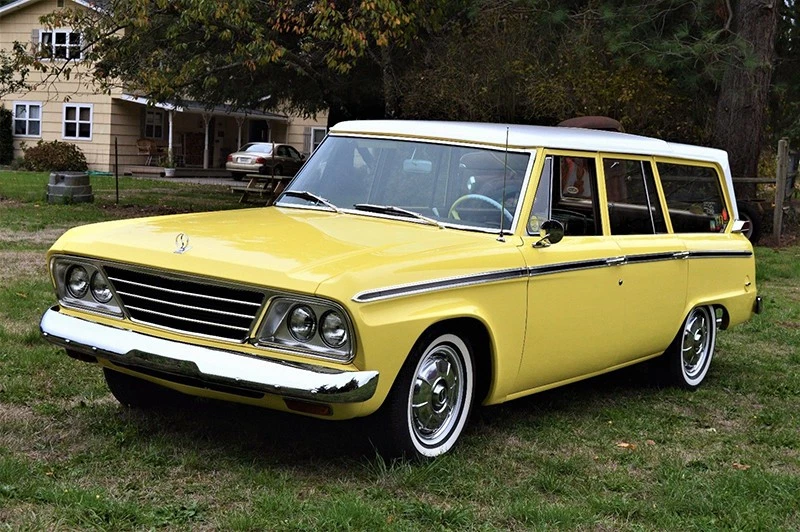
The Wagonaire isn’t exactly a convertible, but the owner says that it’s a blast to drive particularly with the roof panel open.
About the author

Share your feedback
This article is meant to provide general guidance only. Automotive maintenance, repair, upgrade, and installation may depend on vehicle-specifics such as make and model. Always consult your owner's manual, repair guide for specific information for your particular vehicle and consider a licensed auto-care professional's help as well, particularly for advance repairs.