1963 Bond Minicar: Comfortable Basic Transportation in a Small Package
Culture
Oddities
Classics
European
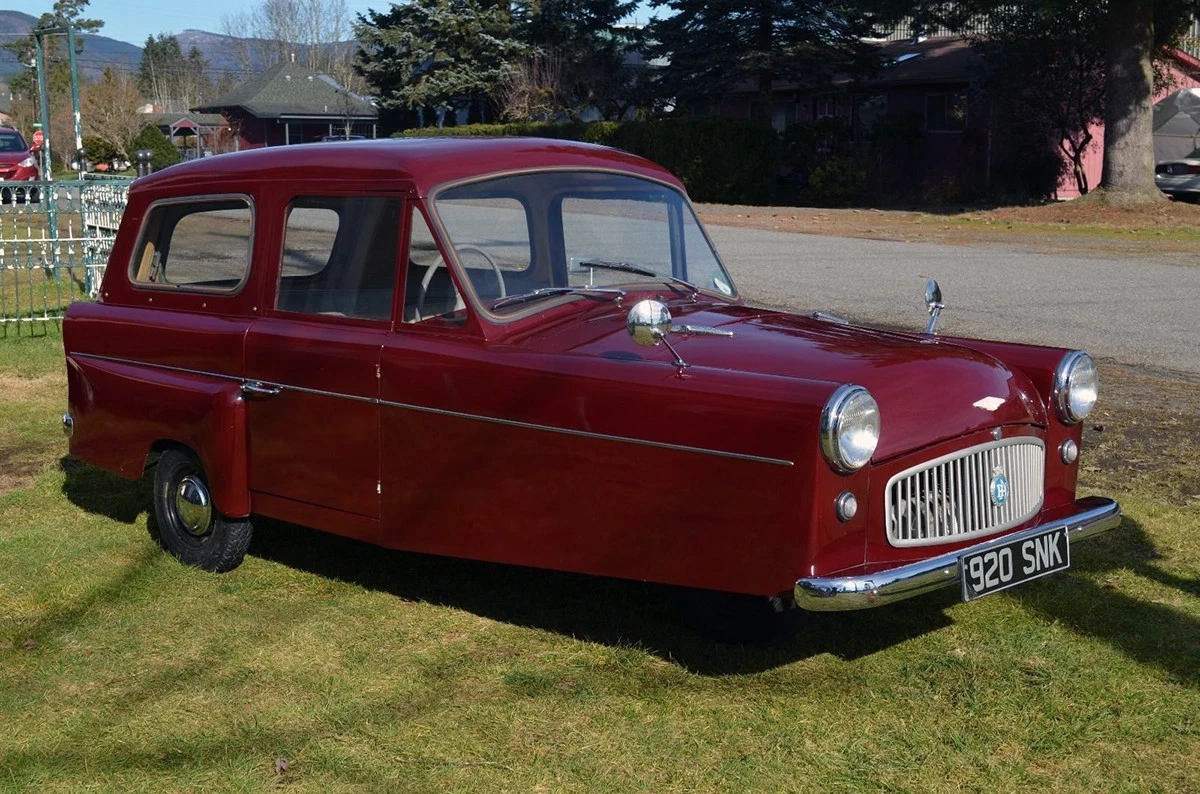
If you’re a fan of microcars - opens in new window or tab., especially the three-wheeled variety, this rare 1963 Bond Mark G Estate recently listed on eBay deserves a careful look. Bond was one of numerous automakers that produced microcars following the Second World War—when resources in Europe were scarce, and the need for affordable personal transportation was great. The fact that many microcars, including the Bond, could be insured and licensed as motorcycles made them an even better value.
The Mark G Estate was one of the last models Bond produced, so it benefits from two decades of production, as well as founder Lawrence Bond’s aeronautical engineering experience during World War II. Bond came up with his concept for a front-wheel drive microcar powered by a single-cylinder two-stroke Villiers engine - opens in new window or tab. and three-speed gearbox in 1948. Production began the following year at Sharp’s Commercials Limited in Lancashire, England.
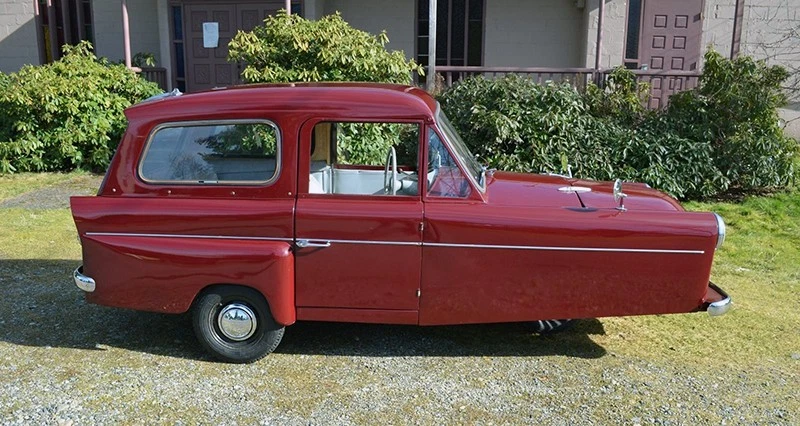
Unlike early Bond models, the 1963 Mark G has a Dynastart generator and a starter actuated via a lever under the dash. That makes firing the ignition much easier than kick-starters. This Bond comes with a two-cylinder, Villiers two-stroke engine rated at 14.6-horsepower: three more than the one-cylinder block on the base car that debuted in 1961.
The Bond’s engine, gearbox, and front wheel are a single assembly. The driver can pivot the engine up to 90-degrees using the steering wheel for an exceptional turning radius. Watch the 1963 Bond in action in this video:
The transmission is a four-speed manual gearbox. Bonds didn’t come with a traditional reverse gear. The Dynastart incorporates a reverse solenoid switch: the driver stops the engine and uses the switch to reverse the direction of the engine.
The two-cylinder engine was capable of speeds up to 60 miles-per-hour according to the manufacturer. “Although it is quite slow we did manage to get it up to 45mph on a level road,” the seller reports.
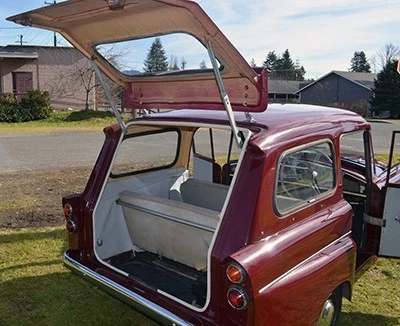
Small as it is, the Mark G is capable of seating four passengers. Front seats are adjustable with the passenger side moving forward enough to provide access to the rear bench. Doors are on the small side, but lockable with wind-up windows.
Bond made numerous changes to the suspension to keep all four passengers comfortable. On early models, the engine and front wheel were sprung as part of the trailing link suspension, while the rear wheels mounted to the body on stub axles with no suspension at all. By the 1960s, Bonds featured a trailing arm rear suspension with Armstrong dampers - opens in new window or tab..
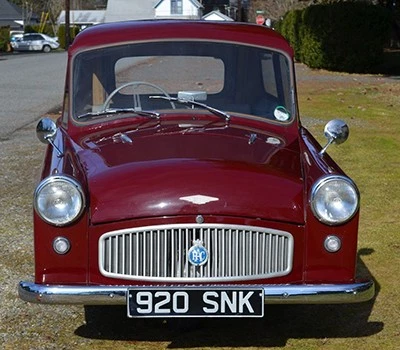
Brakes were also upgraded, from conventional drums on the rear wheels activated by a system of cables and rods to a fully hydraulic system on the front wheel and a single hydraulic unit in back controlling both rear wheels.
All the above improvements added significant weight to the vehicle. The Mark G weighs about 850 pounds compared to the topless 1951 Minicar Deluxe Tourer weighing 310 pounds. But on fast-moving American highways, the extra heft and more rigid body structure is probably a benefit.
If you want a mini that’s not a MINI, Isetta - opens in new window or tab., Messerschmitt - opens in new window or tab., Peel Trident - opens in new window or tab. or Fiat 600 - opens in new window or tab., the Bond Mark G Estate is an exceptionally lovable package.
About the author

Share your feedback
This article is meant to provide general guidance only. Automotive maintenance, repair, upgrade, and installation may depend on vehicle-specifics such as make and model. Always consult your owner's manual, repair guide for specific information for your particular vehicle and consider a licensed auto-care professional's help as well, particularly for advance repairs.