
The 1955 Chevrolet - opens in new window or tab. was a tough act to follow, but the 1956 Chevy did an excellent job of keeping the sales momentum going. Sales were down about 100,000 units, but Chevrolet still sold more than 1.5 million ’56 Chevys. Mechanically, the 1956 models were clones of the ’55. The main body shell was also the same—although clever restyling hid that fact. The great parts interchangeability of ’55-’57 Chevys is a big reason these cars are so popular with restorers and customizers.

The full width 1956 grille is a big departure from the ’55 grille.
Build Styles
The three series variants—150, 210, and Bel Air—continued for 1956. The unique full-width grille, distinctive taillights, and new side trim made the ’56 look longer and wider than the ’55 Chevy. The ’56 Chevy was long considered the third choice of tri-five Chevys, but ‘56s have come on strong lately, especially with builders of modified cars.
The predominant building style is a near stock exterior mated to an upgraded chassis/suspension (as low as possible with a slight rake), modern wheels, tires and brakes, and a newer, more powerful engine. Like the ’55, the 210 two-door sedan is the body of choice for modified ’56 Chevys. Wagons are very popular, especially Nomads. Any two-door wagon is desirable. Four-door wagons are good, but four-door sedans don’t justify big investments.

This turquoise and white ’56 Nomad is a great example of a stock looking exterior cloaking modern upgrades.
Convertibles and two-door hardtops tend to find more favor with restorers than customizers. Color choices are dominated by factory original colors: Tropical Turquoise, Matador Red, and Onyx Black as three top color choices. Two-tone paint schemes were popular in ’56 and remain so. Shades of red are the top custom colors.
Retaining the factory trim is big. Top quality builds often narrow bumpers for a perfect fit. Precision panel alignment and minimal gaps are signs of a top car.

A rare 9-passenger Bel Air wagon is a neat way to accommodate the full gang and all their weekend gear.
Stance Mods
The availability of a custom chassis like those built by Art Morrison Enterprises has greatly simplified getting a low stance and modern running gear. There are lots of suspension upgrade components designed for the original chassis.
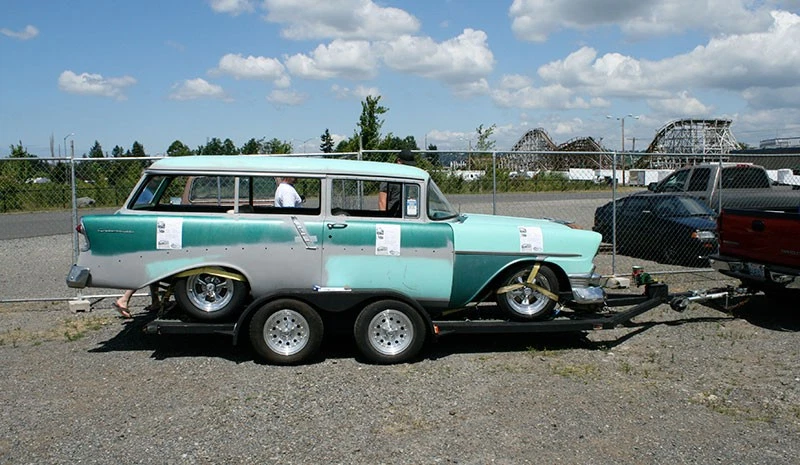
Buying a semi-finished ’56 Chevy project vehicle can save money as long as you like the type and quality of the work performed. Check that all the necessary parts are present.
Larger diameter wheels and lower profile tires are easiest to fit with an aftermarket chassis. Rear frame and well tub modifications are necessary to fit oversized rolling stock. Classic five-spoke custom wheels look like they were designed for tri-five Chevys. Modern interpretations of classic mags are also very popular.

Accommodating modern wheels, tires, and disc brakes involves enlarging the rear wheel tubs. Depending on width sometimes the frame will need to be notched.
Under the Hood and In the Cabin
Modern small-block Chevy V-8 engines and automatic overdrive transmissions are the first choice of ’56 Chevy builders. Big-block V-8s and manual transmissions are also good. Late model Corvette mechanical components are a top way of upgrading a ’56 Chevy.

Factory style interiors are easy to restore due to an extensive reproduction marketplace.
Reproduction factory style interior kits are plentiful, affordable, and the easy way to restore a ’56 interior. Totally custom interiors are mostly found on the more radical nd expensive cars. Clean and simple is the modern interior theme most used. Modern but hidden sound systems prevail.
The handsome 1956 Chevy is a great car to either restore or customize.
About the author

Share your feedback
This article is meant to provide general guidance only. Automotive maintenance, repair, upgrade, and installation may depend on vehicle-specifics such as make and model. Always consult your owner's manual, repair guide for specific information for your particular vehicle and consider a licensed auto-care professional's help as well, particularly for advance repairs.