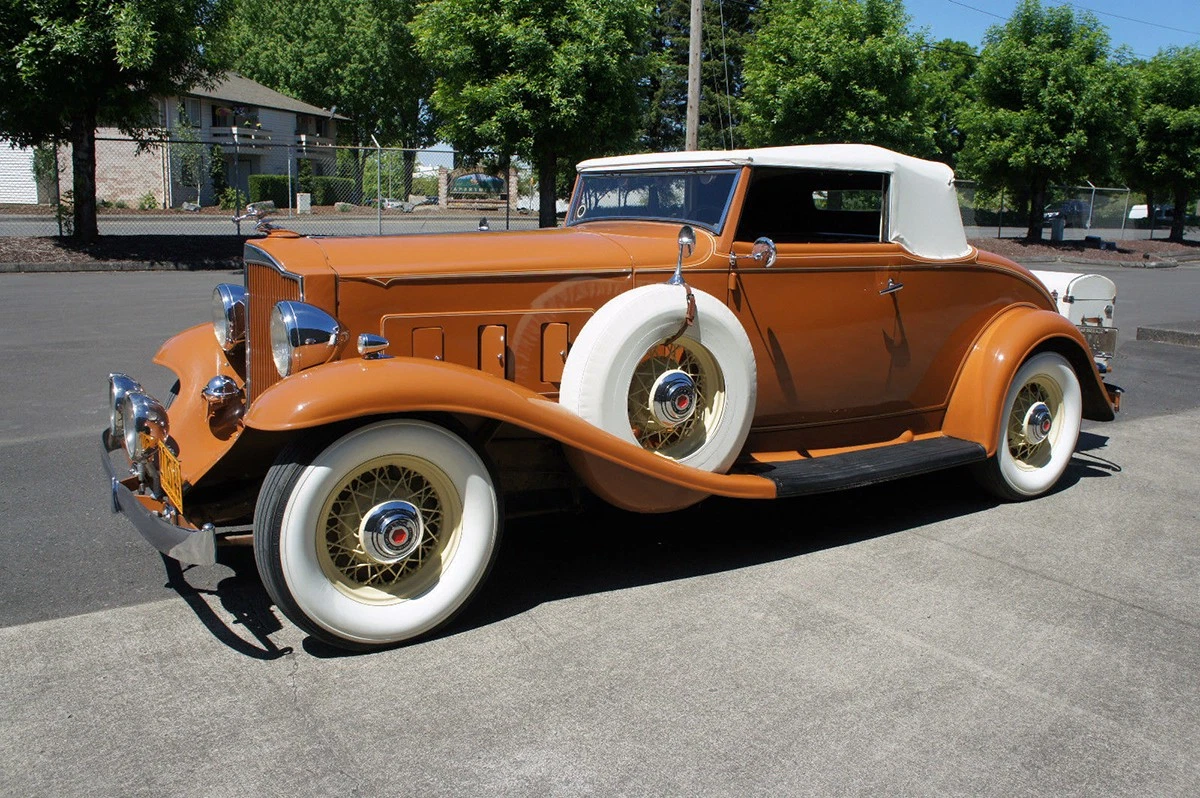
The Packard Series 900, also called the Light Eight, was both the original hot rod and the first entry-level luxury car. Produced exclusively for the 1932 model year, the Series 900 with its distinctive shovelhead nose was the automaker’s attempt to boost sales at the height of the Great Depression. Its low-slung aerodynamic profile foreshadows post-War concept cars such as Harley Earl’s 1938 Y Job and 1951 Buick LeSabre. It followed his dictum: “Longer, lower, wider.”
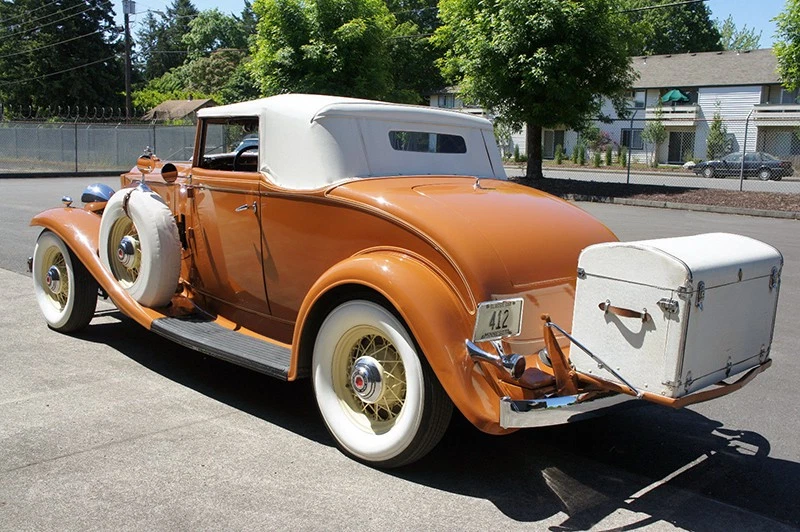
The Light Eight convertible coupe listed on eBay - opens in new window or tab. is a clean, well-maintained example of this important chapter in Packard - opens in new window or tab. history. The car has been in the same family for more than half a century. The current owner says the Packard is in good driving condition, by virtue of its original L-head inline eight-cylinder engine and three-speed manual transmission.
This particular vehicle was heavily optioned from the factory, with dual side-mount spare tires, front fender parking lights, and the original Packard trunk mounted on its rear bumper. Pricing for the Light Eight ranged from $1,795 to $1,940 when the car was new: a bargain for a Packard but unfortunately beyond reach for millions of Americans struggling to maintain roofs over their heads.

Packard, along with Pierce-Arrow - opens in new window or tab. and Peerless - opens in new window or tab. were the “Three Ps” of American luxury cars. Both Pierce-Arrow and Peerless started out as manufacturers of household items such as clothes wringers and ice boxes before moving onto bicycles and finally automobiles. Packard was an automobile manufacturer from the start, producing its first production car, the Model B, in early 1900. By 1912, when it introduced the six-cylinder models 48 and 38, Packard had established itself as a premier manufacturer of luxury automobiles priced many thousands of dollars over Henry Ford’s Model T - opens in new window or tab. that debuted four years earlier.
Throughout the 1920s powerful eight and twelve-cylinder Packards, Peerlesses, and Pierce-Arrows represented the epitome of style and performance. But when the Great Depression hit in 1929, the Three Ps felt its shock waves.

Although the Packard Light Eight was a commercial failure, the automaker’s effort to introduce new, more affordable products saved it from extinction. Unlike Peerless which closed its doors in 1931 and Pierce-Arrow that followed suit seven years later, Packard held on, producing automobiles until 1958.
The roadster coupe was one of four available body styles for the Packard Light Eight - opens in new window or tab.. Although its X-frame construction was similar to Standard Eight - opens in new window or tab. models, the Light Eight weighed about 500 pounds less: hence the name. With its 320 cubic-inch engine delivering 110-horsepower, it was a competent performer.

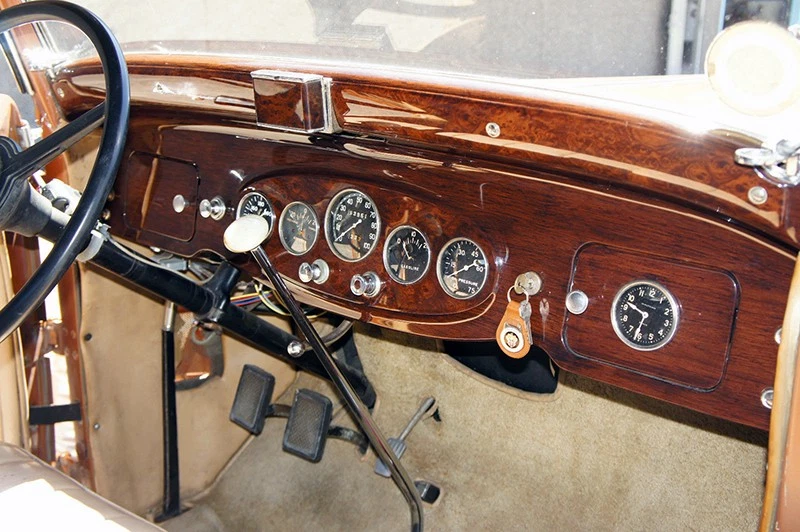
The Packard 900 Series’ low production run of 6,785 units makes the example listed now on eBay - opens in new window or tab. highly collectible. With its sweeping front fenders, sumptuous interior, and superior performance, the Packard Light Eight is a classic car with timeless appeal.
About the author

Share your feedback
This article is meant to provide general guidance only. Automotive maintenance, repair, upgrade, and installation may depend on vehicle-specifics such as make and model. Always consult your owner's manual, repair guide for specific information for your particular vehicle and consider a licensed auto-care professional's help as well, particularly for advance repairs.