Picture 1 of 1
Gallery
Picture 1 of 1

Have one to sell?
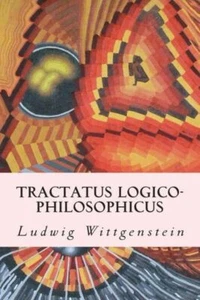
Tractatus Logico-Philoso

US $8.89
Condition:
6 available36 sold
- Buy It NowTractatus Logico-Philosophicus
Oops! Looks like we're having trouble connecting to our server.
Refresh your browser window to try again.
Shipping:
Free Economy Shipping.
Located in: USA, United States
Delivery:
Estimated between Sat, Dec 6 and Fri, Dec 12 to 94104
Returns:
30 days returns. Buyer pays for return shipping. If you use an eBay shipping label, it will be deducted from your refund amount.
Payments:
Special financing available. See terms and apply now- for PayPal Credit, opens in a new window or tab
Earn up to 5x points when you use your eBay Mastercard®. Learn moreabout earning points with eBay Mastercard
Shop with confidence
About this item
Seller assumes all responsibility for this listing.
eBay item number:184091547988
Item specifics
- Condition
- ISBN
- 9781502551382
- Book Title
- Tractatus Logico-Philosophicus
- Publisher
- CreateSpace
- Item Length
- 9 in
- Publication Year
- 2014
- Format
- Trade Paperback
- Language
- English
- Item Height
- 0.1 in
- Genre
- Mathematics, Philosophy
- Topic
- Language, Individual Philosophers, History & Surveys / Ancient & Classical, Logic
- Item Weight
- 5.1 Oz
- Item Width
- 6 in
- Number of Pages
- 62 Pages
About this product
Product Identifiers
Publisher
CreateSpace
ISBN-10
1502551381
ISBN-13
9781502551382
eBay Product ID (ePID)
204230815
Product Key Features
Book Title
Tractatus Logico-Philosophicus
Number of Pages
62 Pages
Language
English
Publication Year
2014
Topic
Language, Individual Philosophers, History & Surveys / Ancient & Classical, Logic
Genre
Mathematics, Philosophy
Format
Trade Paperback
Dimensions
Item Height
0.1 in
Item Weight
5.1 Oz
Item Length
9 in
Item Width
6 in
Additional Product Features
Intended Audience
Trade
Dewey Edition
23
Dewey Decimal
192
Synopsis
The Tractatus Logico-Philosophicus (TLP) (Latin for "Logico-Philosophical Treatise") is the only book-length philosophical work published by the Austrian philosopher Ludwig Wittgenstein in his lifetime. The project had a broad aim - to identify the relationship between language and reality and to define the limits of science[1] - and is recognized as a significant philosophical work of the twentieth century. G. E. Moore originally suggested the work's Latin title as homage to the Tractatus Theologico-Politicus by Baruch Spinoza.[2]Wittgenstein wrote the notes for the Tractatus while he was a soldier during World War I and completed it during a military leave in the summer of 1918.[3] It was first published in German in 1921 as Logisch-Philosophische Abhandlung. The Tractatus was influential chiefly amongst the logical positivists of the Vienna Circle, such as Rudolf Carnap and Friedrich Waismann. Bertrand Russell's article "The Philosophy of Logical Atomism" is presented as a working out of ideas that he had learned from Wittgenstein.The Tractatus employs a notoriously austere and succinct literary style. The work contains almost no arguments as such, but rather consists of declarative statements, or passages, that are meant to be self-evident. The statements are hierarchically numbered, with seven basic propositions at the primary level (numbered 1-7), with each sub-level being a comment on or elaboration of the statement at the next higher level (e.g., 1, 1.1, 1.11, 1.12, 1.13). In all, the Tractatus comprises 526 numbered statements, with 1, 2, 3, 4, 5, 6 and 7 having 7, 79, 74, 109, 151, 105 and 1 associated statement(s), respectively.Wittgenstein's later works, notably the posthumously published Philosophical Investigations, criticised many of the ideas in the Tractatus.Wittgenstein concluded that the Tractatus had resolved all philosophical problems.The book was translated into English by C. K. Ogden with help from the teenaged Cambridge mathematician and philosopher Frank P. Ramsey. Ramsey later visited Wittgenstein in Austria. Translation issues make the concepts hard to pinpoint, especially given Wittgenstein's usage of terms and difficulty in translating ideas into words.[25]The Tractatus caught the attention of the philosophers of the Vienna Circle (1921-1933), especially Rudolf Carnap and Moritz Schlick. The group spent many months working through the text out loud, line by line. Schlick eventually convinced Wittgenstein to meet with members of the circle to discuss the Tractatus when he returned to Vienna (he was then working as an architect). Although the Vienna Circle's logical positivists appreciated the Tractatus, they argued that the last few passages, including Proposition 7, are confused. Carnap hailed the book as containing important insights, but encouraged people to ignore the concluding sentences. Wittgenstein responded to Schlick, commenting: "...I cannot imagine that Carnap should have so completely misunderstood the last sentences of the book and hence the fundamental conception of the entire book.A more recent interpretation comes from The New Wittgenstein family of interpretations under development since 2000.[27] This so-called "resolute reading" is controversial and much debated.[citation needed] The main contention of such readings is that Wittgenstein in the Tractatus does not provide a theoretical account of language that relegates ethics and philosophy to a mystical realm of the unsayable. Rather, the book has a therapeutic aim. By working through the propositions of the book the reader comes to realize that language is perfectly suited to all his needs, and that philosophy rests on a confused relation to the logic of our language. The confusion that the Tractatus seeks to dispel is not a confused theory, such that a correct theory would be a proper way to clear the confusion, rather the need of any such theory is confused., The Tractatus Logico-Philosophicus (TLP) (Latin for "Logico-Philosophical Treatise") is the only book-length philosophical work published by the Austrian philosopher Ludwig Wittgenstein in his lifetime. The project had a broad aim - to identify the relationship between language and reality and to define the limits of science 1] - and is recognized as a significant philosophical work of the twentieth century. G. E. Moore originally suggested the work's Latin title as homage to the Tractatus Theologico-Politicus by Baruch Spinoza. 2] Wittgenstein wrote the notes for the Tractatus while he was a soldier during World War I and completed it during a military leave in the summer of 1918. 3] It was first published in German in 1921 as Logisch-Philosophische Abhandlung. The Tractatus was influential chiefly amongst the logical positivists of the Vienna Circle, such as Rudolf Carnap and Friedrich Waismann. Bertrand Russell's article "The Philosophy of Logical Atomism" is presented as a working out of ideas that he had learned from Wittgenstein. The Tractatus employs a notoriously austere and succinct literary style. The work contains almost no arguments as such, but rather consists of declarative statements, or passages, that are meant to be self-evident. The statements are hierarchically numbered, with seven basic propositions at the primary level (numbered 1-7), with each sub-level being a comment on or elaboration of the statement at the next higher level (e.g., 1, 1.1, 1.11, 1.12, 1.13). In all, the Tractatus comprises 526 numbered statements, with 1, 2, 3, 4, 5, 6 and 7 having 7, 79, 74, 109, 151, 105 and 1 associated statement(s), respectively. Wittgenstein's later works, notably the posthumously published Philosophical Investigations, criticised many of the ideas in the Tractatus. Wittgenstein concluded that the Tractatus had resolved all philosophical problems. The book was translated into English by C. K. Ogden with help from the teenaged Cambridge mathematician and philosopher Frank P. Ramsey. Ramsey later visited Wittgenstein in Austria. Translation issues make the concepts hard to pinpoint, especially given Wittgenstein's usage of terms and difficulty in translating ideas into words. 25] The Tractatus caught the attention of the philosophers of the Vienna Circle (1921-1933), especially Rudolf Carnap and Moritz Schlick. The group spent many months working through the text out loud, line by line. Schlick eventually convinced Wittgenstein to meet with members of the circle to discuss the Tractatus when he returned to Vienna (he was then working as an architect). Although the Vienna Circle's logical positivists appreciated the Tractatus, they argued that the last few passages, including Proposition 7, are confused. Carnap hailed the book as containing important insights, but encouraged people to ignore the concluding sentences. Wittgenstein responded to Schlick, commenting: "...I cannot imagine that Carnap should have so completely misunderstood the last sentences of the book and hence the fundamental conception of the entire book. A more recent interpretation comes from The New Wittgenstein family of interpretations under development since 2000. 27] This so-called "resolute reading" is controversial and much debated. citation needed] The main contention of such readings is that Wittgenstein in the Tractatus does not provide a theoretical account of language that relegates ethics and philosophy to a mystical realm of the unsayable. Rather, the book has a therapeutic aim. By working through the propositions of the book the reader comes to realize that language is perfectly suited to all his needs, and that philosophy rests on a confused relation to the logic of our language. The confusion that the Tractatus seeks to dispel is not a confused theory, such that a correct theory would be a proper way to clear the confusion, rather the need of any such theory is confused.
Item description from the seller

Popular categories from this store
Seller feedback (264,397)
This item (7)
All items (264,397)
- 3***6 (70)- Feedback left by buyer.More than a year agoVerified purchaseExcellent condition. Quick delivery. Thank you
- eBay automated feedback- Feedback left by buyer.Past monthOrder delivered on time with no issues
- eBay automated feedback- Feedback left by buyer.Past 6 monthsOrder delivered on time with no issues
- 1***0 (1564)- Feedback left by buyer.Past monthVerified purchaseAS SHOWN/DESCRIBED. THIS BOOK IS WONDERFUL. IT IS NEW, AND EXPLAINS HOW BEADING IS DONE. IT HAS MANY COLORED PATTERNS WITH INSTRUCTIONS AND MUCH MORE. I BOUGHT ANOTHER BOOK FOR MAKING BRACELETS. SELLER COMBINED SHIPPING, YEA! AT A GREAT PRICE, VERY SECURED PACKING, FAST FREE SHIPPING AND FAST DELIVERY! I AM VERY HAPPY WITH MY PURCHASES AND I HIGHLY RECOMMEND THIS FANTASTIC SELLER! THANK YOU FOR EVERYTHING!
- f***f (1670)- Feedback left by buyer.Past 6 monthsVerified purchaseExcellent Seller, Goes the Extra Mile. The Seller Was Incredibly Communicative. Smooth Transaction, Shipped Very Quickly, As Advertised; Good Price; Well Packaged & Delivered Within a Few Days. Item in Described Promised Condition, Thank You Very Much!!!!!!!!!!! A+The Angels Of Lockhart (#196308958644)
- y***r (655)- Feedback left by buyer.Past 6 monthsVerified purchaseFiver star seller: brand new, exactly as described, safely packed (no bumps, bends or dings.) Six days seems a bit long for delivery, but the USPS is doing their best. Perfect! Thank you.
Popular categories from this store
Seller feedback (264,397)
This item (7)
All items (264,397)
- 3***6 (70)- Feedback left by buyer.More than a year agoVerified purchaseExcellent condition. Quick delivery. Thank you
- eBay automated feedback- Feedback left by buyer.Past monthOrder delivered on time with no issues
- eBay automated feedback- Feedback left by buyer.Past 6 monthsOrder delivered on time with no issues
- 1***0 (1564)- Feedback left by buyer.Past monthVerified purchaseAS SHOWN/DESCRIBED. THIS BOOK IS WONDERFUL. IT IS NEW, AND EXPLAINS HOW BEADING IS DONE. IT HAS MANY COLORED PATTERNS WITH INSTRUCTIONS AND MUCH MORE. I BOUGHT ANOTHER BOOK FOR MAKING BRACELETS. SELLER COMBINED SHIPPING, YEA! AT A GREAT PRICE, VERY SECURED PACKING, FAST FREE SHIPPING AND FAST DELIVERY! I AM VERY HAPPY WITH MY PURCHASES AND I HIGHLY RECOMMEND THIS FANTASTIC SELLER! THANK YOU FOR EVERYTHING!
- f***f (1670)- Feedback left by buyer.Past 6 monthsVerified purchaseExcellent Seller, Goes the Extra Mile. The Seller Was Incredibly Communicative. Smooth Transaction, Shipped Very Quickly, As Advertised; Good Price; Well Packaged & Delivered Within a Few Days. Item in Described Promised Condition, Thank You Very Much!!!!!!!!!!! A+The Angels Of Lockhart (#196308958644)
- y***r (655)- Feedback left by buyer.Past 6 monthsVerified purchaseFiver star seller: brand new, exactly as described, safely packed (no bumps, bends or dings.) Six days seems a bit long for delivery, but the USPS is doing their best. Perfect! Thank you.